
Direct answer summary
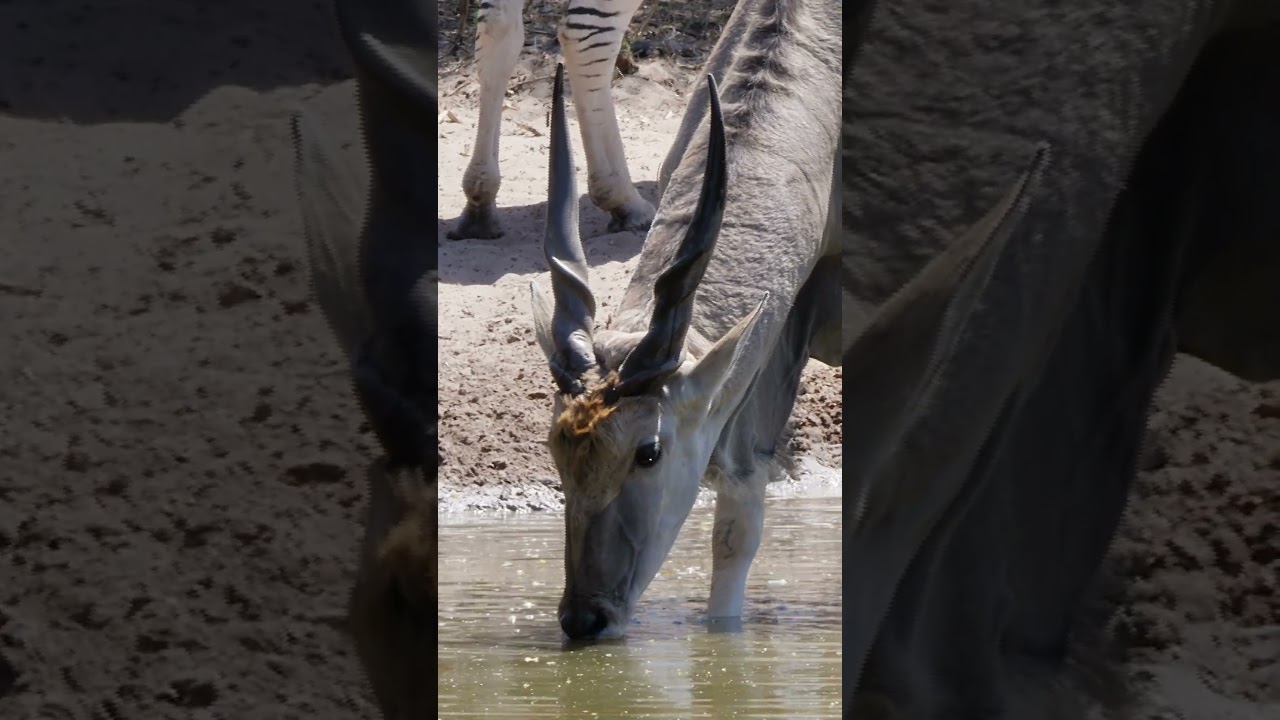
Common Eland (Taurotragus oryx) antelopes drink by lowering their heads directly into water sources and using their tongues to draw water into their mouths. This behavior is crucial for hydration, especially in arid environments where they may consume large volumes of water when available, sometimes up to 20-30 liters in a single session.
Key Field Takeaways
- Taxonomic Classification: Family Bovidae, Genus Taurotragus, Species Taurotragus oryx.
- Primary Behavioral Adaptation: Efficient water consumption, capable of drinking up to 20-30 liters in a single session, and can derive moisture from diet.
- Ecological Niche & Range: Widely distributed across eastern and southern African savannas, woodlands, and grasslands.
- Conservation & Field Status: IUCN Red List status is “Least Concern,” with stable populations across much of its range.
| Characteristic | Details |
|---|---|
| Binomial Nomenclature | Taurotragus oryx |
| Common Names | Common Eland, Eland Antelope |
| IUCN Conservation Status | Least Concern |
| Primary Diet & Foraging | Herbivorous browser and grazer, consuming leaves, grasses, fruits, and bulbs. |
| Natural Habitat & Range | Savannas, woodlands, grasslands, and semi-arid regions of East and Southern Africa. |
| Key Adaptation | Ability to derive significant moisture from diet, reducing reliance on open water sources. |
Eland drinking mechanics and waterhole vigilance
The video footage meticulously captures a male Common Eland (Taurotragus oryx) engaging in essential drinking behavior at a shallow waterhole. The animal lowers its head with deliberate precision, submerging its muzzle and mouth deep into the water. This posture allows for efficient water intake, a critical activity in environments where water sources can be scarce or ephemeral.
While drinking, the Eland’s ears exhibit subtle but continuous movement, swiveling slightly to monitor its surroundings. This demonstrates inherent vigilance, a common trait among large herbivores at waterholes where they are vulnerable to predators. The presence of another animal’s striped legs, likely a zebra, in the background further suggests a shared water source, necessitating heightened awareness.
Morphological adaptations for survival
The Eland’s physical characteristics are finely tuned for its African savanna habitat. Its most striking features are the large, spiraled horns, which are present in both sexes but are typically more robust and longer in males, reaching up to 123 centimeters. These horns are used for defense against predators like lions and hyenas, as well as for sparring during dominance displays among males.
A distinctive anatomical feature is the prominent dewlap, a large fold of skin hanging from the throat. This dewlap is believed to play a role in thermoregulation by increasing the surface area for heat dissipation, helping the Eland stay cool in hot climates. It may also serve as a visual signal in social contexts, indicating age or dominance.
Coat coloration and body mass
The Eland’s coat is a uniform grayish-tan, providing effective camouflage against the dry grasses and sandy soils of its habitat. This coloration helps it blend into its environment, reducing its visibility to predators. The species is the second-largest antelope, with males weighing between 400 and 1,000 kilograms and standing up to 1.8 meters at the shoulder. This substantial body mass provides significant energy reserves and acts as a deterrent to many potential predators.
Habitat, diet, and ecological role
The Common Eland is widely distributed across a mosaic of habitats in eastern and southern Africa, including savannas, woodlands, and open grasslands. These environments often experience pronounced dry seasons, making reliable water sources crucial for survival. Elands are highly adaptable, capable of both browsing on leaves and shoots and grazing on grasses, a dietary flexibility that allows them to thrive in varied vegetation zones.
During dry periods, Elands exhibit a remarkable ability to extract moisture from succulent plants, such as wild melons and certain roots, significantly reducing their dependency on open water. This adaptation allows them to range further from permanent waterholes than many other large herbivores. However, when water is available, they will drink readily and consume large quantities.
Waterhole dynamics and interspecies interaction
Waterholes serve as vital hubs for a diverse array of wildlife, especially during dry seasons. The video’s depiction of an Eland drinking alongside a zebra highlights the communal nature of these resources. While sharing water sources, species like the Eland and zebra maintain a degree of vigilance, constantly scanning for threats. This shared risk-assessment behavior is a common strategy among herbivores at vulnerable points in the landscape, similar to the Impala drinking mechanics and waterhole vigilance observed in other antelope species.
Conservation status and threats
The Common Eland is currently classified as “Least Concern” by the IUCN Red List, indicating a relatively stable and widespread population. This favorable status is largely due to its broad geographical distribution and its adaptability to various habitats, including some modified by human activity. However, local populations can face specific pressures.
Key threats include habitat loss and fragmentation due to agricultural expansion and human settlement. While less prone to direct poaching than some other large African mammals, Elands are still hunted for their meat and hides in certain regions. Effective conservation strategies involve the establishment and management of protected areas, anti-poaching initiatives, and community-based conservation programs that promote sustainable coexistence with wildlife. Understanding specific behaviors like drinking and foraging, much like analyzing leaf-cutter ant foraging, provides insights into species’ ecological needs and informs conservation efforts.
How do Eland antelopes drink water?
Eland antelopes drink by lowering their heads and muzzles directly into water sources. They use their strong tongues to lap up water, often submerging their mouths to efficiently consume large volumes in short periods.
What is the purpose of an Eland’s dewlap?
The prominent dewlap, or fold of skin, on an Eland’s throat serves multiple biological functions. It aids in thermoregulation by increasing surface area for heat dissipation and can also be a visual display during social interactions or courtship.
Where do Eland antelopes typically find water?
Eland antelopes typically find water at natural waterholes, rivers, and temporary pools that form after rainfall in their savanna, woodland, and grassland habitats. They are also adept at obtaining moisture from succulent vegetation.
How long can an Eland go without water?
Common Elands possess remarkable adaptations allowing them to survive extended periods without direct access to water. They can extract sufficient moisture from their diet of leaves, grasses, and fruits, enabling them to endure several days or even weeks without drinking, particularly when succulent plants are abundant.