
Direct answer summary
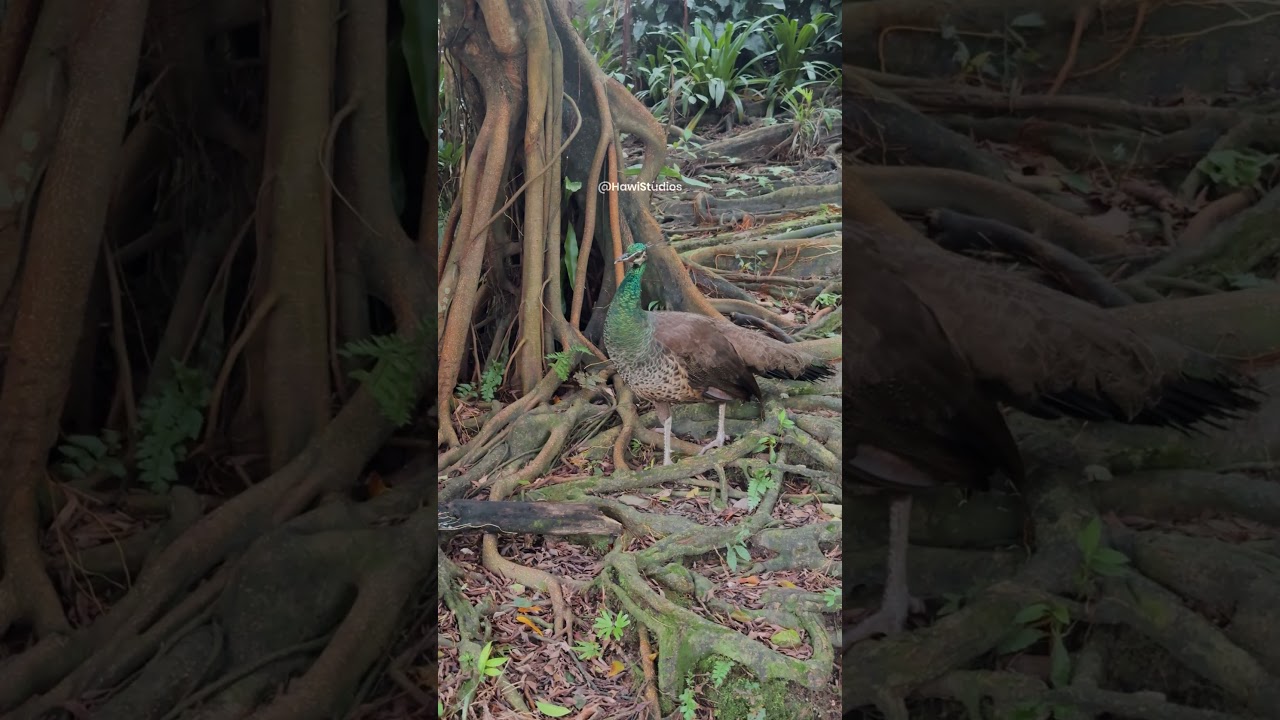
The Indian Peafowl (Pavo cristatus) is a large, ground-dwelling bird native to South Asia, primarily inhabiting tropical and subtropical dry deciduous forests. The female, or peahen, exhibits a cryptic brown plumage with a metallic green neck, providing crucial camouflage for nesting.
Key Field Takeaways
- Taxonomic Classification: The Indian Peafowl belongs to the family Phasianidae, order Galliformes.
- Primary Behavioral Adaptation: Peahens demonstrate vigilant ground-dwelling behavior, relying on mottled brown and grey plumage for camouflage against predators.
- Ecological Niche & Range: This species thrives in tropical dry deciduous forests, cultivated lands, and scrub jungles across the Indian subcontinent, typically at elevations below 1,800 meters.
- Conservation & Field Status: The IUCN Red List classifies Pavo cristatus as a species of Least Concern, indicating a stable and widespread population.
| Characteristic | Detail |
|---|---|
| Binomial Nomenclature | Pavo cristatus |
| Common Names | Indian Peafowl, Blue Peafowl |
| IUCN Conservation Status | Least Concern |
| Primary Diet & Foraging | Omnivorous (grains, seeds, fruits, insects, small reptiles, amphibians) |
| Natural Habitat | Tropical dry deciduous forests, cultivated areas, scrub jungles |
| Key Adaptation | Sexual dimorphism in plumage, peahens use cryptic coloration for nesting camouflage |
Observational analysis of peahen posture and environment
The video footage captures an Indian Peafowl, specifically a peahen, standing with remarkable stillness amidst the complex root system of a large tree. This static posture, observed across multiple frames, suggests a state of vigilance rather than active foraging. The peahen’s head is held erect, with a slight upward tilt, indicating an awareness of its surroundings.
Its body orientation remains largely unchanged, but subtle head movements are visible, scanning the immediate area. This behavior is characteristic of ground-dwelling birds in potentially exposed environments, where detecting predators or disturbances is paramount. The dense network of roots and leaf litter provides a natural backdrop, against which the peahen’s plumage offers effective camouflage.
Ground-dwelling behavior and sensory perception
As a predominantly ground-dwelling species, the Indian Peafowl relies on its terrestrial mobility and acute sensory perception. The peahen’s strong legs and feet, visible in the footage, are adapted for walking, running, and scratching for food on the forest floor. Its eyes, positioned laterally on its head, provide a wide field of view, crucial for detecting movement from various angles.
The bird’s upright posture maximizes its visual range over the uneven terrain of roots and foliage. While no direct foraging is observed, the peahen’s presence on the forest floor, rich with organic matter, aligns with its omnivorous diet. Foraging strategies of similar ground-dwelling birds often involve methodical searching and scratching, as seen in the Thick-billed Green-Pigeon’s feeding behavior.
Morphological and anatomical adaptations
The peahen in the video displays key morphological features adapted to its ecological role. Its head and neck exhibit a striking metallic green-blue iridescence, contrasting with the more subdued brown and grey patterning of its body. This coloration, while less flamboyant than the male peacock’s, still provides a degree of visual signaling while maintaining camouflage for the majority of its body.
A small, tufted crest adorns the peahen’s head, composed of short, bare shafts tipped with fan-like feathers. This crest is present in both sexes but is typically smaller in females. The white patches above and below the eye are also distinct, framing its dark eye and potentially enhancing its visual acuity in varying light conditions.
Plumage and sexual dimorphism
The peahen’s body plumage is a mosaic of mottled brown, grey, and dull green feathers, particularly on its back and wings. This cryptic coloration is a critical adaptation for a ground-nesting bird, allowing it to blend seamlessly with the leaf litter and undergrowth of its habitat. The absence of the male’s elongated, iridescent tail train is the most significant expression of sexual dimorphism in this species.
This difference in plumage directly relates to reproductive strategies. The peacock’s elaborate train is a display for mate attraction, while the peahen’s more camouflaged appearance is essential for incubation and chick protection. The peahen’s shorter tail feathers, while still providing balance, do not hinder movement through dense vegetation.
Habitat range and terrestrial ecology
The Indian Peafowl is indigenous to the Indian subcontinent, thriving across a diverse range of habitats. These include tropical dry deciduous forests, cultivated agricultural lands, and scrub jungles. The presence of large tree roots and dense undergrowth in the video aligns perfectly with its preferred forest floor environment, where it finds both food and shelter.
These birds are typically found at elevations ranging from sea level up to approximately 1,800 meters. Their adaptability allows them to persist in areas with human habitation, often frequenting village outskirts and cultivated fields where food sources are abundant. The robust root systems provide elevated perches for roosting and vantage points for scanning, while the ground offers foraging opportunities.
Foraging strategy and dietary flexibility
The Indian Peafowl’s foraging strategy is primarily terrestrial. It walks slowly, pecking at the ground to consume a wide variety of food items. Its omnivorous diet includes grains, seeds, fruits, berries, and various invertebrates such as insects, worms, and even small vertebrates like lizards and snakes. This dietary flexibility allows the species to exploit diverse food resources across its range.
The peahen’s robust beak is well-suited for cracking seeds and manipulating small prey. Its strong leg muscles enable it to scratch through leaf litter and soil, uncovering hidden food sources. This generalist feeding behavior contributes significantly to its ecological success and widespread distribution, similar to the adaptable foraging patterns observed in the Eurasian red squirrel.
Interspecies relationships and evolutionary significance
In its natural habitat, the Indian Peafowl interacts with a variety of other species, both as a prey item and as a consumer. Large predators such as leopards, tigers, and dholes target peafowl, particularly during nesting periods when peahens are more vulnerable. The peahen’s cryptic plumage and vigilant behavior are direct evolutionary responses to these predatory pressures.
Their loud calls, especially the distinctive ‘may-awe’ sound, serve as an alarm signal for other forest inhabitants, indicating the presence of predators. This makes them a keystone species in terms of providing early warning for other animals. Their consumption of insects and small reptiles also helps regulate local invertebrate and small vertebrate populations within their ecosystem.
Social structure and reproductive dynamics
Indian Peafowl typically live in small groups, though males are largely solitary outside the breeding season. During breeding, peacocks establish territories and display their elaborate trains to attract peahens. Peahens, after mating, are solely responsible for nest building, incubation, and rearing the young.
The peahen’s choice of a secluded, camouflaged nesting site, often among dense roots or under thick bushes, is critical for clutch survival. A typical clutch consists of 3 to 6 eggs, incubated for approximately 28 to 30 days. The peahen’s protective instincts are strong, and she will fiercely defend her chicks from potential threats.
Conservation status and ecosystem threats
The Indian Peafowl is classified as Least Concern by the International Union for Conservation of Nature (IUCN) Red List. This favorable status reflects its wide distribution, large population, and ability to adapt to modified landscapes. In India, it holds significant cultural and religious importance, often leading to its protection in many areas.
Despite its stable status, localized threats persist. Habitat degradation due to deforestation and agricultural expansion can fragment populations. Pesticide use in farming areas can also impact their health and reproductive success. However, its adaptability to human-modified environments, including gardens and parks, has largely mitigated these pressures on a broader scale.
Ecological role and human interaction
As an omnivore, the Indian Peafowl plays a role in seed dispersal and insect control within its ecosystem. Its foraging activities can influence plant regeneration and invertebrate populations. Human interaction with this species is generally positive, with many communities appreciating its presence and beauty.
However, occasional conflicts arise, particularly when peafowl forage in agricultural fields, potentially damaging crops. Conservation efforts focus on managing these human-wildlife interfaces to ensure coexistence. Public awareness and cultural reverence continue to be significant factors in the ongoing protection of the Indian Peafowl across its native range.
What is the primary diet of the Indian Peafowl?
The Indian Peafowl is an omnivorous ground-feeder. Its diet primarily consists of grains, seeds, fruits, insects, small reptiles, and amphibians, foraging opportunistically on the forest floor.
How does the peahen’s plumage differ from the peacock’s?
The peahen’s plumage is generally duller and lacks the male’s elaborate, iridescent tail train. Her brown and grey body feathers, combined with a metallic green neck, provide camouflage essential for nesting and protecting young in dense undergrowth.
What is the conservation status of the Indian Peafowl?
The Indian Peafowl is classified as Least Concern by the IUCN Red List. Its population is stable and widespread across its native range, benefiting from its adaptability to various habitats and cultural protection in some regions.
Where do Indian Peafowl typically build their nests?
Indian Peafowl typically build their nests on the ground, often in a shallow scrape concealed beneath dense bushes, thickets, or other protective vegetation. This ground-nesting strategy relies on the peahen’s camouflage for protection.