
Direct answer summary
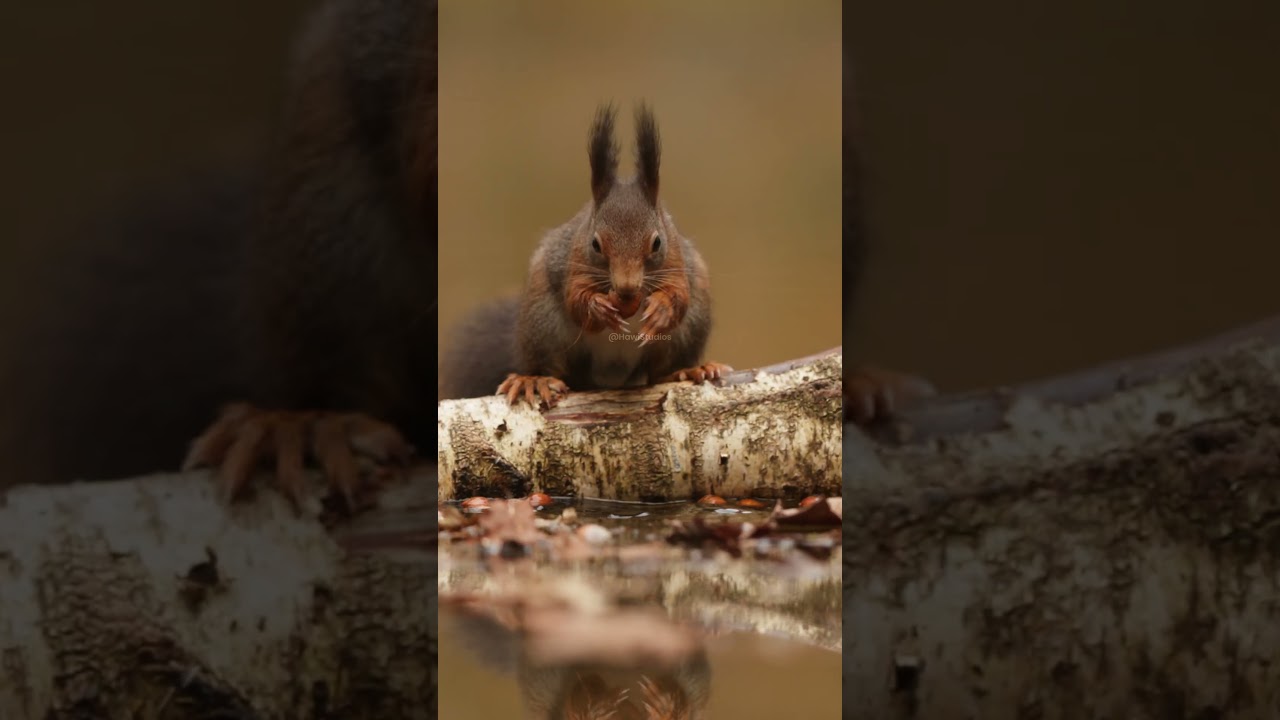
The Eurasian red squirrel (Sciurus vulgaris) is a diurnal arboreal rodent that maintains hydration by lapping water from surface sources. These animals utilize elevated perches to monitor their surroundings for threats while engaging in essential metabolic maintenance behaviors like drinking.
Key Field Takeaways
- Taxonomic Classification: Family Sciuridae, Genus Sciurus, Species Sciurus vulgaris.
- Primary Behavioral Adaptation: High-precision motor control for balancing on narrow surfaces like logs during feeding or drinking.
- Ecological Niche & Range: Primarily coniferous and deciduous forests across Eurasia, occupying a crucial role in seed dispersal.
- Conservation & Field Status: Classified as Least Concern by the IUCN, though populations face habitat fragmentation and competition from invasive species.
| Feature | Specification |
|---|---|
| Scientific Name | Sciurus vulgaris |
| Common Name | Eurasian red squirrel |
| Conservation Status | Least Concern |
| Primary Diet | Seeds, nuts, fungi, berries |
| Habitat | Forests (Coniferous/Deciduous) |
| Key Adaptation | Continuously growing incisors |
Biological mechanics of hydration
The Eurasian red squirrel exhibits specific postural adaptations when accessing water. By positioning itself on a horizontal substrate like a birch log, the animal distributes its weight across its forelimbs and hindlimbs to maintain stability. This behavior minimizes exposure to potential ground-level predators while allowing the squirrel to reach the water surface with its muzzle.
Sensory integration during feeding
During the drinking process, the Eurasian red squirrel maintains a high state of vigilance. Its large, dark eyes are positioned laterally on the skull, providing a wide field of view to detect movement. This sensory capacity is essential for survival in environments where rapid escape into the canopy is the primary defense mechanism, similar to the survival strategies observed in the Eurasian lynx hunting posture.
Morphological and anatomical adaptations
The Eurasian red squirrel displays specialized morphological traits suited for an arboreal lifestyle. Its sharp, curved claws provide the necessary grip for navigating vertical tree trunks and thin branches. These physical tools are complemented by a bushy tail, which is a critical counterbalance during high-speed movement through the forest canopy.
Dentition and foraging apparatus
The dental structure of the Eurasian red squirrel is highly specialized for a diet of hard-shelled seeds. The incisors are enamel-coated and grow throughout the animal’s life, preventing damage from the abrasive nature of nuts and bark. This mechanical efficiency in processing food is a hallmark of the order Rodentia, allowing these animals to exploit nutrient-dense food sources that are inaccessible to many other small mammals.
Habitat and ecological role
The Eurasian red squirrel thrives in diverse forest ecosystems, ranging from boreal coniferous forests to temperate broadleaf woodlands. They play a vital role in forest regeneration by caching seeds, many of which remain uneaten and germinate. This behavior makes them an essential component of the ecosystem, much like the roles observed in various avian and mammalian studies of American black bear feeding and seed dispersal dynamics.