
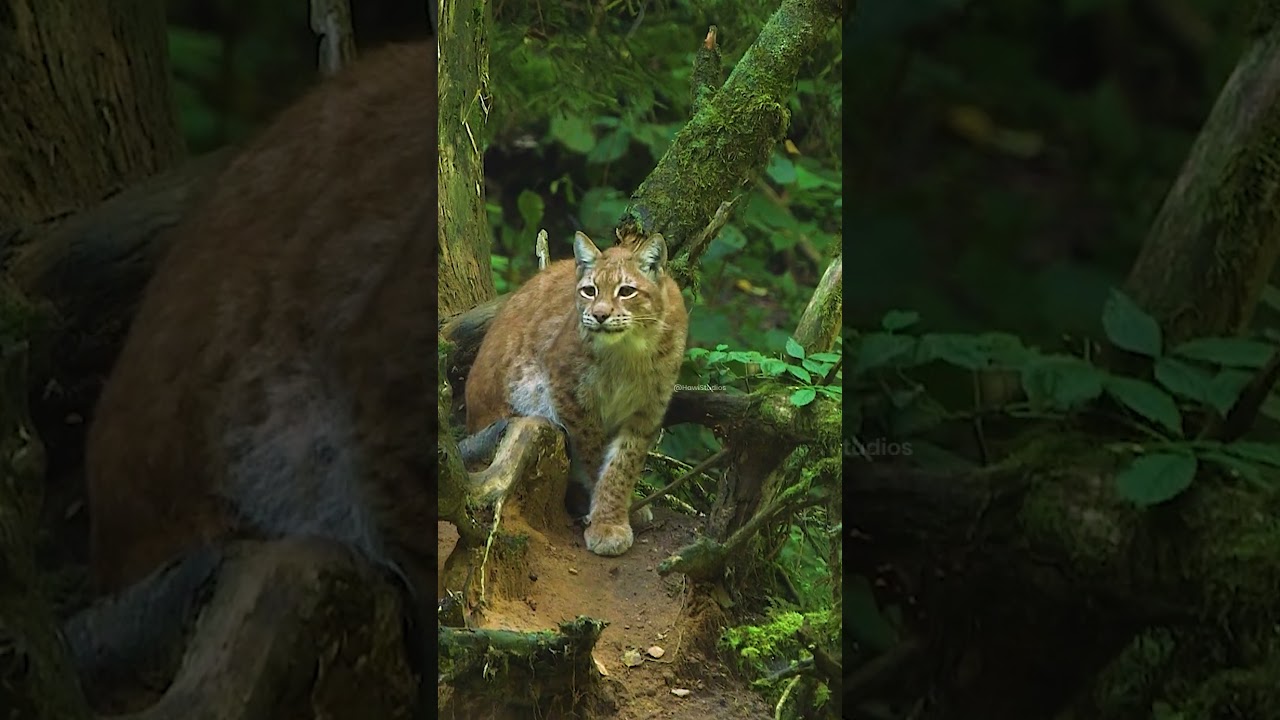
Direct answer summary
Eurasian lynx hunting posture features a lowered thorax, flexed tarsal joints, and forward-oriented cervical extension that compresses muscular tension into the hindquarters. This biomechanical crouch optimizes kinetic energy storage, allows silent weight shifts across soft substrates, and maximizes forward propulsion during ambush strikes.
Key Field Takeaways
- Taxonomic Classification: Class Mammalia, Order Carnivora, Family Felidae, Lynx lynx.
- Primary Behavioral Adaptation: Low-frequency crouching mechanics with static weight distribution over flexible plantar surfaces for silent stalking.
- Ecological Niche & Range: Apex or mesopredator in boreal and temperate mixed forests across Europe, Siberia, and Central Asia.
- Conservation Status: Classified as Least Concern by the IUCN overall, though isolated European subpopulations remain Endangered.
| Parameter | Biological Metric / Classification |
|---|---|
| Binomial Nomenclature | Lynx lynx |
| Common Name | Eurasian lynx |
| IUCN Conservation Status | Least Concern (global population) |
| Primary Diet | Ungulates (roe deer, chamois) and small mammals (hares) |
| Natural Habitat | Boreal coniferous forests, montane woodlands, temperate mixed forests |
| Key Anatomical Adaptation | Oversized snowshoe-like paws with retractable claws and auditory ear tufts |
What is the function of black ear tufts on a lynx?
The black hair tufts on the ear tips act like acoustic funnels that direct precise high-frequency sound waves down into the auditory canal. They also aid in visual communication and species recognition among solitary individuals.
How far can a Eurasian lynx jump during an attack?
A healthy adult Eurasian lynx can leap horizontal distances of 3 to 5 meters in a single explosive leap from a stationary crouch, powered by its elongated hind limbs.
What primary prey does the Eurasian lynx target in temperate forests?
In temperate and boreal forests across Europe and Asia, the Eurasian lynx feeds primarily on small ungulates such as roe deer and chamois, supplemented by hares and rodents.