
Direct answer summary
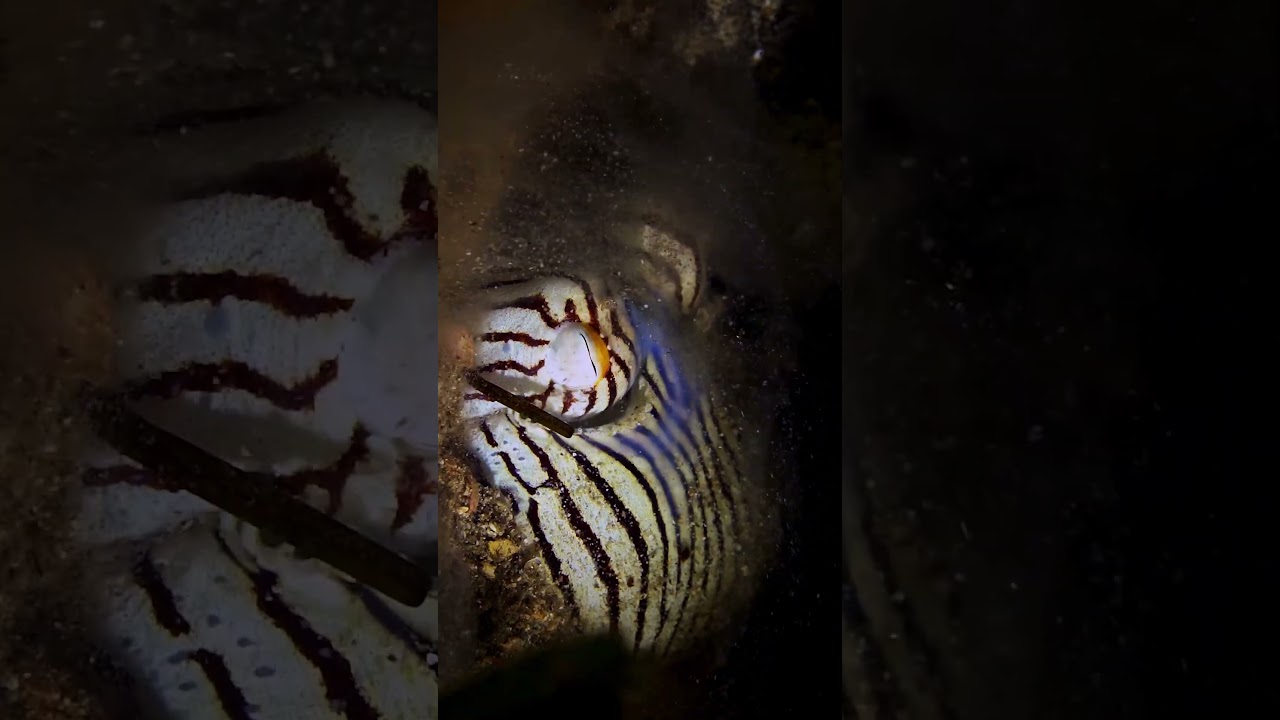
The Zebra Squid (Sepioteuthis lessoniana) performs sand-burrowing behavior to achieve cryptic concealment from predators and potential prey. By utilizing its muscular mantle to displace sediment, the squid creates a protective depression, effectively masking its body and leaving only its sensory organs exposed to the surrounding water column.
Key Field Takeaways
- Taxonomic Classification: Family Loliginidae, Genus Sepioteuthis, Species Sepioteuthis lessoniana.
- Primary Behavioral Adaptation: Mantle-driven substrate displacement allows for rapid burial in loose sand or silt.
- Ecological Niche: Benthic and epipelagic zones of shallow tropical and temperate reefs.
- Morphological Feature: High-contrast striped patterning serves as disruptive coloration for camouflage.
| Feature | Specification |
|---|---|
| Scientific Name | Sepioteuthis lessoniana |
| Common Name | Zebra Squid / Bigfin Reef Squid |
| IUCN Status | Not Evaluated |
| Primary Diet | Small fish, crustaceans |
| Habitat | Coastal reefs, seagrass beds |
| Key Adaptation | Rapid chromatophore-based color change |
Biological mechanics of sand burrowing
The burrowing action observed in Sepioteuthis lessoniana is a specialized motor pattern involving the coordinated contraction of the mantle musculature. By forcing water through the siphon and undulating the lateral fins, the squid displaces fine sediment particles, creating a hollow in the substrate. This behavior is distinct from the octopus ink defense, as it relies on physical concealment rather than chemical distraction.
Once the depression is formed, the squid settles into the cavity. It then uses its arms and tentacles to pull surrounding sand over its dorsal surface. The process is highly efficient, often completed within seconds, minimizing the duration the animal remains exposed to potential threats during the transition from the water column to the benthos.
Morphological adaptations for benthic life
The Sepioteuthis lessoniana exhibits a flattened, elongated body shape that is highly conducive to resting on the seafloor. Its mantle is lined with complex chromatophores, which are specialized cells that expand and contract to alter the squid’s visual appearance. This allows the animal to match the texture and color of the sand or coral rubble.
The eyes of the Zebra Squid are large and highly developed, providing acute vision even in low-light conditions. When buried, the squid positions its eyes just above the sand line. This placement allows for a wide field of view, enabling the animal to monitor for approaching predators or small prey species while remaining largely invisible.
Ecological role and habitat dynamics
As a predator in shallow coastal ecosystems, the Zebra Squid occupies a position that links planktonic and benthic food webs. They are highly mobile and frequently move between open water and the seafloor to forage. Unlike species that rely on constant motion, their ability to remain stationary in the substrate provides a unique advantage in ambush predation.
The presence of Sepioteuthis lessoniana is often tied to the health of local seagrass beds and coral reef structures. These environments offer the necessary substrate for burrowing and provide abundant cover. For further insight into specialized feeding strategies, see our analysis on black frogfish biology and their respective ambush techniques.