
Direct answer summary
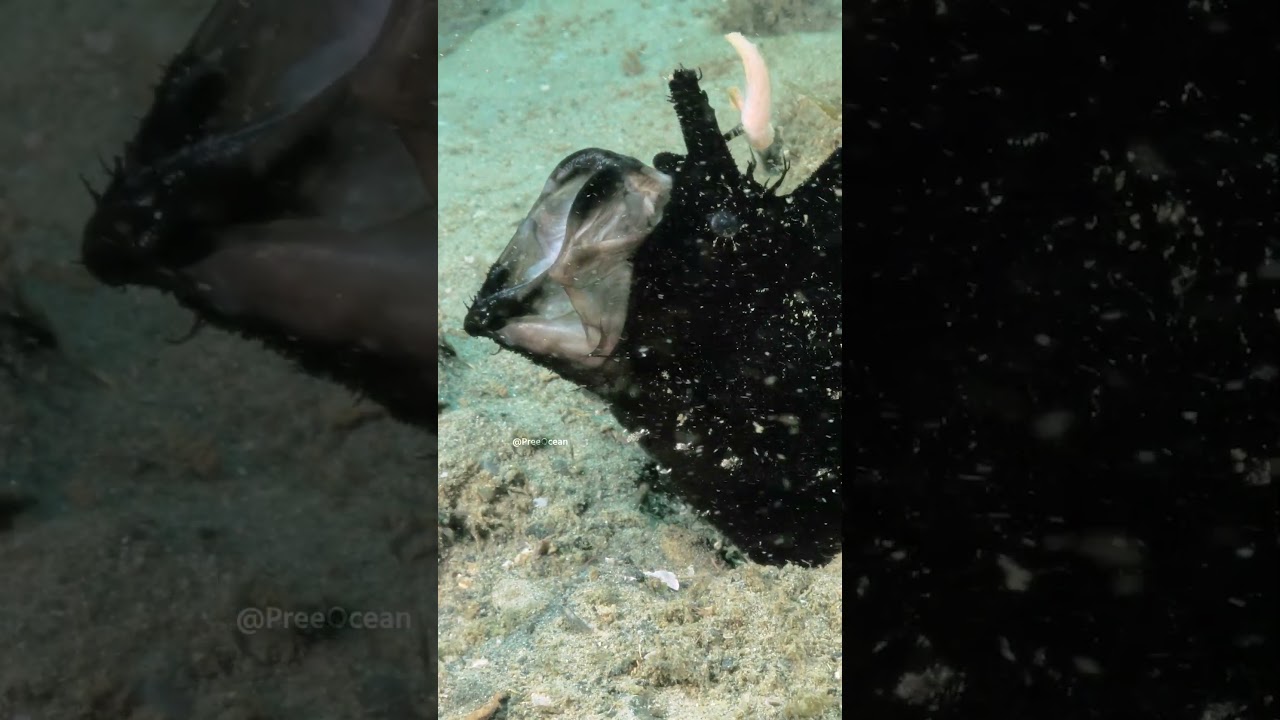
The black frogfish (Antennarius commerson) is a highly specialized ambush predator that employs a combination of crypsis and rapid suction feeding to secure prey. This species uses a modified dorsal spine as an esca to lure victims within striking distance of its expansive jaws.
Key Field Takeaways
- Taxonomic Classification: Family Antennariidae, Order Lophiiformes, Class Actinopterygii.
- Primary Behavioral Adaptation: Rapid suction feeding, reaching peak mouth expansion in under 6 milliseconds.
- Ecological Niche: Benthic predator found in tropical and subtropical marine environments, typically at depths of 0 to 70 meters.
- Morphological Specialization: Highly textured, camouflage-capable skin that mimics sponges, rocks, or coral debris.
| Feature | Specification |
|---|---|
| Scientific Name | Antennarius commerson |
| Common Name | Black frogfish |
| Diet | Small fish and crustaceans |
| Habitat | Coral reefs and rubble zones |
| Key Adaptation | Modified dorsal fin lure (esca) |
Biological mechanics of the black frogfish
The black frogfish exhibits remarkable behavioral adaptations for life on the benthos. Its movement is typically slow, using modified pectoral fins that function like limbs to crawl across the substrate. This lethargic movement conserves energy, which is essential for an animal that relies entirely on ambush tactics rather than active pursuit.
Ambush predation and suction feeding
When prey enters the strike zone, the black frogfish initiates a strike that is among the fastest in the teleost world. By rapidly expanding its buccal cavity, the fish creates a powerful negative pressure gradient. This suction force pulls water and the intended prey into the mouth before the target can react to the movement.
Morphological and anatomical adaptations
The external morphology of the black frogfish is a primary tool for survival. Its skin is covered in irregular appendages and filaments that break up its outline, providing near-perfect crypsis against the reef environment. This allows the fish to remain hidden in plain sight, often positioned near sponges or rock formations.
The role of the esca
The most iconic feature of the black frogfish is the illicium and esca, a modified dorsal fin spine complex. The esca is a biological fishing lure, which the fish manipulates with rhythmic movements. By mimicking the motion of a small organism, the fish draws unsuspecting prey directly into the strike zone of its jaws.
Habitat dynamics and ecological role
These fish occupy diverse marine habitats, ranging from shallow tide pools to deeper reef slopes. They are highly sedentary, often remaining in a small home range for extended periods. Their presence is a testament to the success of specialized niche occupation in complex reef ecosystems, similar to how other predators rely on specific flamboyant cuttlefish sensory adaptations to navigate their surroundings. As apex predators within their micro-habitat, they help regulate populations of smaller reef-dwelling organisms.