
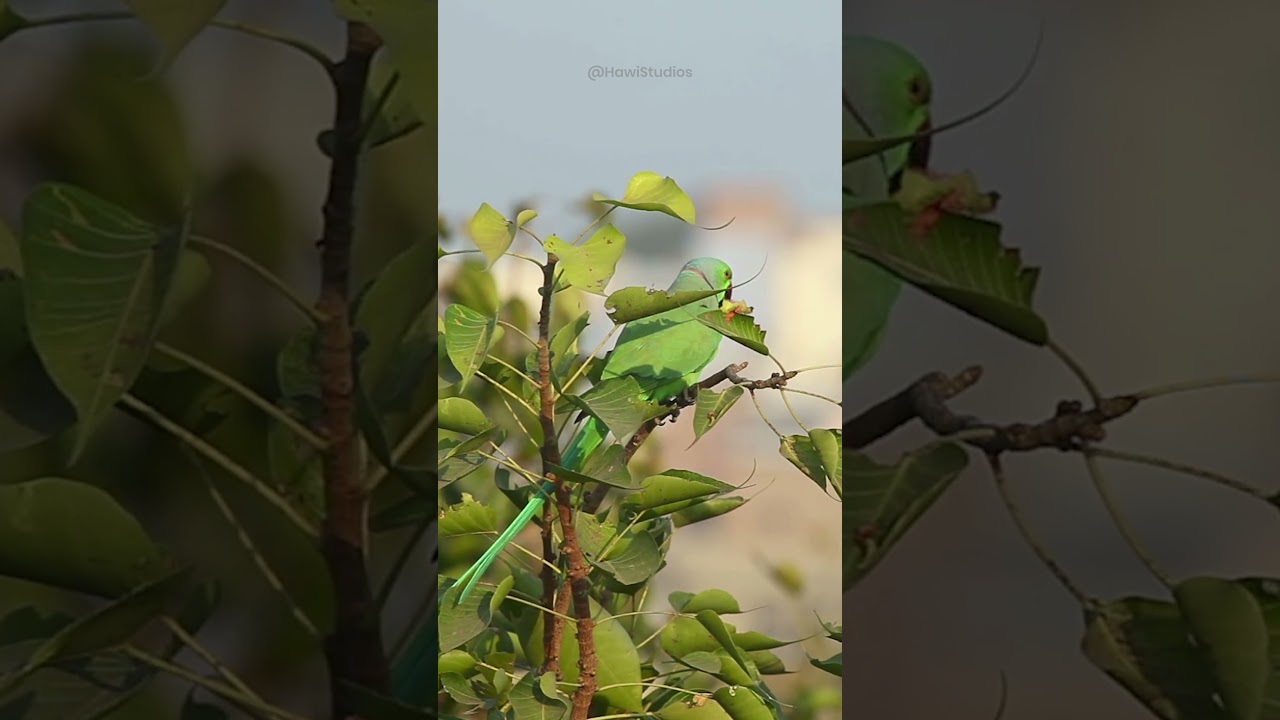
Direct answer summary
Rose-ringed Parakeets (Psittacula krameri) utilize dexterous zygodactyl feet combined with a hooked, heavy upper mandible to extract seeds and fruits. By anchoring to slender branches with one foot while lifting food directly to the bill with the other, this species optimizes energetic efficiency during arboreal foraging.
Key Field Takeaways
- Taxonomic Classification: Order Psittaciformes, Family Psittaculidae, Genus Psittacula, Species P. Krameri.
- Primary Behavioral Adaptation: Zygodactyl foot arrangement (toes two and three forward, toes one and four rearward) allowing precise single-foot item handling.
- Ecological Niche & Range: Native across sub-Saharan Africa and South Asia, with invasive feral populations thriving in temperate European urban centers.
- Conservation & Field Status: Categorized as Least Concern on the IUCN Red List due to high behavioral adaptability and expanding global numbers.
| Biological Characteristic | Field Specification / Measurement |
|---|---|
| Binomial Scientific Name | Psittacula krameri |
| Common Name | Rose-ringed Parakeet (Ring-necked Parakeet) |
| IUCN Red List Status | Least Concern (Population Trend: Increasing) |
| Average Adult Body Mass | 100 to 140 grams |
| Total Body Length (with Tail) | 38 to 42 centimeters |
| Primary Foraging Diet | Seeds, cereal grains, wild fruits, flower buds, tree nuts |
| Structural Foot Type | Zygodactyl (2 toes forward, 2 toes rearward) |
Foraging mechanics and dexterous foot manipulation
The field footage demonstrates the precise arboreal feeding behavior of the Rose-ringed Parakeet (Psittacula krameri). Positioned firmly on a swaying branch, the parakeet coordinates its balance and dexterity to process plant material. This parrot relies on specialized leg musculature and foot morphology to harvest vegetation from outer tree canopies where food density is highest.
Zygodactyl foot structure and perching stability
Unlike passerine songbirds with anisodactyl feet (three toes forward, one back), Psittacula krameri features a zygodactyl foot arrangement. Digits two and three project forward, while digits one and four point backward. This symmetrical digit configuration delivers exceptional grip torque, allowing the parakeet to clamp onto thin twigs while freeing its opposing foot to act as a grasping appendage.
During the observed feeding sequence, the parakeet shifts its entire body weight onto its left foot. The flexor tendons in the lower tarsometatarsus automatically contract, locking the digits around the branch. The right foot then converts into a manipulation claw, lifting a fruit pod directly to the lower mandible. Similar pedal dexterity during feeding can be observed in studies on Thick-billed Green-Pigeon feeding behavior in tropical canopy ecosystems.
Mandibular force and food processing
The beak of Psittacula krameri is a highly specialized crushing mechanism. The upper mandible is deeply curved and articulates with the skull via a flexible kinetic joint called the nasal-frontal hinge. This cranial kinesis grants elevated gape angles and leverage, generating high mechanical forces at the tip of the bill.
The sharp edge of the lower mandible works against the ridged interior surface of the upper bill, acting as a shearing force to husk tough seed coats and peel protective skins. As seen in the footage, the parakeet takes small, controlled bites, using its muscular tongue to maneuver food particles against the upper bill palate before swallowing.
Anatomical features and sexual dimorphism
The Rose-ringed Parakeet exhibits clear physical traits refined for life in dense foliage. Its bright lime-green plumage provides protective camouflage within tree canopies, reducing detectability by raptors such as accipiters and falcons. Understanding these external structures helps explain how the species thrives across diverse biomes.
Plumage pigmentation and structural coloration
The vivid green visual presentation of Psittacula krameri results from a combination of chemical pigments and structural light scattering. Psittacofulvin pigments embedded within the feather keratin produce yellow hues, while microscopic spongy structures inside the feather barb scatter blue light through Tyndall scattering. Combined, these mechanisms create the bright emerald coloration across the back, wings, and head.
Adult specimens show distinct tail morphology, featuring elongated central rectrices that measure up to 20 centimeters in length. These extended tail feathers act as dynamic counterweights during sharp flight turns and assist in maintaining balance on thin branches during feeding sessions.
Sensory coordination and sexual dimorphism
Adult males display prominent sexual dimorphism characterized by a dark neck collar. A black stripe wraps around the chin and joins a soft rose-pink band running around the back of the neck. Females and subadult individuals lack this dark neck ring, exhibiting either a uniform pale lime collar or no visible band at all.
The eyes of the Rose-ringed Parakeet feature a pale yellow iris surrounded by a thin bare orbital ring. Visual acuity in this species is exceptionally high, supported by a dense concentration of retinal cones sensitive to ultraviolet wavelengths. This specialized vision allows the bird to evaluate seed ripeness and detect hidden fruits among leafy foliage.
Ecological range and urban adaptation
The evolutionary background of Psittacula krameri spans two main continent-scale populations across tropical regions. Over recent decades, however, human transport and urban colonization have expanded its geographic footprint into temperate cities far beyond its historical distribution.
Native habitats across Afro-Asian biomes
The native distribution of Psittacula krameri comprises two core geographic subspecies groups:
- African Subspecies Group: Distributed in a wide east-west band across sub-Saharan Africa from Senegal to Ethiopia, occupying dry savannas and open woodlands.
- Asian Subspecies Group: Native to India, Pakistan, Nepal, and Myanmar, inhabiting dry deciduous forests, cultivated agricultural lands, and riverine forest belts.
In these native environments, the birds nest inside natural tree hollows or abandoned cavities carved out by woodpeckers and barbets. Their generalist diet allows them to switch between seasonal seeds, wild figs, and agricultural crops as food availability shifts throughout the year.
Global naturalization and urban cavity nesting
Few avian species match the invasive capacity of the Rose-ringed Parakeet. Feral populations are now fully established in major European cities, including London, Brussels, Paris, and Rome, as well as parts of North America and Japan. These northern colonies survive harsh winters by exploiting artificial bird feeders, urban parks, and mature ornamental trees that offer reliable roosting sites.
Their thermal tolerance is supported by behavioral adaptations such as communal roosting in dense tree stands or architectural crevices, where hundreds of individuals cluster together to minimize thermal energy loss during cold nights.
Interspecies competition and ecosystem impacts
The presence of Psittacula krameri in non-native habitats produces complex ecological dynamics. Because parakeets are obligate secondary cavity nesters, they compete directly with native wildlife for limited nesting sites in urban parks and ancient woodlands.
Resource competition with native avian species
In European urban parklands, Rose-ringed Parakeets initiate breeding earlier in the spring than native cavity-nesting birds like the Nut-hatch (Sitta europaea) and the Great Spotted Woodpecker (Dendrocopos major). By occupying mature tree hollows early in the season, the parakeets reduce available nesting sites for native species. Comparative behavioral studies regarding arboreal foraging strategies can be seen when evaluating Eurasian red squirrel foraging biology in shared suburban forest spaces.
Additionally, their aggressive communal defenses often drive smaller mammals and songbirds away from rich food patches. Their high foraging efficiency allows them to clear localized seed crops rapidly, altering resource availability for sympatric urban wildlife. Similar rapid canopy harvesting strategies occur in invertebrate communities, such as leaf-cutter ant foraging mechanics in tropical rainforests.
Seed dispersal and agricultural impact
While Rose-ringed Parakeets destroy seeds by crushing them with their powerful mandibular apparatus, they also act as opportunistic seed dispersers for larger fleshy fruits. When carrying fruit away from parent trees to preferred eating perches, birds frequently drop intact seeds along their flight path, facilitating plant recruitment across fragmented urban landscapes.
In agricultural regions of South Asia, large flocks can cause notable yield losses in sunflower, maize, mustard, and orchard fruit crops. Farmers employ various acoustic and physical deterrents to manage flock foraging in rural farming zones.
Frequently Asked Questions
What do Rose-ringed Parakeets eat in the wild?
Rose-ringed Parakeets are granivores and frugivores that feed on seeds, wild nuts, tree buds, berries, blossoms, and cultivated cereal crops. Their varied diet allows them to adapt rapidly to changing food sources across both natural and urban habitats.
How do Rose-ringed Parakeets hold food while eating?
They utilize zygodactyl feet featuring two forward-facing toes and two rear-facing toes. This structural setup enables them to grip branches securely with one foot while using the other foot to lift seeds and fruits directly up to their beak for processing.
Where are Rose-ringed Parakeets naturally native?
The species is native to sub-Saharan Africa and the Indian Subcontinent across dry savannas and open woodlands. However, escaped pet birds have established thriving feral populations in urban areas across Western Europe, North America, and East Asia.
How can you distinguish male and female Rose-ringed Parakeets?
Adult males exhibit a distinct dark chin stripe that loops into a pink band around the back of the neck. Females and juvenile parakeets lack this sharp neck ring or display a subtle, pale lime collar instead.