
Direct answer summary
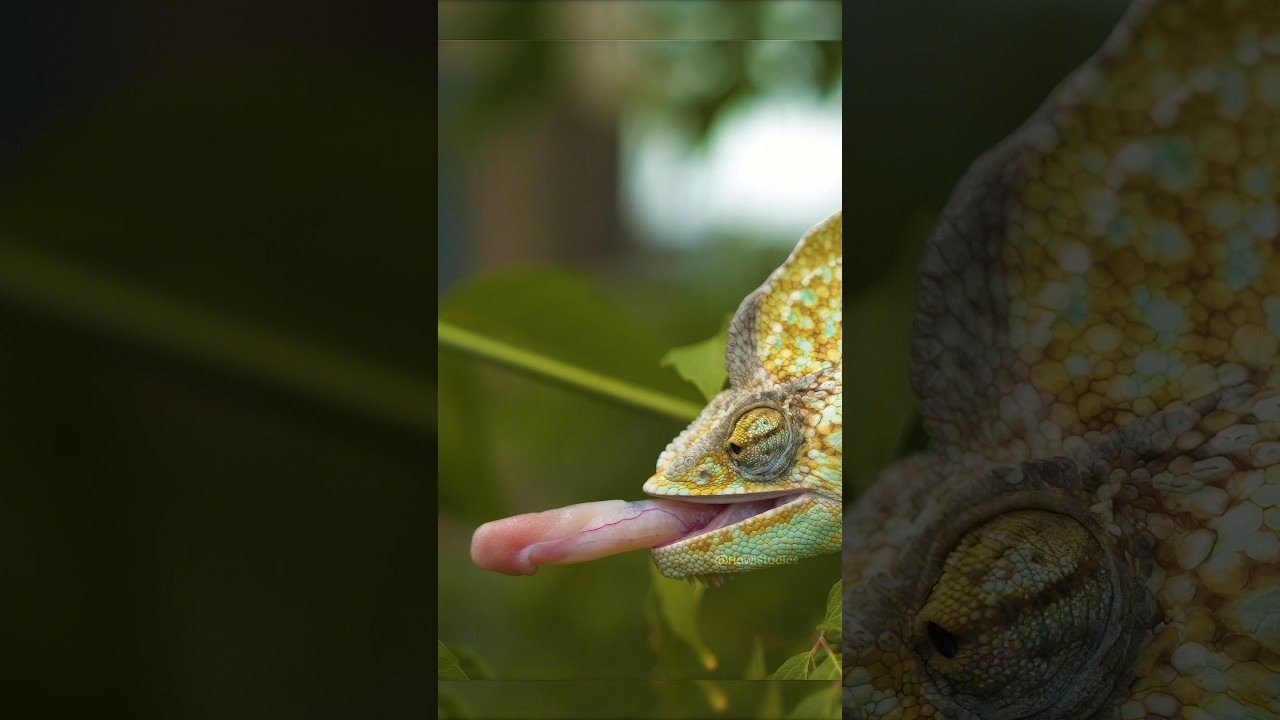
The Veiled Chameleon (Chamaeleo calyptratus) captures prey using a specialized, ballistic tongue projection mechanism. This anatomical adaptation involves the rapid release of stored elastic energy from the hyoid apparatus, allowing the lizard to strike and secure insects with a sticky tongue tip in under 0.1 seconds.
Key Field Takeaways
- Taxonomic Classification: Family Chamaeleonidae, Genus Chamaeleo, Species calyptratus.
- Primary Behavioral Adaptation: Ballistic tongue projection utilizing the hyoid bone and collagenous elastic tissues.
- Ecological Niche & Range: Arboreal habitat in the mountainous and coastal regions of Yemen and Saudi Arabia.
- Conservation & Field Status: Generally stable population, though habitat loss remains a localized threat.
| Feature | Specification |
|---|---|
| Scientific Name | Chamaeleo calyptratus |
| Common Name | Veiled Chameleon |
| Diet | Insectivorous (crickets, locusts, beetles) |
| Habitat | Arboreal, semi-arid, and mountainous |
| Key Adaptation | Ballistic hyoid-driven tongue |
Physical observation of the tongue strike
In the observed footage, the Veiled Chameleon demonstrates the precise mechanics of a high-speed strike. The process begins with the chameleon positioning its head toward the target, followed by the rapid ejection of the tongue. The tongue functions like a whip, with the muscular tip expanding upon contact with the prey.
Anatomical mechanics of the strike
The tongue is supported by a specialized hyoid bone that acts as a launch platform. When the chameleon triggers the strike, the hyoid apparatus accelerates the tongue forward, unfolding it like a telescope. The sheer velocity of this movement is a result of stored elastic energy rather than purely muscular contraction, which would be too slow to capture agile insects.
Morphological and anatomical adaptations
The Veiled Chameleon possesses unique physical traits that facilitate its predatory lifestyle. Beyond the tongue, the lizard features zygodactylous feet, where the toes are fused into two opposing groups. This structure provides a secure grip on branches, allowing the chameleon to stabilize its body during the powerful recoil generated by the tongue strike.
Sensory and visual equipment
The eyes of the Veiled Chameleon operate independently, providing a 360-degree field of view for spotting prey. Once a target is identified, both eyes rotate to focus on the item, allowing for accurate depth perception. This binocular vision is vital for gauging the distance required for a successful tongue strike.
Habitat and ecological niche
Native to the Arabian Peninsula, the Veiled Chameleon thrives in environments ranging from coastal plains to high-altitude mountain slopes. These reptiles are well-adapted to semi-arid conditions and rely on vegetation for both concealment and moisture. Their ability to blend into the foliage through chromatophore-controlled skin color shifts provides an effective defense against predators.
Trophic role in the ecosystem
As an insectivore, the Veiled Chameleon is a significant predator of various arthropod populations. By maintaining balance within its immediate arboreal environment, the lizard plays a role in regulating insect numbers. For more on how other species interact with their environment, compare this to the oriental garden lizard thermoregulation strategies.
Conservation and field status
The Veiled Chameleon is currently considered stable in its natural range. However, like many reptiles, it faces risks from habitat fragmentation and the pet trade. Understanding the specific Greek tortoise feeding adaptations or other reptilian behaviors helps biologists assess how these animals survive in changing environments. Conservation efforts prioritize the preservation of native scrub and forest patches to ensure these lizards maintain access to diverse insect populations.