
Direct answer summary
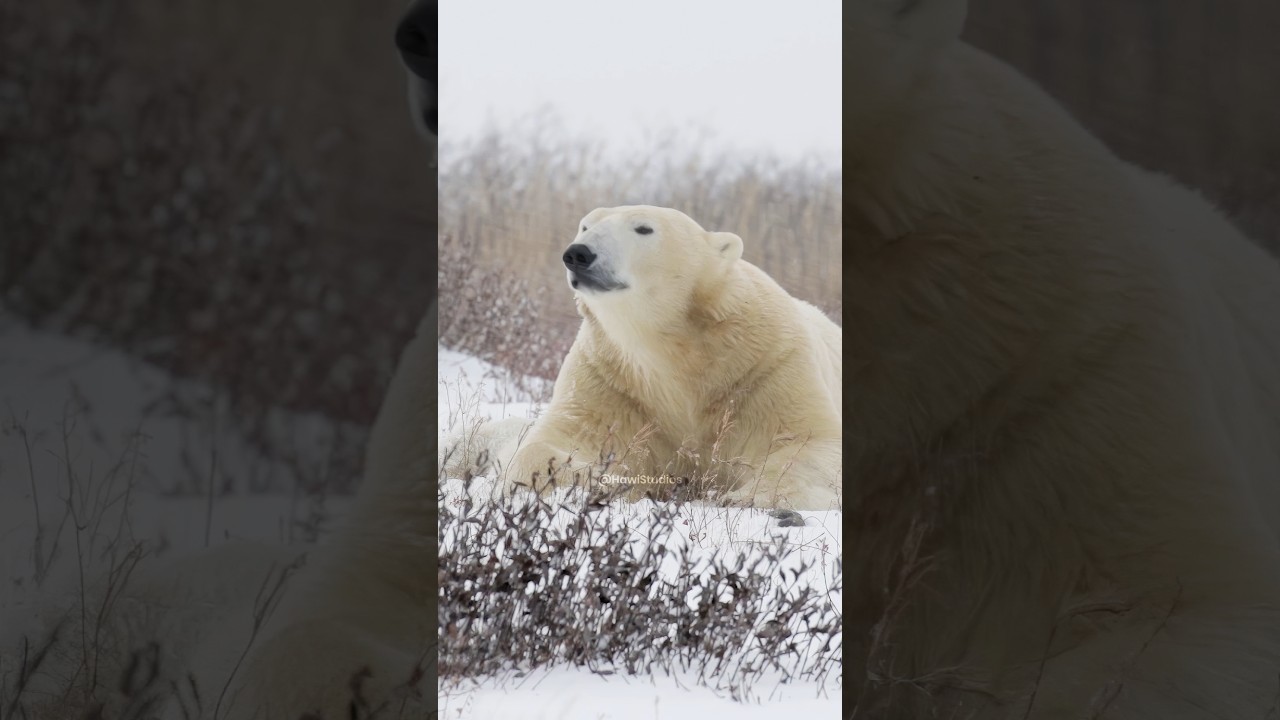
Polar bears (Ursus maritimus) conserve metabolic energy during winter storms by resting close to the substrate and curling into prone positions. While resting, they maintain sensory vigilance by lifting their snouts into wind currents to detect airborne chemical cues from up to 32 kilometers away.
Key Field Takeaways
- Taxonomic Classification: Class Mammalia, Order Carnivora, Family Ursidae, Ursus maritimus.
- Olfactory Detection Range: Capable of sampling airborne hydrocarbons and seal scent markers up to 32 kilometers (20 miles) across open ice or tundra.
- Thermal Insulation Mechanics: Dense underfur paired with guard hairs and a subcutaneous adipose layer up to 10 centimeters thick reduces thermal loss.
- Conservation Status: Classified as Vulnerable on the IUCN Red List due to sea ice loss and habitat fragmentation.
| Biological Property | Field Metric / Description |
|---|---|
| Scientific Binomial | Ursus maritimus |
| Common Name | Polar bear |
| IUCN Status | Vulnerable |
| Adult Body Mass | 350 to 700 kg (males), 150 to 300 kg (females) |
| Subcutaneous Adipose Layer | Up to 10 cm (3.9 inches) thick |
| Primary Scent Range | 1.6 to 32 km depending on atmospheric stability |
Frame-by-frame behavioral analysis of polar bear resting posture
In the video footage, an adult polar bear lies prone across a snow-covered tundra substrate interspersed with low-growing woody vegetation. At timestamp 00:00, the polar bear keeps its head lowered against the snowpack, keeping its eyes half-closed to guard against blowing wind particles. This low-profile posture minimizes the exposed surface area of the body, which reduces radiative and convective heat loss during freezing temperatures.
Between 00:01 and 00:06, the polar bear lifts its head from the ground and elevates its nose toward the incoming air stream. The nostril openings expand as the bear flares its nasal passages, actively sampling airborne chemical cues transported across the tundra. The bear rotates its head laterally while maintaining a stable resting posture, demonstrating how resting apex predators continue environmental monitoring without expending energy on full locomotion.
Morphological adaptations for thermal retention and olfactory acuity
Epidermal structure and insulation properties
The skin and pelage of Ursus maritimus are evolved for sub-zero survival in Arctic habitats. Underneath two layers of fur sits a dense subcutaneous adipose layer reaching up to 10 centimeters in depth. This lipid reserve acts as a primary energy depot during prolonged fasting periods and provides a thermal buffer against environmental temperatures down to -40 degrees Celsius.
The pelage consists of a dense underfur layer beneath coarse, hollow guard hairs. These guard hairs lack white pigment and appear transparent, allowing solar radiation to penetrate down to the black epidermal layer underneath. The black skin absorbs electromagnetic energy, while the trapping of stationary air inside the hollow guard hairs prevents convective cooling in high winds.
Nasal architecture and chemoreception
Polar bears possess an expanded olfactory turbinate structure lined with highly vascularized epithelium containing hundreds of millions of sensory neurons. When the bear elevates its head in wind currents, air flows over these complex nasal convolutions, capturing trace volatile organic compounds. This specialized nasal architecture allows the bear to detect prey breathing holes through packed snow up to 1 meter deep.
In addition to prey tracking, airborne scent detection provides early warning of competing adult males or changing weather conditions. Other terrestrial mammals, such as the Eurasian red squirrel, rely on acute sensory monitoring while feeding, but the polar bear scales this sensory reliance across vast Arctic expanses.
Habitat dynamics and metabolic conservation strategies
During seasonal periods when sea ice consolidates or retreats, polar bears transition onto coastal tundra or ice margins. Because active hunting of ringed seals (Pusa hispida) becomes restricted during ice-free periods, bears adopt a state of low-activity resting. Resting on snow or vegetated soil conserves glycogen stores and minimizes lipid oxidation.
When blusters and low visibility occur, lying prone close to low-lying vegetation reduces wind chill effects. Similar body orientation tactics appear in other open-air species, such as during impala drinking mechanics and waterhole vigilance, where resting or drinking animals maintain constant head adjustments to assess surroundings before moving.
Trophic placement and ecological vulnerability
As the apex predator of the Arctic marine ecosystem, Ursus maritimus regulates marine mammal populations and redistributes nutrients across sea ice and coastal shorelines. Abandoned seal carcasses left by feeding polar bears provide vital energetic sustenance for secondary scavengers, including Arctic foxes (Vulpes lagopus) and ivory gulls (Pagophila eburnea).
The loss of multi-year sea ice directly impacts polar bear hunting efficiency by reducing access to prime seal breathing sites. Habitat fragmentation forces bears to swim longer distances between ice floes, increasing metabolic expenditure and reducing body condition in breeding females.
Frequently asked questions about polar bear physiology
Why do polar bears elevate their noses while resting in snow?
Polar bears elevate their snouts into prevailing wind currents to sample airborne volatile compounds. This olfactory scanning allows them to detect ringed seals, carrion, or potential threats over long distances while conserving physical energy.
How thick is the fat layer on a polar bear?
A healthy polar bear can have a subcutaneous fat layer up to 10 centimeters (3.9 inches) thick. This adipose layer provides buoyancy while swimming and insulation against freezing ambient temperatures.
Are polar bear hairs actually white?
Polar bear hairs are not white, they are clear and hollow. The optical scattering of light within the hair shafts makes the coat appear white or cream-colored, while the underlying skin is black to absorb heat.
How far can a polar bear smell prey?
Polar bears can detect scents up to 32 kilometers (20 miles) away across open ice or tundra under favorable atmospheric conditions. They can also locate seal breathing holes covered under 1 meter of packed snow.