
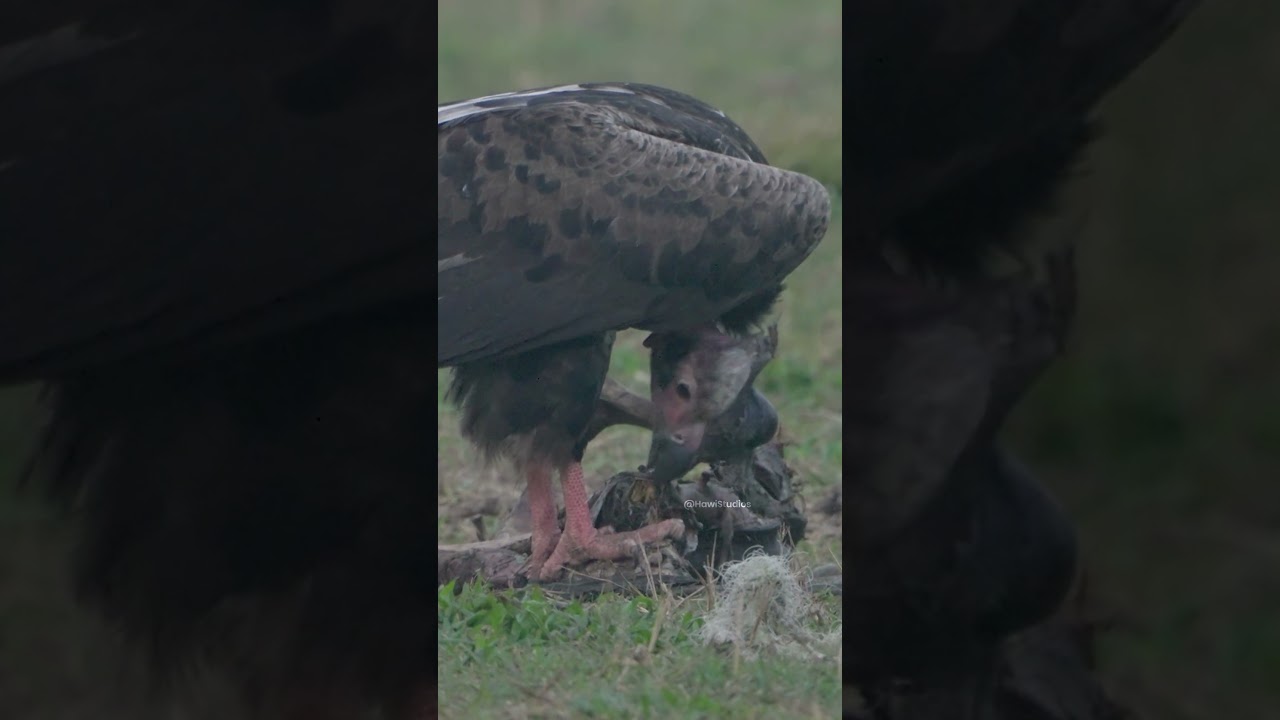
Direct answer summary
The lappet-faced vulture (Torgos tracheliotos) uses a powerful, laterally compressed bill measuring up to 10 centimeters in length alongside heavy pink talons to anchor and tear tough hide, sinew, and cartilage from animal carcasses. This specialized feeding mechanism allows the bird to open fresh mammalian remains that smaller scavengers cannot penetrate.
Key Field Takeaways
- Taxonomic Classification: Class Aves, Order Accipitriformes, Family Accipitridae, Genus Torgos, Species Torgos tracheliotos.
- Primary Feeding Adaptation: Massive hooked bill engineered to sever tough skin, dried tendons, and thick ligament tissue.
- Ecological Niche &, Range: Dominant dominant avian scavenger across African dry savannahs, arid thornbush, and desert habitats up to 3,000 meters elevation.
- Conservation &, Field Status: Endangered on the IUCN Red List, threatened primarily by secondary agricultural poisoning and habitat destruction.
| Biological Parameter | Taxonomic Specification |
|---|---|
| Binomial Nomenclature | Torgos tracheliotos |
| Common Name | Lappet-faced vulture (Nubian vulture) |
| IUCN Conservation Status | Endangered |
| Primary Diet | Carrion, hide, sinew, bones, small live prey |
| Wingspan Range | 2.5 to 2.9 meters (8.2 to 9.5 feet) |
| Body Mass Range | 5.4 to 9.4 kilograms (12 to 21 pounds) |
| Key Morphological Traits | Bare pinkish head with skin folds, deep heavy bill, massive talons |
Observation of feeding mechanics and carcass manipulation
Direct visual observation of Torgos tracheliotos reveals physical shear force applied during carcass feeding. The bird positions its weight directly over the skeletal remains, securing the carcass frame against the ground with large, thick-toed pink feet and short claws. This anchor allows the bird to leverage its entire body mass when pulling tissue.
The bird lowers its unfeathered neck, clamping the sharply curved tip of its upper mandible around dense collagenous skin. By extending its legs and flexing strong neck musculature, it generates upward and backward tension. This tearing motion strips fibrous muscle and tough hide away from bare bone, processing food items that resist the lighter beaks of sympatric avian scavengers.
Morphological adaptations and sensory specialized traits
The lappet-faced vulture possesses anatomical structures adapted for consuming tough terrestrial remains. Its bare head and neck feature unfeathered pinkish skin with prominent lateral folds known as lappets. This lack of facial plumage prevents blood, rotting fluids, and fat residues from drying on feathers, minimizing bacterial infection and facilitating easy cleaning after feeding sessions.
Its massive bill is deeper than that of any other African vulture, measuring up to 10 centimeters from gape to tip. The sharp cutting edges of the bill tomia function like heavy shears, allowing the bird to tear dried skin and thick ligaments. Broad fleshy foot pads provide stable footing on loose soil while pinning down heavy animal remains.
Habitat distribution and terrestrial scavenging ecology
Torgos tracheliotos inhabits open dry savannahs, arid plains, semi-desert scrublands, and open thornveld regions across Sub-Saharan Africa and parts of the Arabian Peninsula. These expansive, flat environments generate strong thermals that support energy-efficient soaring flight over vast foraging radii.
The species relies on acute visual acuity to locate food, spotting carcasses and predator activity from flight altitudes exceeding 1,000 meters above ground level. Unlike mammalian carnivores, it does not rely on olfaction to discover food. Instead, it observes the flight trajectories of smaller vultures and monitors ground carnivores moving across the landscape.
Interspecies hierarchy and trophic dynamics
At feeding sites, the lappet-faced vulture occupies a dominant hierarchical position among avian scavengers. With a body mass reaching up to 9.4 kilograms and a wingspan up to 2.9 meters, it routinely displaces smaller species such as white-backed vultures and hooded vultures through aggressive posture and physical size.
While smaller vultures focus on soft internal organs and loose flesh, Torgos tracheliotos cuts through intact hide and tough tendons. This tearing action opens the carcass structure, exposing internal tissues for smaller species and establishing an efficient feeding succession. Broader ecosystem dynamics near waterholes, such as eland antelope drinking behavior or impala drinking mechanics, highlight the ungulate populations that sustain carnivores and supply carrion for scavengers.
Conservation challenges and population status
The IUCN Red List classifies Torgos tracheliotos as Endangered due to rapid population declines throughout its range. The primary threat stems from secondary poisoning, where livestock owners place poison baits intended for mammalian predators like lions and hyenas, inadvertently killing feeding vultures.
Habitat fragmentation, reduction of large wild ungulate herds, loss of suitable nesting trees, and collisions with high-voltage power lines further reduce reproductive output. Conservation initiatives focus on protecting nesting sites, installing bird-safe electrical infrastructure, and implementing strict bans on toxic veterinary drugs and agricultural poisons.
Why does the lappet-faced vulture have a featherless head?
The unfeathered pink head and neck prevent blood, rotting tissue, and visceral fluids from adhering to plumage while feeding inside animal carcasses. This bare skin improves hygiene, simplifies grooming, and assists in thermal regulation.
How powerful is the beak of a lappet-faced vulture?
The bill of the lappet-faced vulture is exceptionally deep and heavy, exerting sufficient force to slice through tough mammalian hide, dried tendons, and cartilage. This allows the bird to open intact carcasses that smaller vulture species cannot access.
What is the wingspan and body mass of a lappet-faced vulture?
Adult lappet-faced vultures weigh between 5.4 and 9.4 kilograms (12 to 21 pounds) and have a wingspan measuring 2.5 to 2.9 meters (8.2 to 9.5 feet). This expansive wing surface generates high lift for thermal soaring.
What is the conservation status of the lappet-faced vulture?
The lappet-faced vulture is classified as Endangered on the IUCN Red List. Major threats include poison baits targeted at mammalian predators, loss of nesting trees, and collisions with power lines.