
Direct answer summary
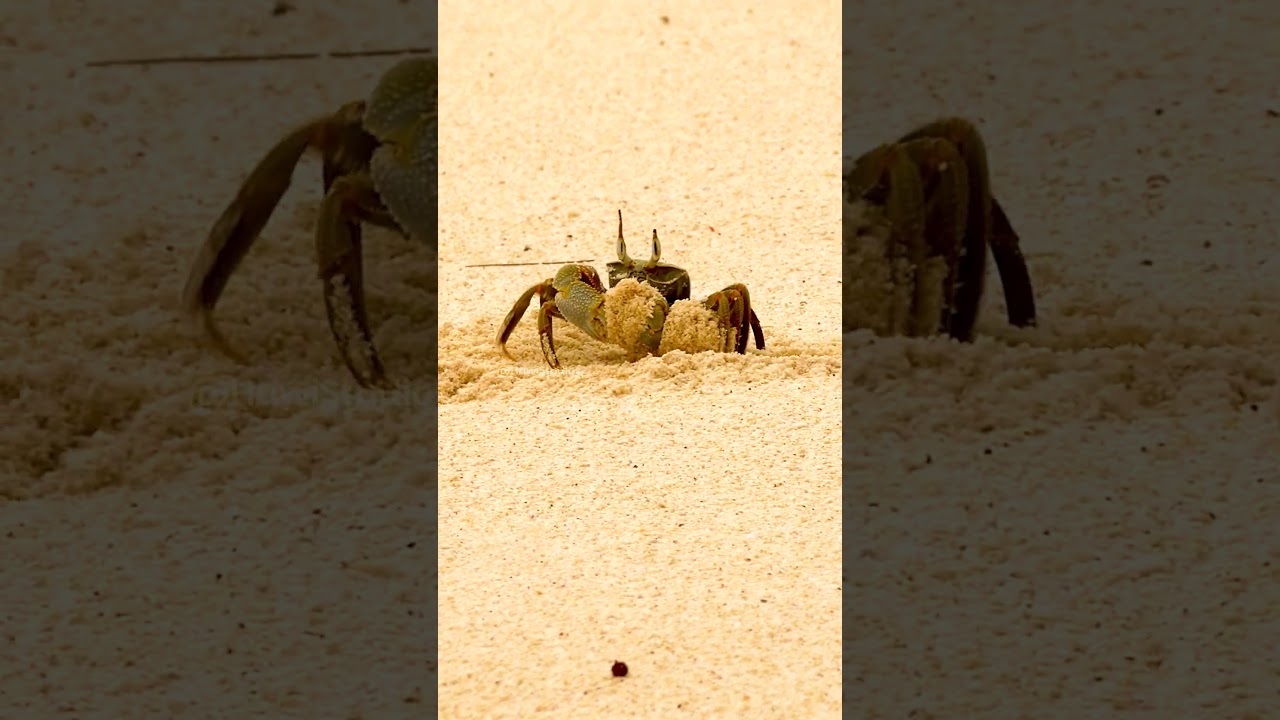
The Ghost Crab (Ocypode ceratophthalma) executes precise sand excavation by using its chelipeds to mold moist sediment into spherical pellets. This behavior allows the crab to efficiently clear its subterranean tunnels while maintaining structural integrity in the shifting intertidal zone.
Key Field Takeaways
- Taxonomic Classification: Family Ocypodidae, Genus Ocypode, Species Ocypode ceratophthalma.
- Primary Behavioral Adaptation: Specialized cheliped manipulation for rapid sediment transport and pellet formation.
- Ecological Niche: Intertidal zones and supralittoral sandy beaches where they manage complex burrow systems.
- Conservation & Field Status: Generally stable, though highly sensitive to anthropogenic beach disturbance and coastal erosion.
| Feature | Specification |
|---|---|
| Scientific Name | Ocypode ceratophthalma |
| Common Name | Ghost Crab |
| Conservation Status | Not Evaluated (Stable) |
| Primary Diet | Scavenger/Omnivore |
| Habitat | Sandy Intertidal Beaches |
| Key Adaptation | Stalked eyes and specialized chelipeds |
Physical observation of sand excavation
The Ocypode ceratophthalma exhibits high-speed coordination during its burrow maintenance. In the footage, the crab uses its primary cheliped to scoop sand from the tunnel interior. It then compresses this material into a distinctively round pellet. This behavior is a highly evolved method of moving heavy sediment without collapsing the tunnel walls.
Mechanics of pellet transport
The crab carries the sand pellet away from the burrow entrance before dropping it. By moving the excavated material away from the immediate opening, the individual reduces the risk of the burrow entrance becoming obstructed. This mechanical precision is essential for survival in high-energy beach environments.
Morphological adaptations for life on the beach
The Ghost Crab possesses stalked eyes that provide a nearly 360-degree field of view. This adaptation is critical for detecting predators like shorebirds while the crab is busy with surface activities. Their carapace coloration often matches the local sand, providing effective crypsis in their natural habitat.
Cheliped specialization
The chelipeds of Ocypode ceratophthalma are not only tools for digging but also for defense and communication. The asymmetry between the two claws is often pronounced, with one larger claw used for crushing and defense. These appendages are highly articulated, allowing for the delicate manipulation of sand grains observed during the excavation process.
Habitat dynamics and intertidal ecology
These crustaceans are masters of the supralittoral zone. They construct burrows that can reach depths of up to 1 meter to maintain access to groundwater, which is necessary for gill respiration. Their ability to manage these complex environments is similar to the mute swan mud foraging mechanics in terms of environmental interaction and habitat modification.
Interspecies relationships and ecosystem role
As opportunistic scavengers, ghost crabs fulfill a role in nutrient cycling on sandy beaches. By processing organic debris and turning over large volumes of sand, they influence the local sediment composition. Their presence is a biological indicator of beach health, as they require relatively undisturbed sand to maintain their deep, water-filled burrows. For those interested in other specialized crustacean behaviors, studying the bubble coral shrimp reveals parallel evolutionary strategies for survival in marine environments.