
Direct answer summary
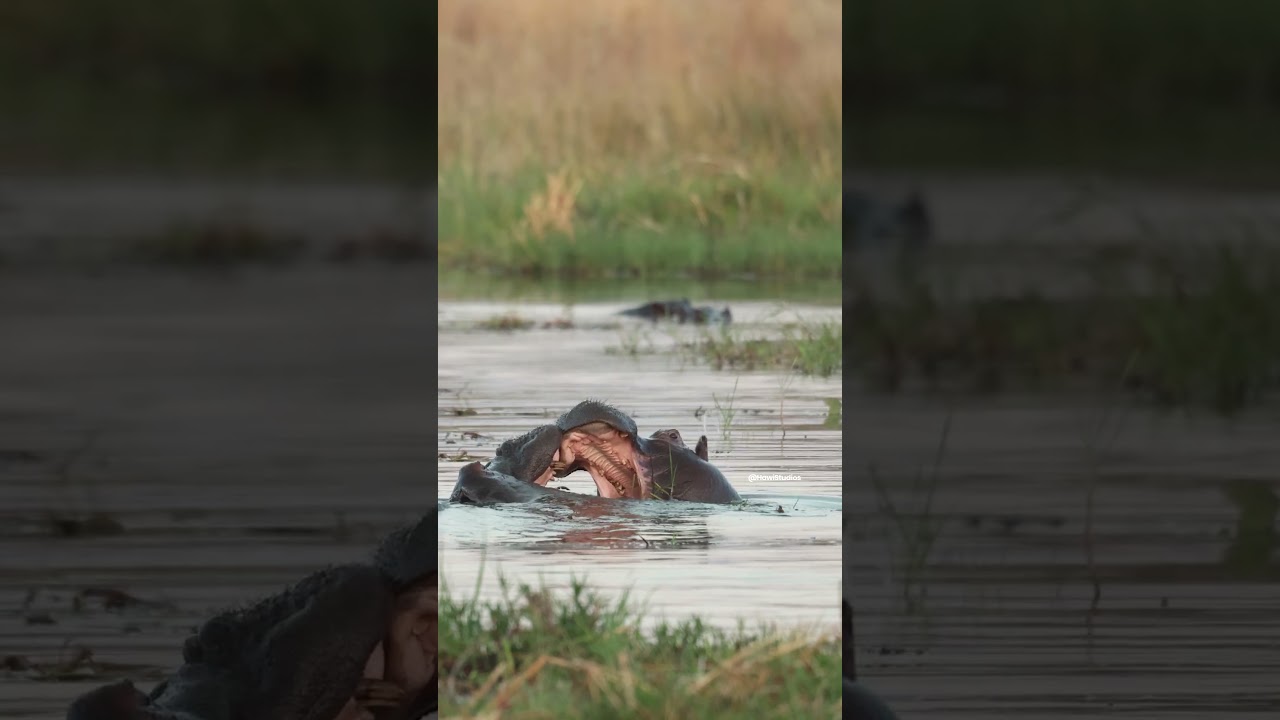
Hippopotamus river sparring represents a non-lethal agonistic display where individuals open their jaws up to 150 degrees to showcase massive lower canine tusks. This behavior assesses physical dominance, establishes riverine territory, and resolves social hierarchy without escalating to lethal mechanical trauma.
Key Field Takeaways
- Taxonomic Classification: Class Mammalia, Order Artiodactyla, Family Hippopotamidae, Hippopotamus amphibius.
- Primary Behavioral Adaptation: Jaw gaping reaching 150-degree angles to display elongated canine tusks up to 50 centimeters long.
- Ecological Niche &, Habitat: Sub-Saharan freshwater rivers, lakes, and oxbow swamps maintaining water depths above 1.5 meters.
- Conservation Status: Vulnerable on the IUCN Red List due to habitat fragmentation and illegal poaching for ivory tusks.
| Metric / Feature | Biological Specification |
|---|---|
| Binomial Nomenclature | Hippopotamus amphibius |
| Common Name | Hippopotamus |
| IUCN Status | Vulnerable |
| Adult Mass Range | 1,300 to 1,800 kg (Females), 1,500 to 3,000 kg (Males) |
| Max Jaw Gape Angle | Up to 150 degrees |
| Bite Force Pressure | Approximately 12,600 kilopascals (1,800 PSI) |
| Primary Diet | Herbivorous (Nocturnal terrestrial grazing on grasses) |
Frame-by-frame observation of hippopotamus aquatic sparring
In the primary observational footage, two hippopotamuses (Hippopotamus amphibius) float in a slow-moving freshwater river surrounded by emergent sedges. The interaction opens at 00:01 as one individual elevates its cranial region above the water surface and extends its dentary bone downward, achieving a jaw gape exceeding 100 degrees.
By frame 00:03, the secondary individual responds by elevating its head and matching the jaw opening. The two animals align their oral cavities directly, bringing their enlarged lower canine teeth into close proximity. At 00:04, their jaws collide softly in a mouth-to-mouth jaw clash, allowing each individual to measure the physical scale and canine dimensions of the opponent.
The physical contact remains controlled and lasts less than two seconds. At 00:06, both individuals lower their heads back into the river basin, returning to a neutral submerged posture by 00:07. This rapid sequence confirms that the action functions as an assessment ritual rather than an unconstrained physical attack.
Functional anatomy of the hippo jaw and tusk biomechanics
Jaw articulation and muscular leverage
The hippopotamus possesses a specialized jaw joint situated far back on the skull, which allows the dentary bone to swing downward to an angle of 150 degrees. Massive digastric and temporalis muscle groups generate immense clamping force once the jaw begins closing. The bite force of an adult female measures approximately 12,600 kilopascals (1,800 PSI), representing one of the strongest bites among living mammals.
Dentition and canine tusk morphology
Unlike standard herbivore dentition designed solely for mastication, the anterior jaw of Hippopotamus amphibius houses specialized continuously growing tusks. The lower canines grow throughout the animal’s life, reaching lengths between 40 and 50 centimeters. The upper and lower canines rub against each other during jaw closure, creating a self-sharpening bevel edge that transforms these teeth into formidable defensive weapons.
Aquatic territoriality and amphibious thermal regulation
Riverine territory structure
Dominant male hippopotamuses defend strictly defined stretches of river or lake margins ranging from 50 to 500 meters in length. These aquatic territories provide protected daytime resting sites for pods of females and juveniles. While hippopotamuses do not defend territories on land during night grazing, aquatic space is heavily contested because deeper water protects their skin from dehydration and solar radiation.
Amphibious physiological requirements
Hippopotamuses lack sweat glands and instead secrete a red pigmented fluid containing hipposudoric acid. This secretion acts as a natural sunblock and antimicrobial agent. Because this fluid breaks down under intense solar heat, individuals must remain submerged during peak daylight hours. Competition for optimal river pools drives frequent behavioral displays such as jaw gaping and water spraying.
Interspecies interactions and riverine ecosystem impacts
Hippopotamuses act as key ecosystem engineers in sub-Saharan freshwater habitats. By consuming up to 40 kilograms of terrestrial grass nightly and depositing large volumes of organic dung into rivers during the day, they transfer massive amounts of nutrients from terrestrial ecosystems into aquatic food webs.
Their physical movement through shallow water channels carves deep underwater pathways that route water flow across oxbow swamps and floodplains. Similar structural modifications of terrestrial ecosystems can be observed in predatory species through specialized movement, as seen in African lion locomotion dynamics. Specialized feeding morphology also occurs in distinct non-mammalian lineages, such as the durophagous jaws studied in Caiman lizard diet mechanics or carcass processing seen in lappet-faced vulture feeding adaptations.
Conservation status and population threats
The International Union for Conservation of Nature (IUCN) classifies Hippopotamus amphibius as Vulnerable. Global populations face pressure from habitat loss caused by dam construction, river diversion for agriculture, and drought linked to climate shifts.
Additionally, illegal hunting for meat and ivory canine tusks remains a persistent threat across several regional river basins. Effective conservation relies on protecting continuous river corridors and maintaining natural water flow regimes across international boundary waters.