
Direct answer summary
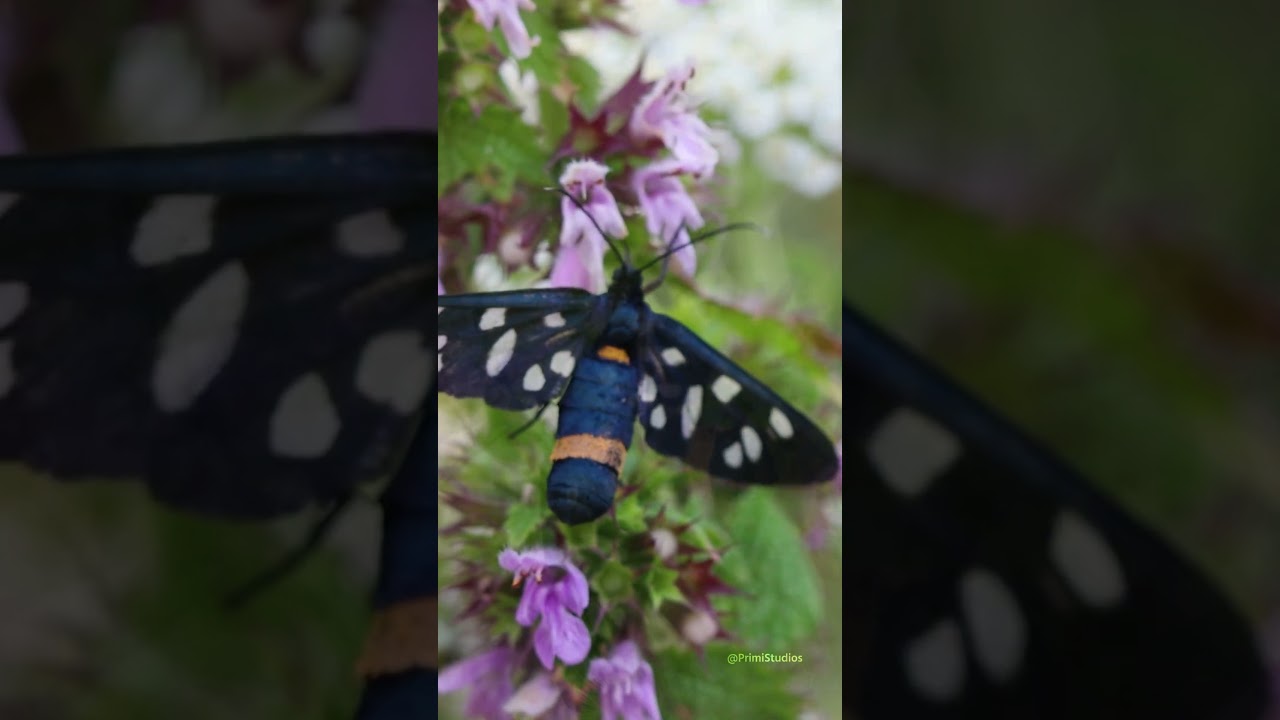
The Nine-spotted moth (Syntomis phegea) is a diurnal moth recognized by its iridescent blue-black body, translucent white wing spots, and yellow abdominal bands. This species feeds on floral nectar using a flexible proboscis during warm daylight hours while using aposematic coloration to deter avian predators.
Key Field Takeaways
- Taxonomic Classification: Class Insecta, Order Lepidoptera, Family Erebidae, Genus Syntomis, Species S. Phegea.
- Primary Behavioral Adaptation: Diurnal foraging rhythm powered by thermal solar absorption through dark dorsal scales.
- Morphological Traits: Wingspan measuring 35 to 40 millimeters with nine distinct translucent white spots across paired wings.
- Defense Mechanism: Aposematic coloration signaling toxic pyrazines and synthesized cardiac glycosides to visually hunting birds.
| Specification | Taxonomic &, Biological Detail |
|---|---|
| Binomial Nomenclature | Syntomis phegea (Linnaeus, 1758) |
| Common Name | Nine-spotted moth |
| IUCN Conservation Status | Least Concern (Unassessed locally across European ranges) |
| Primary Diet | Floral nectar (adults), herbaceous leaves such as Plantago and Galium (larvae) |
| Wingspan &, Dimensions | 35 mm to 40 mm wingspan, body length 15 mm to 18 mm |
| Key Adaptation | Diurnal mimicry paired with aposematic warning coloration |
Frame-by-frame observation of Nine-spotted moth foraging mechanics
In the video footage, a Nine-spotted moth (Syntomis phegea) perches atop a cluster of purple labiate flowers. The individual exhibits precise motor coordination, anchoring its six tarsal claws onto the delicate petals. As the insect probes each corolla tube, its elongated proboscis extends into the floral base to extract nectar droplets rich in carbohydrates.
The footage documents subtle abdominal pulsing movements. These rhythmic muscular contractions pump hemolymph through the thoracic cavity and aid atmospheric gas exchange across lateral spiracles. The dorsal abdominal segments highlight two prominent yellow-orange bands that stand out sharply against the deep navy blue cuticle.
Nectar siphon mechanics and sensory palpation
The proboscis operates through hydraulic pressure generated within the head capsule. Muscular pumping draws liquid nectar upward through the central food canal of the galeae. While probing, the antennae remain fully extended to detect volatile organic compounds emitted by adjacent blossoms.
Sensory chemoreceptors located on the distal tarsal segments allow the individual to taste sugars immediately upon landing. This immediate chemical feedback triggers proboscis uncoiling without unnecessary delay, maximizing energetic efficiency during peak sunlight hours.
Morphological traits and wing spot configuration
The Nine-spotted moth possesses a compact body structure typical of the subfamily Syntominae. The primary forewings display six individual white spots, while the smaller hindwings contain three additional spots. These unpigmented patches consist of clear, scale-deprived membrane sections that allow light to pass directly through the wing structure.
The remaining wing area features dense, overlapping chitinous scales coated in structural pigments. These microstructures reflect deep blue and black wavelengths depending on the angle of incoming sunlight. This combination of dark background and clear windows disrupts the insect outline against dense vegetation.
Abdominal warning coloration and chemical deterrence
Bright yellow rings surround the second and fifth abdominal segments of Syntomis phegea. This conspicuous striping pattern serves as an honest visual signal to potential predators, indicating the presence of unpleasant chemical compounds within insect tissues.
When threatened, the adult synthesizes defensive pyrazine chemicals that emit a pungent odor. Birds that sample a Nine-spotted moth experience extreme distaste, learning to associate the high-contrast yellow bands and spotted wings with an inedible prey item.
Diurnal ecology and flight biomechanics
Unlike nocturnal moths that rely on olfactory tracking in complete darkness, Syntomis phegea flies exclusively during sunny daylight hours. Sunlight warms the thoracic flight muscles to the minimum operating temperature of 28 to 32 degrees Celsius required for powered flight.
The flight pattern appears slow and direct compared to fast-flying butterflies. Low wing-beat frequencies near 25 to 35 Hertz suffice for short flights between floral patches, as reduced predation risk from visual hunters allows a slower flight profile.
Habitat preference and larval host plants
This species inhabits dry grasslands, sunny forest edges, heathlands, and scrub environments across Southern and Central Europe. These open habitats offer abundant access to solar radiation and nectar-producing flora required by adult lepidopterans.
Female moths deposit clusters of spherical eggs on low-growing herbaceous vegetation. The dark, hairy caterpillars feed on broadleaf foliage including plantain (Plantago), bedstraw (Galium), and dandelion (Taraxacum) before pupating in leaf litter near the ground surface.
Interspecies dynamics and mimicry complexes
The Nine-spotted moth participates in a broad Müllerian mimicry ring alongside other distasteful diurnal insects. Species such as the yellow-belted leaf-roller moth and various burnet moths (family Zygaenidae) share similar dark wings, pale spots, and yellow abdominal markings.
By sharing a unified warning pattern, these distinct insect groups spread the energetic cost of predator education across multiple populations. Avian predators learn to avoid the shared visual blueprint after sampling only a small number of individual insects across the ecosystem.
Role in plant pollination and comparative adaptations
While gathering sugary nectar to power adult activities, Syntomis phegea inadvertently transfers pollen grains between flowers. Pollen sticks to the dense hair-like setae covering the head and thorax, facilitating cross-pollination among wild herbal plant species.
Understanding these diurnal invertebrate interactions complements studies on other specialized arthropods and foraging animals. For instance, detailed analyses of Giant Prickly Stick Insect biology highlight how structural adaptations defend herbivores against foliage predators, while work on New England Aster biology and pollinator ecology examines the floral resources supporting daytime insects.
Conservation status and environmental factors
What does the Nine-spotted moth feed on during its adult stage?
Adult Nine-spotted moths feed on floral nectar from herbaceous wild plants including scabious, knapweed, thyme, and betony. They use an elongated proboscis to sip energy-rich nectar solutions during warm daylight hours.
Is the Nine-spotted moth poisonous to predators?
Yes, the Nine-spotted moth contains unpleasant pyrazine compounds and synthesized toxins within its body fluids. These chemicals produce a foul taste and noxious odor that deter insectivorous birds and small lizards.
How can you distinguish Syntomis phegea from burnet moths?
Syntomis phegea features white translucent spots on dark blue wings and prominent yellow bands on the abdomen. Burnet moths (family Zygaenidae) typically display bright red or crimson spots on dark green wings without yellow abdominal striping.
Why does the Nine-spotted moth fly during the daytime instead of at night?
This species evolved a diurnal lifestyle supported by chemical defenses and aposematic warning coloration. Daytime flight allows the moth to use ambient solar radiation to heat its flight muscles and locate nectar flowers visually.