
Direct answer summary
African lions (Panthera leo) utilize a digitigrade stride that elevates the wrist and heel joints off the ground, maximizing stride length while reducing acoustic vibration. Young subadults walk in coordinated pairs or pride groups to maintain social cohesion, optimize energetic efficiency, and refine collective movement patterns before reaching full physical maturity.
Key Field Takeaways
- Taxonomic Classification: Class Mammalia, Order Carnivora, Family Felidae, Genus Panthera, Species Panthera leo.
- Primary Locomotor Adaptation: Digitigrade posture with retractable claws and soft fatty footpads that minimize ground impact noise and increase stride distance by 15 to 20 percent compared to plantigrade mammals.
- Ecological Niche and Transit Behavior: Use of clear linear corridors such as game trails and dirt roads to decrease energetic expenditure during morning territorial patrols and foraging movements.
- Conservation Status: Classified as Vulnerable on the IUCN Red List due to habitat fragmentation, human-wildlife conflict, and prey depletion across sub-Saharan Africa.
| Parameter | Biological Metric / Classification |
|---|---|
| Binomial Nomenclature | Panthera leo |
| Common Name | African Lion |
| Conservation Status | Vulnerable (IUCN Red List) |
| Adult Mass Range | 120 to 190 kg (females), 150 to 250 kg (males) |
| Locomotion Type | Digitigrade terrestrial quadrupedalism |
| Primary Habitat | Savanna, open woodland, and scrubland ecosystems |
Locomotor biomechanics and digitigrade foot structure in subadult lions
Digitigrade wrist elevation and weight distribution
The locomotion of Panthera leo relies on a specialized skeleton architecture where the animal walks on its digits rather than the entire sole of the foot. The carpal and tarsal joints remain elevated well above the substrate. This digitigrade arrangement effectively lengthens the functional limb, allowing longer strides without increasing trunk mass.
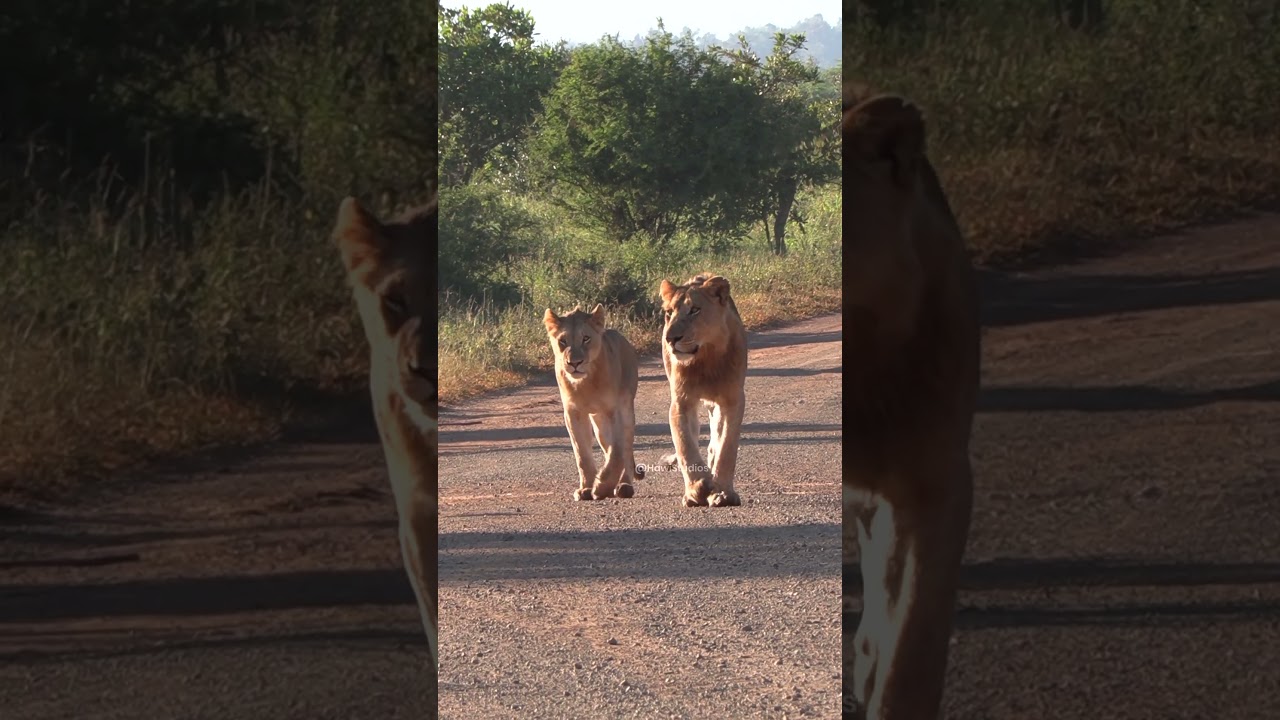
Subadult lions walking across packed gravel exhibit an alternating diagonal gait. The right forelimb advances almost simultaneously with the left hindlimb, distributing body mass across three ground contacts at any instant. This quadrupedal weight distribution reduces ground pressure and maintains stability on uneven terrain.
Soft pad acoustic dampening and retractable claw mechanics
Underneath each toe and metacarpal joint lies a dense pad of fatty tissue covered by thick keratinized skin. These footpads act as natural shock absorbers, deforming under load to absorb impact energy and reduce sound. The elasticity of these structures allows large felids weighing over 100 kilograms to move with minimal footfall noise.
During normal locomotion, the claws remain retracted within skin sheaths attached to the distal phalanges by elastic ligaments. Retraction prevents mechanical wear on the sharp keratin tips against abrasive gravel roads. Claws extend only when high traction or prey capture requires mechanical engagement with the substrate.
Social cohesion and paired movement in subadult lion prides
Coalition formation and sibling bonds
Young lions remain near their natal pride or sibling coalition during their subadult development phase. Moving in pairs or small groups provides mutual protection against larger adult competitors and hyenas. These spatial associations form the foundation for permanent male coalitions or cooperative female pride units.
Observations of young subadults walking side by side highlight synchronized movement patterns. The proximity of the two individuals, often less than one body length apart, reinforces social cohesion through visual and olfactory cues. Shared movement reinforces pair bonding that aids in future territorial defense.
Visual alignment and synchronized pacing
While walking along open paths, subadult lions match their walking speed and stride frequency. Pacing synchronization reduces spatial separation and keeps the animals within clear line of sight. Forward-facing eyes allow both individuals to monitor the path ahead simultaneously while maintaining group alignment.
The slightly larger individual on the right displays early mane growth around the neck and throat, marking secondary sexual development in young males. The companion on the left retains a sleek, hairless neck contour characteristic of young females or younger subadults. Despite subtle body mass differences, both maintain an identical walking cadence.
Visual and sensory adaptations during crepuscular movements
Tapetum lucidum and binocular field overlap
Lions are primary crepuscular and nocturnal predators, possessing large orbits positioned on the frontal plane of the skull. This arrangement creates a binocular field overlap of roughly 120 degrees, conferring precise depth perception required for spatial awareness and distance estimation during low-light hours.
Behind the retina lies the tapetum lucidum, a reflective layer of tissue that bounces unabsorbed light back through the photoreceptors. This structure dramatically increases retinal sensitivity in dim conditions, such as early morning twilight. High rod density in the retina further amplifies detection of subtle movements along the horizon.
Ear pinnae orientation and acoustic tracking
The rounded ear pinnae of Panthera leo are controlled by complex facial muscles that permit independent rotation toward sound sources. As the lions walk, their ears adjust to capture high-frequency vocalizations from prey or territorial calls from distant pride members. White fur patches on the backs of the ears act as visual markers for followers during group movements.
Sensory vigilance during movement is comparable to other large terrestrial predators. While apex felids rely on visual and auditory cues on open roads, species like polar bears utilize intense polar bear olfactory vigilance to scan vast open landscapes for potential prey or competitors.
Linear transit corridors and energetic optimization in savanna habitats
Road and game trail selection mechanics
Apex predators frequently utilize human-made dirt roads, cleared tracks, and worn game trails as transit routes through dense savanna vegetation. Dense brush creates mechanical resistance that increases locomotion cost and energy expenditure per kilometer traveled. Open linear corridors present a smooth surface that optimizes muscular efficiency.
Walking on compacted gravel or bare earth minimizes resistance against the limbs, allowing a steady speed with lower metabolic output. Clear paths also afford unobstructed sightlines, enabling early detection of potential prey or dangerous encounters with rival lion prides.
Comparison with other savanna carnivores and ungulates
The use of linear transit routes is widespread among savanna fauna. Large herbivores also utilize open pathways to move between foraging areas and water sources. Understanding these transit dynamics provides insight into overall herbivore behavior, such as the eland antelope drinking behavior observed around open savanna waterholes.
For carnivores, roads act as territorial boundaries and scent-marking highways. Subadult lions walking along these routes gain familiarity with pride territory borders while learning to navigate the physical landscape alongside mature adults.
Conservation biology and savanna ecosystem integrity
Trophic impacts of apex predator movements
As apex predators, lions exert strong top-down control on savanna food webs. Their presence influences the spatial distribution and movement patterns of mid-sized herbivores, including zebras, wildebeest, and impalas. Even non-lethal interactions, such as visual presence along roads, generate landscape-scale effects by altering herbivore habitat selection.
Healthy lion populations indicate intact food webs with abundant prey density and broad contiguous habitat blocks. As subadults mature and establish territories, their movement across large areas maintains genetic diversity across interconnected regional populations.
Human-wildlife conflict along habitat boundaries
The habit of utilizing roads and open linear corridors frequently brings lions into contact with human infrastructure and boundary zones. Unfenced reserve edges, agricultural roads, and pastoral corridors increase the likelihood of livestock interactions and retaliatory killing by local communities.
Conservation initiatives focus on creating safe wildlife corridors between fragmented protected areas. Ensuring connected landscapes allows subadult lions to disperse naturally, reducing human-lion encounters and supporting long-term population stability.
What is digitigrade locomotion in African lions?
Digitigrade locomotion means walking directly on the phalanges (toes) with elevated carpals and tarsals (wrists and heels). This skeleton orientation extends effective leg length, increasing stride distance while soft fatty footpads dampen footfall sounds.
Why do subadult lions walk together in open areas?
Subadult lions travel in pairs or sibling groups to reinforce social bonds and improve defense against rival predators. Open corridors like dirt roads offer paths of least resistance, reducing mechanical friction and energy output.
How do lion paws muffle noise during movement?
Lion paws contain thick dermal pads composed of elastic collagen tissue and fatty deposits. These soft pads compress against substrate to absorb impact forces, allowing silent stalking and low-noise walking across dirt or gravel surfaces.
At what age do young male lions develop manes?
Male African lions begin developing dark hair around the neck and chest at approximately 1.5 to 2 years of age. Mane growth correlates with surging testosterone levels and continues expanding until full physical maturity around 4 to 5 years.