
Direct answer summary
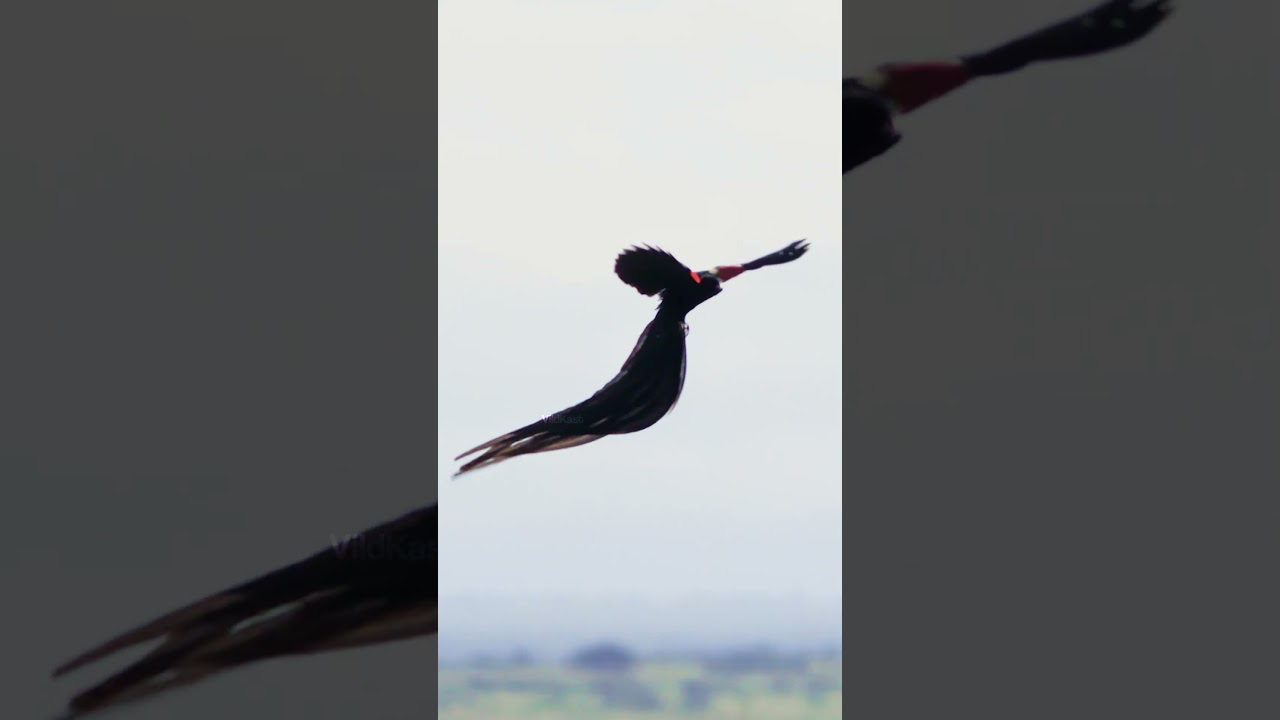
The Long-tailed Widowbird (Euplectes progne) utilizes a specialized, high-drag aerial display to attract females. During this flight, the male maintains a slow, undulating path, allowing its tail feathers, which can exceed 50 centimeters in length, to trail prominently behind its body.
Key Field Takeaways
- Taxonomic Classification: Family Ploceidae, Genus Euplectes, Species Euplectes progne.
- Primary Behavioral Adaptation: Sexual display flight featuring extreme caudal feather elongation to signal fitness.
- Ecological Niche & Range: Open grasslands and marshy habitats across southern and eastern Africa.
- Conservation & Field Status: Listed as Least Concern by the IUCN, with stable populations in protected grassland biomes.
| Feature | Specification |
|---|---|
| Scientific Name | Euplectes progne |
| Common Name | Long-tailed Widowbird |
| IUCN Status | Least Concern |
| Diet | Seeds and small insects |
| Habitat | Grasslands, marshes |
| Key Adaptation | Elongated male tail feathers |
Flight mechanics and display behavior
The flight of the Long-tailed Widowbird is a study in biological trade-offs. While the elongated tail feathers are essential for attracting mates, they impose a significant aerodynamic burden. Observation of the bird in flight reveals a slow, labored wingbeat frequency designed to counteract the drag produced by the long, trailing plumage.
This display is not merely for locomotion but is a visual advertisement of the male’s physical condition. By navigating the air with such an cumbersome appendage, the male proves its ability to forage and evade predators despite the handicap. Similar to the common chaffinch foraging patterns, these birds must balance energy expenditure with reproductive success.
Morphological and anatomical adaptations
The male Euplectes progne possesses striking plumage characterized by deep black coloration and distinct red and white epaulets on the wings. The most notable feature is the tail, which consists of twelve feathers, with the central rectrices reaching lengths up to 50 centimeters. This morphology is absent in females, which exhibit a cryptic, brown-streaked appearance to provide camouflage during nesting.
The skeletal structure supports the musculature required for these sustained, low-altitude flights. The wings are relatively short and rounded, optimized for the slow, hovering-like display rather than high-speed migration. This structural investment is a classic example of sexual dimorphism driven by female mate choice.
Habitat and ecological niche
These birds are endemic to the open, marshy grasslands of sub-Saharan Africa. They require vast, unobstructed spaces to perform their display flights, which are often centered around a specific territory. The presence of tall grasses provides the necessary cover for nesting and protection from aerial predators.
The species plays a role in the local ecosystem by consuming grass seeds and small invertebrates. Their presence is often linked to the health of the grassland biome, similar to how equine grazing mechanics influence the structure of pasture environments. They are highly sensitive to habitat fragmentation and the conversion of grasslands into agricultural land.
Evolutionary significance
The evolution of the Euplectes progne tail is driven by the Fisherian runaway process, where female preference and male trait expression co-evolve. This leads to the development of extreme traits that might otherwise be detrimental to survival. The display flight is a critical component of their reproductive biology, ensuring that only the most fit individuals successfully pass on their genes.
While their display is visually distinct, they also engage in complex social interactions within their territories. Their reliance on specific grassland conditions makes them an important indicator species for the status of African savanna ecosystems. Ongoing conservation efforts focus on preserving large, contiguous tracts of grassland to ensure the survival of this unique avian species.