
Direct answer summary
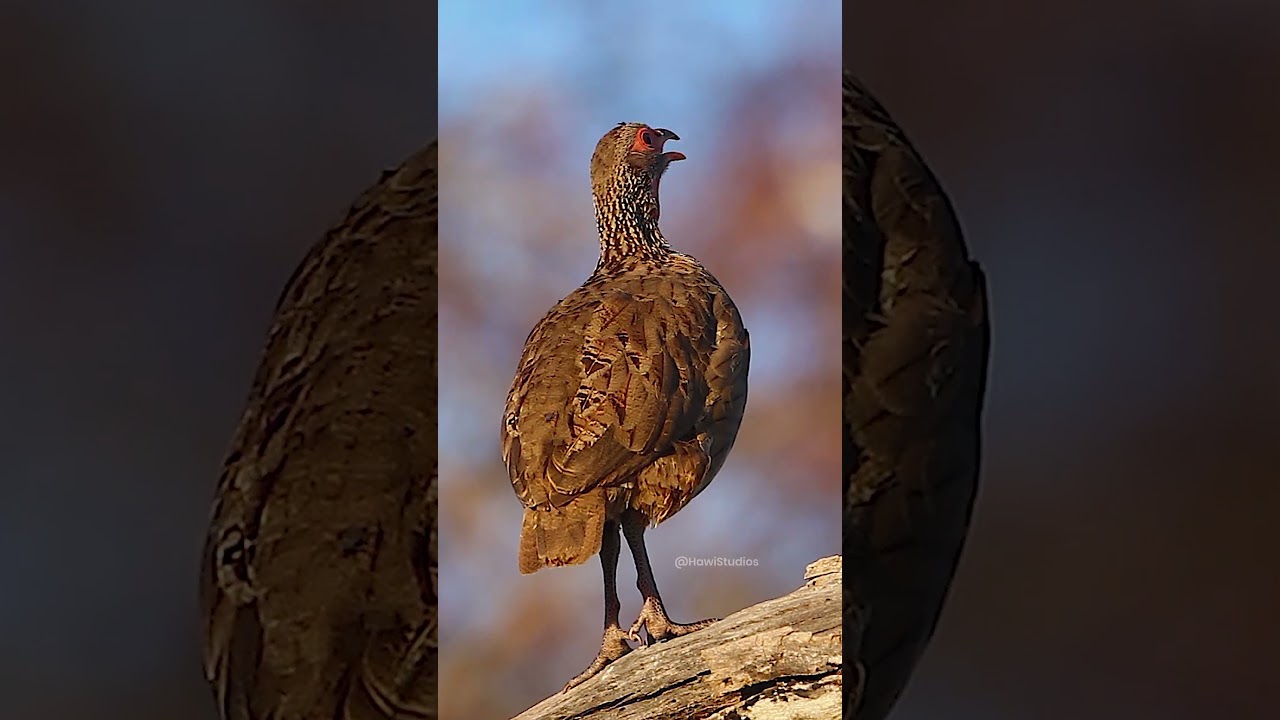
The Swainson’s Spurfowl (Pternistis swainsonii) is a terrestrial gamebird that utilizes loud, repetitive vocalizations as a primary mechanism for territorial signaling and predator detection. The bird modulates its call by tilting its head upward and opening its beak, projecting sound across its savanna habitat.
Key Field Takeaways
- Taxonomic Classification: Family Phasianidae, Genus Pternistis.
- Primary Behavioral Adaptation: High-decibel, repetitive alarm calling for social cohesion and territorial maintenance.
- Ecological Niche & Range: Native to Southern Africa, primarily inhabiting open savanna, woodland edges, and agricultural field margins.
- Conservation & Field Status: Currently classified as Least Concern by the IUCN, with stable populations across its core range.
| Feature | Specification |
|---|---|
| Scientific Name | Pternistis swainsonii |
| Common Name | Swainson’s Spurfowl |
| Diet | Omnivorous (seeds, insects, tubers) |
| Habitat | Savanna, woodland, scrub |
| Key Adaptation | Red bare skin for heat dissipation |
Immediate physical observation and behavioral mechanics
The footage captures a Swainson’s Spurfowl in a stationary, alert posture on a fallen log. The bird exhibits a series of rhythmic muscular contractions associated with vocalization, specifically involving the rapid expansion and contraction of the throat region. By tilting its head upward, the bird optimizes the projection of its call, a behavior common in ground-dwelling birds that utilize sound to navigate dense vegetation.
The bird’s legs are firmly planted, showing the robust tarsus typical of a ground-dwelling species that spends the majority of its time foraging in leaf litter. This stance provides stability while the bird engages in its loud, repetitive display. Such territorial behavior is comparable to the complex signaling found in other avian species, similar to the vocalization patterns analyzed in bald eagle vocalization and territorial behavior analysis.
Morphological and anatomical adaptations
The most striking feature of the Swainson’s Spurfowl is the bright red, unfeathered skin surrounding the eyes and extending down to the throat. This bare skin is a key adaptation for thermoregulation, allowing the bird to dissipate excess heat efficiently while foraging in the high temperatures of the African savanna. The mottled brown and grey plumage provides excellent camouflage against the dry grasses and soil.
The bird’s beak is short, stout, and slightly curved, specialized for pecking at hard seeds, digging for tubers, and capturing small insects from the ground. Its sturdy legs and strong, blunt claws are evolved for scratching through debris to find food, a foraging strategy seen in other ground-foraging birds like those described in common chaffinch foraging behavior and biology.
Habitat range and terrestrial ecology
Swainson’s Spurfowl are endemic to Southern Africa, ranging from Angola and Zambia down to South Africa. They thrive in mosaic habitats that offer both cover for nesting and open ground for foraging. Their presence is often an indicator of healthy savanna or woodland edges, where they play an important role as both seed dispersers and insect controllers.
These birds are rarely seen in flight, preferring to run or squat when threatened. Their terrestrial nature makes them highly dependent on the quality of the understory vegetation. The species frequently associates with other ground-dwelling birds, forming loose groups that enhance their collective ability to spot predators.
Conservation status and ecosystem threats
The Swainson’s Spurfowl remains widespread and common, with its ability to adapt to human-modified landscapes, such as agricultural fields, contributing to its stability. Unlike more specialized species, it has successfully integrated into areas with moderate human activity, provided that sufficient cover remains for roosting and nesting.
However, habitat fragmentation and the use of pesticides in agricultural zones represent potential long-term threats to local populations. Monitoring these birds allows researchers to gauge the health of their respective ecosystems, much like the monitoring of other avian species in diverse habitats, such as those discussed in tropical montane stream ecology and glass frog habitats.