
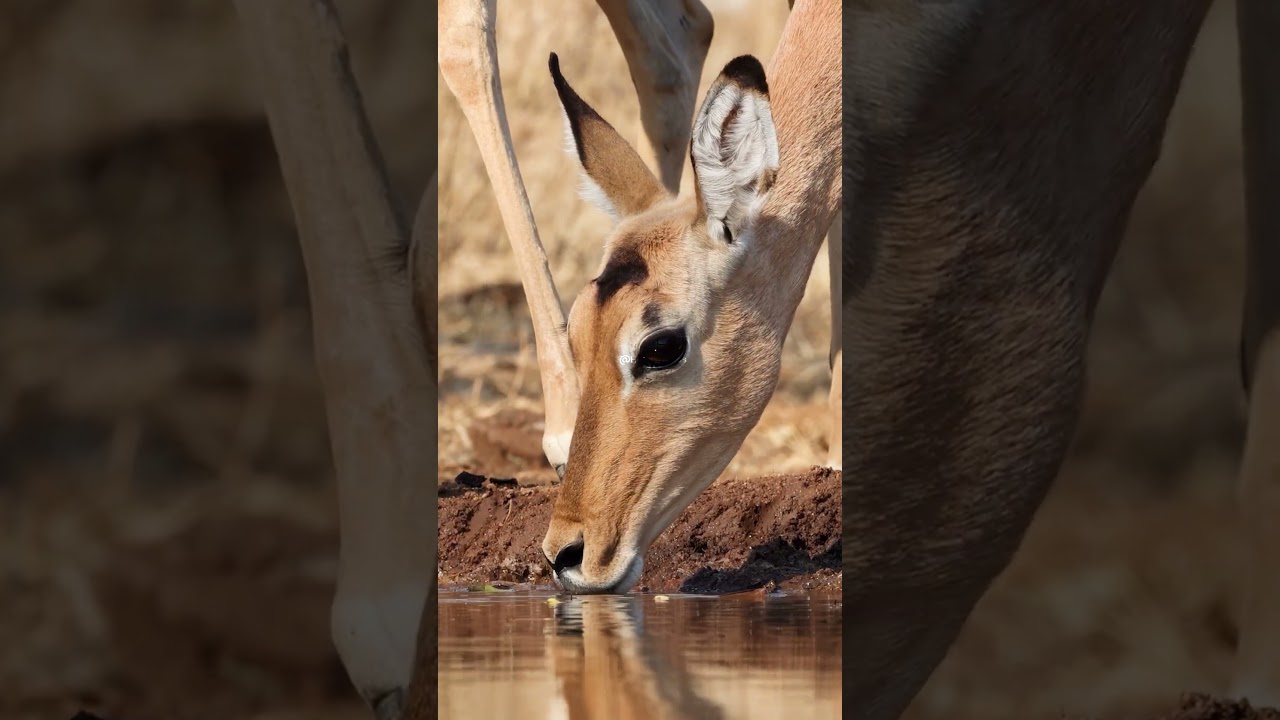
Impala drinking mechanics and waterhole vigilance
Direct answer summary
Impala drinking mechanics rely on dynamic oral suction rather than tongue lapping, allowing Aepyceros melampus to pull water directly into the pharynx. By creating negative pressure within the oral cavity while dipping the muzzle lips slightly below the surface, an individual can ingest up to 2.5 liters of fluid in under two minutes.
Key Field Takeaways
- Taxonomic Classification: Mammalia, Artiodactyla, Bovidae, Aepyceros melampus.
- Primary Behavioral Adaptation: Rapid fluid uptake via labial sealing and pharyngeal suction at a rate exceeding 1.2 liters per minute.
- Ecological Niche &, Range: Woodland savannas, ecotones, and riverine bushlands across East and Southern Africa.
- Conservation &, Field Status: Classified as Least Concern by the IUCN, with an estimated global population exceeding 1.5 million individuals.
| Taxonomic Parameter | Biological Specification |
|---|---|
| Binomial Name | Aepyceros melampus |
| Common Name | Impala |
| IUCN Red List Status | Least Concern |
| Adult Mass &, Height | 40 to 75 kg, 75 to 95 cm shoulder height |
| Primary Foraging Strategy | Mixed feeder (seasonal browser and grazer) |
| Key Sensory Adaptation | 300-degree lateral vision and high-mobility acoustic pinnae |
Observational field analysis of water intake
Labiomandibular fluid uptake mechanisms
Close-up observational footage reveals the exact muscular coordination involved in ungulate drinking mechanics. The muzzle of the female impala lowers until the upper and lower lips break the surface tension of the waterhole. Instead of expanding the tongue into a cup shape like carnivores, the bovid forms a tight seal with the lateral margins of the mouth.
Subtle, rhythmically repeating contractions of the chin and submandibular musculature are visible across the lower jaw. These muscular undulations create a vacuum in the buccal cavity, drawing liquid continuously across the incisors and into the oral pharynx. Tiny, concentric micro-ripples radiate outward from the tip of the nostrils, confirming continuous fluid entry with minimal mechanical displacement of the water surface.
Vigilance cycles during head-down posturing
Lowering the head to drink lowers the animal’s focal plane, placing its primary visual axis close to ground level. In the video clip, the female impala maintains head elevation just high enough to keep its large lateral orbit clear of the water surface. The eye remains wide open, tracking motion along the surrounding shoreline.
Simultaneously, the upper pinna (ear structure) is angled laterally, rotated independently toward background sounds. Herbivores in savanna ecosystems continuously alternate between active drinking phase intervals of 5 to 15 seconds and rapid head raises to scan the horizon. This cyclical posture reduces overall exposure time in high-risk riverine environments.
Morphological and anatomical adaptations
Facial structure and sensory apparatus
The head of Aepyceros melampus is streamlined, featuring a narrow muzzle designed for selective browsing and precise water intake. The dark patch on the bridge of the nose, combined with white facial rings surrounding the eyes, provides visual signal contrasts used in herd coordination. The eyes are positioned laterally on the skull, granting a field of view approaching 300 degrees without requiring significant neck rotation.
Large, funnel-shaped pinnae are mounted high on the cranium. Driven by specialized auricular muscles, these ears rotate over 180 degrees to pinpoint the exact direction of rustling vegetation or approaching predators. This sensory arrangement ensures that even while the mouth is submerged, auditory monitoring of the immediate habitat remains fully operational.
Oral physiology and fluid suction dynamics
The oral cavity of the impala contains soft tissue adaptations optimized for both mastication of fibrous forage and rapid fluid transport. The muscular tongue acts as a internal hydraulic piston. When retracted backward toward the throat, it expands the volume of the oral chamber, creating immediate negative pressure.
This suction mechanism enables the impala to drink rapidly without swallowing excess air. Ingesting large volumes of liquid quickly is vital for survival, as spending extended time at waterholes increases the risk of predation by aquatic and terrestrial carnivores.
Habitat range and savanna ecology
Ecotones and surface water dependency
Impalas inhabit savanna ecosystems across eastern and southern Africa, preferring ecotones located between open grasslands and dense woodlands. These habitat margins provide optimal cover from predators alongside abundant foliage. Access to surface water is a primary factor influencing seasonal impala distribution patterns.
During wet seasons, impalas meet their moisture requirements through lush grasses and shrub foliage. However, during dry seasons, natural vegetation loses water content, forcing herds to concentrate near permanent watercourses, boreholes, and river basins. Herds often visit these water sites during hot morning or late afternoon hours.
Hydration strategy compared to sympatric species
Unlike obligate grazers that must drink every day, impalas display remarkable physiological flexibility. When surface water becomes completely unavailable, impalas adapt by shifting their diet to succulent roots, tubers, and acacia pods. Their kidneys concentrate urine efficiently to lower metabolic water consumption.
When water sources are accessible, impalas drink in synchronized group clusters. This behavioral mechanism reduces individual predation risk through dilution effects. Similar waterhole dynamics can be observed in sympatric carnivores, as analyzed in black-backed jackal drinking mechanics and vigilance strategies.
Interspecies relationships and evolutionary significance
Waterhole dynamics and predator-prey pressure
Waterholes function as major ecological focal points where ungulates, megaherbivores, and apex predators intersect. Lions, leopards, cheetahs, wild dogs, and Nile crocodiles target impalas at these drinking sites. The high threat level drives the evolution of rapid drinking speeds and brief immersion times.
To mitigate risk, impalas frequently mix with other species like zebras, baboons, and kudus at drinking sites. Multi-species aggregation increases total visual coverage across the landscape, allowing early detection of lurking predators before an attack occurs.
Mutualistic associations
Impalas maintain specialized mutualistic relationships with avian species that inhabit the same African savannas. Avian partners frequently land on the backs and necks of impalas to glean engorged ticks and ectoparasites directly from their coat. Details regarding this symbiotic grooming interaction are explored in red-billed oxpecker foraging on impala biology research.
These bird species also serve as early warning alarm systems for the impala. When a predator approaches through dense brush, the sudden flight and harsh warning calls of the birds alert the resting herd, prompting immediate flight reactions.
Conservation status and ecosystem role
The IUCN classifies Aepyceros melampus as a species of Least Concern. Population numbers remain strong across national parks, private game reserves, and protected wilderness areas in countries such as Kenya, Tanzania, Zambia, Namibia, and South Africa.
As an abundant medium-sized ungulate, the impala plays an essential ecological role as both a primary consumer and key prey resource. By consuming vast quantities of grass and woody vegetation, impalas prevent bush encroachment and maintain open savanna structure, supporting rich biodiversity across African ecosystems.
How do impalas drink water without lapping?
Impalas use dynamic muscular suction rather than tongue lapping to drink water. By submerging their muzzle lips slightly beneath the surface and expanding the oral cavity, they create negative pressure that pulls liquid directly into the pharynx.
How often do impalas need to drink water?
Impalas typically drink once or twice daily when water is readily available. However, during dry seasons, they can survive for extended periods without surface water by consuming succulent vegetation and green leaves rich in moisture.
Why do impalas stay extremely alert while drinking?
Waterholes represent high-risk predation zones where carnivores like lions, leopards, and crocodiles launch ambush attacks. Lowering the head compromises the animal’s visual horizon, forcing impalas to maintain acute acoustic awareness and take quick drink bursts.
What physical features help impalas detect predators at waterholes?
Large lateral eyes provide a wide panoramic field of vision, while large, highly rotatable ear pinnae catch low-frequency sounds from surrounding brush. These sensory adaptations remain active even while the muzzle is submerged.