
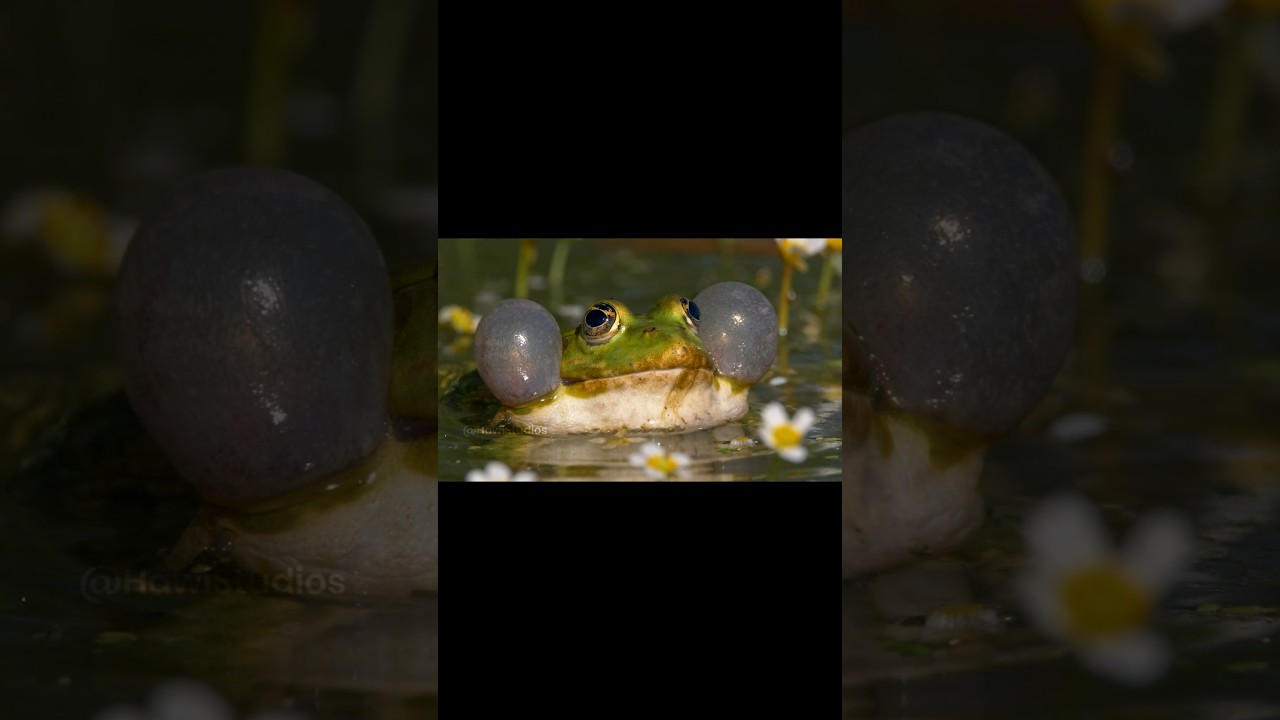
Direct answer summary
The Marsh Frog (Pelophylax ridibundus) utilizes lateral vocal sacs as acoustic resonators to amplify calls for mating and territorial defense. These sacs inflate with air pushed from the lungs, creating a resonant chamber that projects distinct, rhythmic pulses across its wetland habitat.
Key Field Takeaways
- Taxonomic Classification: Family Ranidae, Genus Pelophylax, Species Pelophylax ridibundus.
- Acoustic Mechanism: Paired lateral vocal sacs function as resonant chambers to amplify low-frequency advertisement calls.
- Habitat Range: Primarily thrives in permanent bodies of water, including lakes, ponds, and slow-moving rivers across Europe and parts of Asia.
- Size Metrics: Adult body length typically ranges from 8 to 12 centimeters, with exceptional females reaching up to 17 centimeters.
| Feature | Specification |
|---|---|
| Scientific Name | Pelophylax ridibundus |
| Conservation Status | Least Concern |
| Diet | Insects, spiders, small fish, and occasionally smaller amphibians |
| Habitat | Permanent wetlands, ponds, and slow rivers |
| Key Adaptation | Paired lateral vocal sacs for acoustic signaling |
Vocalization mechanics and biological purpose
The Marsh Frog exhibits a highly specialized vocalization strategy essential for reproductive success. When the frog initiates a call, it closes its nostrils and mouth, forcing air from the lungs into the buccal cavity and subsequently into the lateral vocal sacs. This process expands the thin, elastic skin of the sacs, which act as a powerful resonance chamber.
By vibrating the air within these sacs, the Marsh Frog produces a loud, rhythmic croaking sequence. This acoustic output serves as an advertisement to females, signaling the fitness and location of the male. In a high-density breeding environment, these calls are essential for maintaining spacing between competing males, effectively acting as an auditory boundary for individual territories.
Morphological adaptations for an aquatic life
The Marsh Frog possesses a suite of anatomical features suited for a semi-aquatic existence. Its hind limbs are long and powerful, featuring well-developed webbing between the toes that provides efficient propulsion through water. The eyes are positioned dorsally on the head, allowing the frog to remain almost entirely submerged while maintaining a clear view of both the water surface and the surrounding terrestrial environment.
Skin permeability is another critical adaptation, as the species relies on cutaneous respiration in addition to its lungs. This allows for extended periods of submersion when foraging or avoiding predators. The coloration, typically a mosaic of green and brown, provides effective camouflage against the aquatic vegetation, such as the riparian flora found in its native ranges.
Habitat dynamics and ecological niche
Pelophylax ridibundus is a generalist predator within its wetland ecosystem. It occupies a niche as both a consumer of diverse invertebrates and a prey item for larger vertebrates, including birds and snakes. Its presence often indicates a stable, permanent water source, as the species requires these environments for both breeding and overwintering.
The species demonstrates high site fidelity, often returning to the same breeding ponds year after year. During the warmer months, activity levels peak, with males competing for optimal calling positions near the water edge. This behavior is similar to the predatory vigilance observed in other wetland species, where environmental awareness is critical for survival.