
Direct answer summary
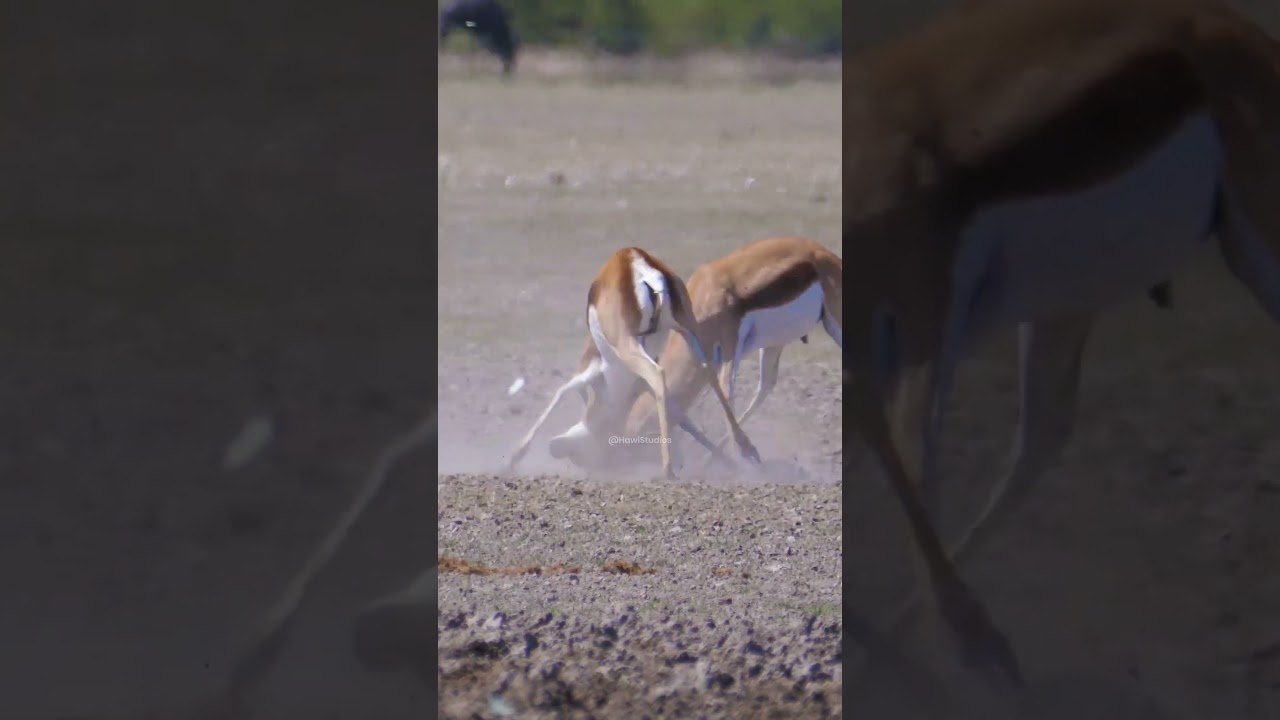
Springbok (Antidorcas marsupialis) engage in ritualized combat to establish social hierarchy and secure breeding access. This behavior involves locking their lyre-shaped horns and pushing against one another, a physical test of strength that allows males to demonstrate dominance while minimizing the risk of severe injury.
Key Field Takeaways
- Taxonomic Classification: Family Bovidae, Genus Antidorcas, Species Antidorcas marsupialis.
- Primary Behavioral Adaptation: Ritualized horn locking used for intraspecific dominance contests.
- Ecological Niche & Range: Inhabits arid and semi-arid regions of southwestern Africa, serving as a primary herbivore.
- Conservation & Field Status: Listed as Least Concern, with stable populations across protected range areas.
| Feature | Specification |
|---|---|
| Scientific Name | Antidorcas marsupialis |
| Common Name | Springbok |
| IUCN Status | Least Concern |
| Primary Diet | Mixed feeder (grasses, shrubs, succulents) |
| Habitat | Dry savannas and semi-desert |
| Key Adaptation | Lyre-shaped horns and high-speed leaping |
Ritualized combat and horn locking mechanics
The interaction observed in the footage captures a fundamental aspect of male springbok social structure. When two males encounter one another, they often initiate a display of strength that culminates in horn locking. This behavior is not an act of blind aggression but a highly regulated ritual that allows individuals to gauge the physical condition of their rivals.
Physical dynamics of the engagement
During the fight, the animals lower their heads to bring their horns into contact. Once locked, they exert pressure, pushing their bodies forward while digging their hooves into the substrate. This creates the dust clouds visible in the footage, which are a byproduct of the intense mechanical force exerted by the hind legs against the ground.
Morphological adaptations for competition
The springbok possesses a distinct cranial morphology characterized by lyre-shaped horns, which are present in both sexes. These horns are composed of a bony core covered by a keratinous sheath, providing the necessary durability for repeated impact. The inward curvature of the horns is specifically adapted to hook onto an opponent, providing a secure point of leverage during pushing matches.
Sensory and physical responses
Beyond the horns, the springbok relies on acute visual and auditory senses to monitor the status of competitors. Their posture during combat is rigid, with the neck muscles tensed to absorb the shock of the impact. This physiological preparation is essential for maintaining stability while the two animals are physically connected.
Habitat and ecological role
The springbok thrives in the arid environments of southern Africa, where resources are often distributed patchily. Their ability to survive on limited water by consuming moisture-rich succulents makes them highly successful in these regions. As grazers and browsers, they occupy a vital niche in the savanna ecosystem, influencing vegetation structure through their feeding habits.
Interspecies interactions
While the focus here is on intraspecific competition, springbok must remain vigilant against predators. Their survival strategies, including high-speed flight and the distinct leaping behavior known as pronking, are essential for avoiding predation. For further reading on related ungulate behaviors, see the detailed analysis of impala chewing behavior in similar habitats.