
Direct answer summary
Algae octopus (Abdopus aculeatus) camouflage relies on muscular control of dermal papillae and chromatic skin cells called chromatophores. By expanding cutaneous projection papillae and pulsing its hyponome siphon at 18 to 24 cycles per minute, the cephalopod blends into benthic coral substrates.
Key Field Takeaways
- Taxonomic Classification: Class Cephalopoda, Order Octopoda, Family Octopodidae, Abdopus aculeatus.
- Primary Behavioral Adaptation: Dynamic structural crypsis via muscular extension of 3D dermal papillae and rapid chromatophore pigment expansion.
- Ecological Niche & Range: Shallow tropical intertidal reefs and tidal pools across the Indo-Pacific at depths of 0.5 to 8 meters.
- Morphological Metrics: Mantle length reaches 5 to 7 centimeters with an arm span extending up to 25 to 30 centimeters.
| Metric / Feature | Taxonomic & Biological Specification |
|---|---|
| Binomial Nomenclature | Abdopus aculeatus |
| Common Name | Algae octopus |
| IUCN Conservation Status | Data Deficient (Stable regional populations) |
| Primary Diet | Benthic crustaceans, small crabs, and littoral mollusks |
| Habitat & Depth Range | Shallow coral reefs, rocky intertidal flats (0.5 to 10 m depth) |
| Key Adaptation | Muscular dermal papillae deformation and siphon hydrostatic respiration |
Observation of benthic posture and siphon respiration
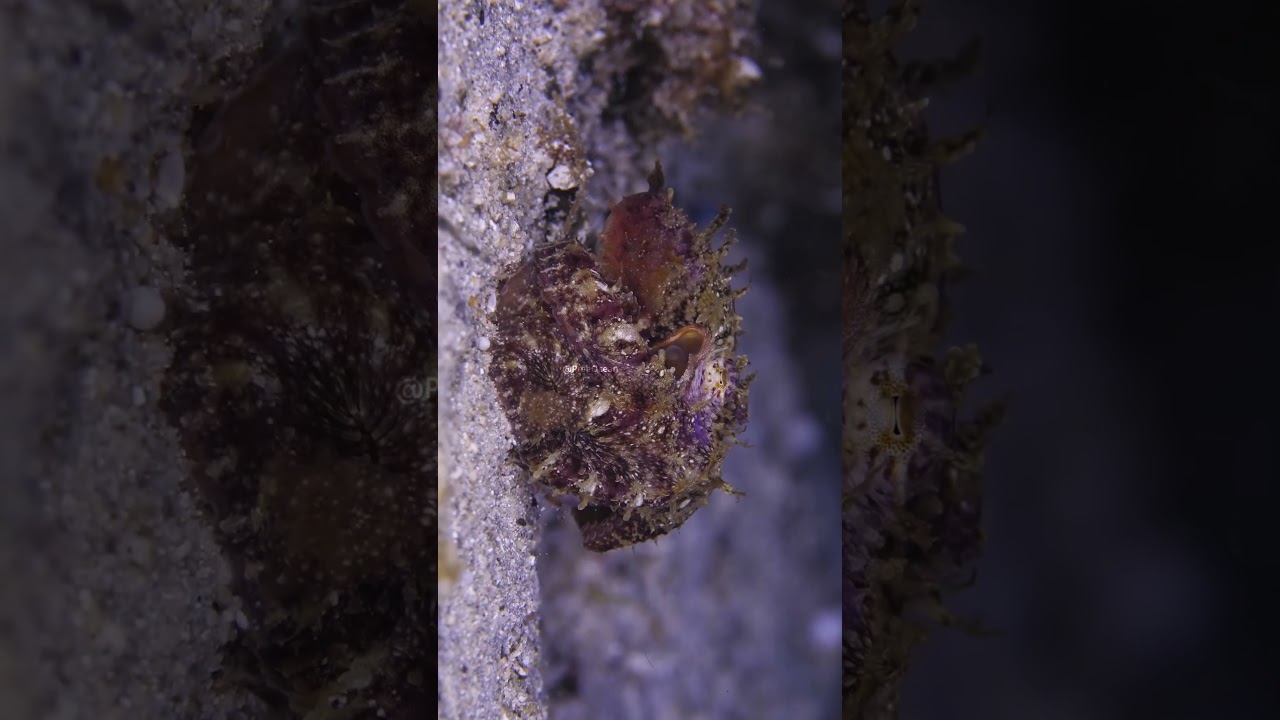
Primary field footage demonstrates an individual algae octopus (Abdopus aculeatus) anchored vertically against porous limestone reef substrate. The cephalopod maintains a compact resting posture, drawing its eight arms close to the central body mass. This physical positioning reduces visual silhouette visibility while maximizing ventral sucker contact with the irregular rock surface.
Direct respiratory mechanics are visible along the lateral edge of the mantle cavity. The tubular hyponome siphon pulses regularly at a frequency of 18 to 24 contractions per minute. Water enters through lateral mantle openings, flows across the internal ctenidia for gas exchange, and expels through the siphon opening without causing significant substrate displacement.
Subtle physical adjustments occur throughout the observation window. The octopus contracts its mantle walls to drive exhaled water current downward, preventing localized sediment plumes from alerting potential predators. Each arm remains firmly anchored via muscular acetabula suction, maintaining positional stability against ambient water motion.
Anatomical structures of dynamic crypsis and skin morphology
Coloration and surface texture matching in Abdopus aculeatus result from coordinated physiological structures within the cutaneous layers. The skin contains thousands of pigment-filled saccules called chromatophores, controlled by radial motor neurons. When these radial muscles contract, pigment sacs expand to expose dark brown, ochre, and deep violet hues across the dorsal surface.
Structural texture modification occurs through elevated dermal papillae. Concentric and longitudinal muscle bundles within the dermal skin layer force interstitial fluids upward, forming raised spires that measure up to 8 millimeters in height. These physical projections disrupt smooth body contours and break up the spherical outline of the mantle.
Beneath the chromatophore layer, specialized iridophores and leucophores reflect ambient light. Iridophores utilize stacks of chitinous platelets to scatter blue and green wavelengths, while leucophores reflect full-spectrum white light. The structural combination creates passive light matching that mirrors the surrounding algae cover.
Intertidal habitat dynamics and benthic ecology
The algae octopus occupies shallow marine habitats across the Indo-Pacific tropical zone. Optimal microhabitats include shallow tide pools, reef flats, and rubble beds where water depth ranges from 0.5 to 10 meters. These locations offer abundant physical crevices for shelter and high densities of invertebrate prey species.
Environmental conditions within intertidal zones subject local organisms to rapid shifts in temperature and oxygen concentrations. During low tide cycles, solar exposure can raise water temperatures in isolated pools to 32 degrees Celsius. Abdopus aculeatus manages these microclimatic fluctuations through physiological metabolic adjustment and short-distance movements across dry rock barriers.
Substrate complexity dictates territory selection for individual octopuses. Coral matrices covered in turfing macroalgae provide optimal structural background for skin papillae matching. Rocky ledges also provide secure anchors during tidal shifts and current surges.
Foraging strategy and arm movement mechanics
Foraging in Abdopus aculeatus relies on a combination of visual scanning and tactile exploration. The octopus extends flexible arms into small rock fissures to search for concealed prey. Each arm contains hundreds of acetabula lined with chemosensory receptor cells that detect chemical traces from hidden crustaceans.
Movement across the substrate operates via muscular hydrostatic skeletal mechanics. Lacking rigid bones, the octopus coordinates longitudinal, circular, and oblique muscle fibers within each arm to achieve fluid elongation, flexing, and suction anchoring. This movement flexibility allows navigation across irregular reef structures.
Comparing invertebrate feeding adaptations across ecological zones reveals diverse mechanical solutions. For example, terrestrial predatory beetles like Carabus ullrichii feeding mechanics rely on rigid chitinous mandibles to crush prey, whereas marine cephalopods utilize hydrostatic tentacles and a muscular buccal mass housing a chitinous beak.
Interspecies dynamics and ecosystem interactions
Within tropical reef food webs, Abdopus aculeatus occupies a dual position as a meso-predator and primary prey item. Major natural predators include moray eels, serranid groupers, and marine snakes. Effective physical crypsis remains the primary defense strategy against visual predators hunting along the reef surface.
When primary visual concealment fails, the cephalopod executes secondary active escape responses. Contraction of the mantle muscles forcibly ejects stored water through the hyponome siphon, driving jet propulsion speeds up to 2 meters per second. Concurrently, dark melanin ink expels from the ink sac to create visual disruption and dull predator olfactory receptors.
Ecological mechanisms observed in marine ecosystems parallel adaptations found in littoral bird species. Coastal birds like Eurasian coot running on water utilize specialized foot surface area to navigate intertidal water boundaries, whereas benthic octopuses maximize adhesive friction across submerged rock faces.
Conservation status and environmental vulnerabilities
The International Union for Conservation of Nature currently classifies regional populations of Abdopus aculeatus within Data Deficient status due to limited systematic baseline surveys. Local population monitoring indicates stable abundance across healthy reef flat habitats.
Environmental pressures impacting shallow reef ecosystems represent potential long-term threats to local octopus density. Coral bleaching, rising sea temperatures, and coastal sedimentation reduce macroalgae substrate quality and decrease microhabitat crevice availability. Protecting intertidal marine flats remains essential for sustaining benthic cephalopod communities.
How does the algae octopus change its skin texture?
The algae octopus alters its skin texture using dermal papillae controlled by specialized muscle networks. Concentric circular muscles force interstitial dermis fluid into vertical projections, creating three-dimensional spires that mimic surrounding reef structures.
What is the function of the octopus siphon?
The siphon, or hyponome, is a muscular tube used for respiration, metabolic waste discharge, and jet propulsion. Water enters the mantle cavity, passes over the ctenidia, and expels through the siphon to maintain oxygenation or generate directional motion.
Where does the algae octopus naturally live?
The algae octopus inhabits tropical intertidal zones and shallow coral reefs across the Indo-Pacific region. They typically occupy limestone crevices and shallow lagoon slopes at depths between 0.5 and 10 meters.
What organisms make up the diet of an algae octopus?
Algae octopuses feed primarily on small benthic crustaceans, such as xanthid crabs and stomatopods, along with littoral gastropods. They probe coral crevices with flexible arms and secure prey using muscular suckers.