
Direct answer summary
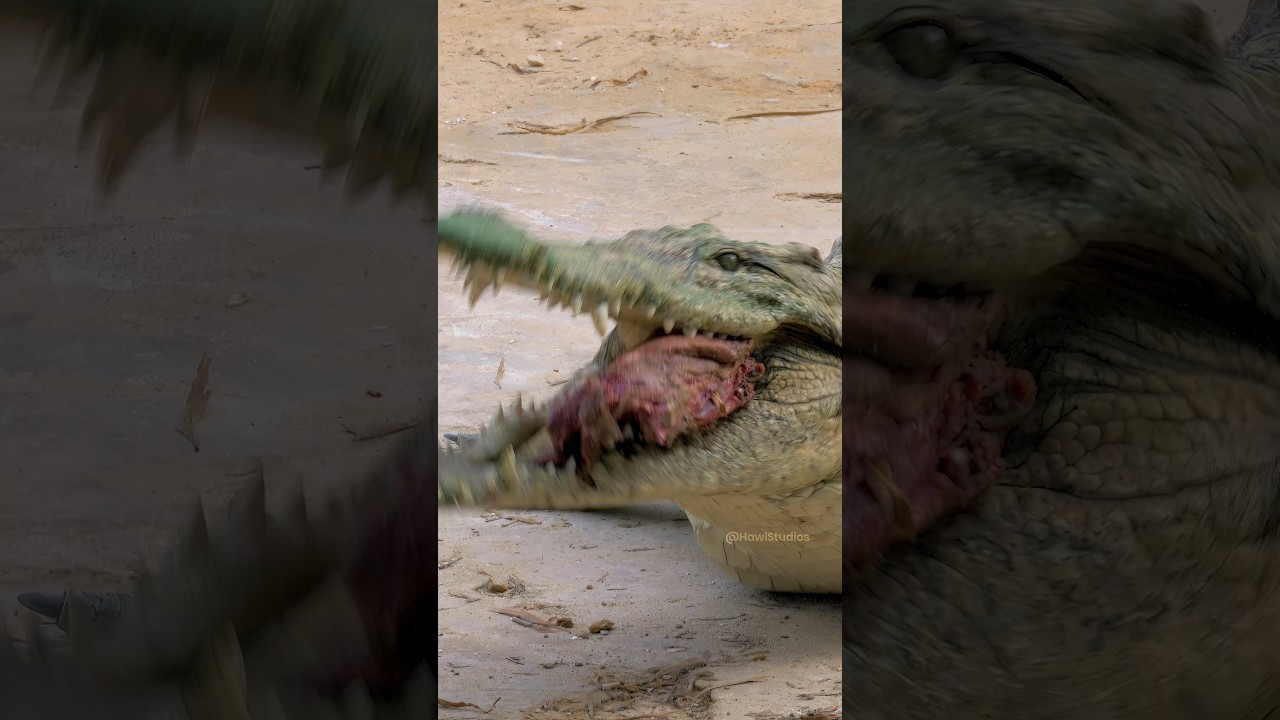
Nile crocodile feeding mechanics rely on inertia feeding, a process where Crocodylus niloticus elevates its head and utilizes gravity and neck momentum to propel large unchewed food items into the esophagus. Lacking lateral jaw mobility and a flexible tongue, the reptile cannot chew flesh manually.
Key Field Takeaways
- Taxonomic Classification: Class Reptilia, Order Crocodilia, Family Crocodilidae, Crocodylus niloticus.
- Primary Behavioral Adaptation: Inertia feeding and kinetic head tossing to move unchewed food down the esophagus.
- Ecological Niche & Range: Apex aquatic predator distributed across freshwater rivers, swamps, and estuaries throughout Sub-Saharan Africa.
- Conservation & Field Status: IUCN Red List status of Least Concern, with protected populations maintaining ecosystem structure.
| Property | Specification |
|---|---|
| Scientific Name | Crocodylus niloticus |
| Common Name | Nile Crocodile |
| IUCN Status | Least Concern |
| Primary Diet | Fish, mammals, birds, carrion |
| Habitat Range | Sub-Saharan Africa rivers, lakes, and marshes |
| Key Adaptation | Static jaw mechanics and palatal valve for underwater and terrestrial prey handling |
Frame-by-frame observation of Nile crocodile feeding mechanics
The visual record documents a Nile crocodile resting on an exposed sandy bank during a feeding sequence. In the initial frames, the predator holds a raw meat portion measuring approximately 20 to 30 centimeters across in its anterior jaw. The conical teeth puncture the tissue surface, securing the food without shearing it into smaller fragments.
As the feeding sequence unfolds, the reptile shifts its weight on its forelimbs and elevates its snout at an angle of roughly 35 to 45 degrees above horizontal. Because crocodilians lack a mobile muscular tongue to move objects backward in the oral cavity, the animal uses sudden upward head movements. This backward thrust uses momentum to lift the meat free from the teeth, allowing gravity to drag the mass deeper into the pharynx.
In the final frames, the lower jaw snaps upward while the head lowers back toward the sand. Throat muscular contractions shift the mass past the palatal valve into the muscular esophagus. This repeated inertial toss allows large pieces of flesh to be ingested whole without prior mastication.
Anatomical features and jaw morphology of Crocodylus niloticus
The skull architecture of Crocodylus niloticus is optimized for high vertical bite forces rather than complex lateral jaw movements. The lower jaw articulates with the quadrate bones in a rigid hinge joint that restricts motion primarily to opening and closing. This structural rigidity allows adult specimens to exert bite forces exceeding 16,000 newtons at the posterior teeth.
The teeth of the Nile crocodile are homodont and conical, numbering between 64 and 68 throughout the upper and lower jaws. These teeth lack serrated cutting edges, rendering them incapable of slicing through meat like mammalian carnivores. Instead, the teeth act as mechanical anchors designed to pierce and hold struggling prey or stationary flesh fragments.
Inside the oral cavity, a specialized muscular fold called the palatal valve seals the back of the throat from incoming water or debris. This valve allows the animal to open its mouth underwater without drowning. During terrestrial swallowing, the palatal valve opens fully to permit large chunks of food to pass into the esophagus.
Digestive mechanics and gastric adaptations of apex crocodilians
Because Nile crocodiles ingest large intact pieces of meat, bones, and skin, their internal digestive apparatus must perform intense chemical processing. The stomach of Crocodylus niloticus contains two distinct chambers: a muscular gizzard-like stomach and a chemical digestive stomach. Gastric glands secrete hydrochloric acid at pH levels below 1.5, creating an environment acidic enough to dissolve bones, hooves, and dense cartilage within several days.
To assist in mechanical breakdown, crocodilians frequently ingest gastroliths, which are small stones retained inside the muscular stomach chamber. These stones roll against ingested food fragments during stomach contractions, breaking down fibrous tissue and accelerating chemical digestion. This dual mechanical and chemical digestive pathway maximizes nutrient recovery from unchewed prey items.
The metabolic rate of Crocodylus niloticus is ectothermic, allowing individuals to survive extended periods between meals. A single large feeding event can sustain an adult crocodile for several weeks or even months depending on ambient temperatures. Carnivores with higher basal metabolic rates, such as those evaluated in analyses of cheetah feeding mechanics, require far more frequent feeding cycles to sustain body temperature and energy output.
Ecological role and scavenged food source utilization
Nile crocodiles function as both active ambush predators and opportunistic scavengers within African freshwater ecosystems. While adult individuals hunt large ungulates during river crossings, scavenging accounts for a substantial percentage of their total caloric intake. Carcasses of hippopotamuses, giraffes, or domestic livestock resting on riverbanks provide accessible nutrients without the energy expenditure of an active chase.
When interacting with large food sources on land, crocodilians display opportunistic solitary or group feeding strategies. Unlike mammalian scavengers detailed in studies of black-backed jackal feeding mechanics, crocodilians cannot use precise incisors to pick small scraps off bones. Instead, they rely on inertial swallowing for loose chunks, or perform high-torque death rolls in water to tear massive carcasses into manageable sizes.
This dual role as predator and scavenger prevents organic waste accumulation along riverbanks and aquatic margins. By consuming decomposing carcasses, Nile crocodiles restrict nutrient overload in water bodies and control pathogen proliferation. Their presence helps regulate aquatic community structures across Sub-Saharan river networks.
Conservation status and habitat maintenance of African rivers
Currently classified as Least Concern on the IUCN Red List, Crocodylus niloticus remains widely distributed across African aquatic environments. However, localized populations face persistent threats from habitat degradation, dam construction, river pollution, and targeted hunting for skin and meat. Maintaining healthy river corridors and natural bank topography is essential for nesting and basking behaviors.
The survival of healthy crocodilian populations maintains trophic balance across tropical river systems. Disruption of crocodile populations often leads to shifts in fish species dominance and secondary ecosystem alterations. Conservation initiatives focus on community-based wildlife management, sustainable river usage, and protecting vital nesting sites from human encroachment.
Understanding the feeding adaptations and mechanical limits of Crocodylus niloticus highlights the evolutionary success of crocodilian lineages spanning millions of years. Unlike specialized predators with delicate capture tools such as those discussed in breakdowns of Veiled Chameleon feeding, the raw mechanical force and digestive resistance of the Nile crocodile provide high resilience in dynamic aquatic environments.