
Direct answer summary
Asian elephant river bathing is a vital thermoregulatory and integumentary care behavior for Elephas maximus. Lacking sweat glands over most of their bodies, Asian elephants enter shallow tropical rivers to transfer excess body heat into the water column and draw water into their muscular trunks for dorsal spraying.
Key Field Takeaways
- Taxonomic Order: Mammalia, Proboscidea, Elephantidae, Elephas maximus.
- Trunk Architecture: Contains approximately 40,000 muscle units enabling rapid fluid intake of 8 to 10 liters.
- Thermoregulatory Rate: Direct river immersion accelerates body heat loss up to ten times faster than air convection.
- Conservation Status: Classified as Endangered on the IUCN Red List due to habitat fragmentation.
| Parameter | Biological Metric |
|---|---|
| Binomial Name | Elephas maximus |
| Common Name | Asian elephant |
| IUCN Status | Endangered |
| Adult Body Mass | 2,700 to 5,000 kilograms |
| Trunk Intake Capacity | 8 to 10 liters per draw |
| Natural Habitat | Tropical moist broadleaf forests and riparian zones |
Asian elephant river immersion and limb movement mechanics
Frame-by-frame motor control in shallow stream flow
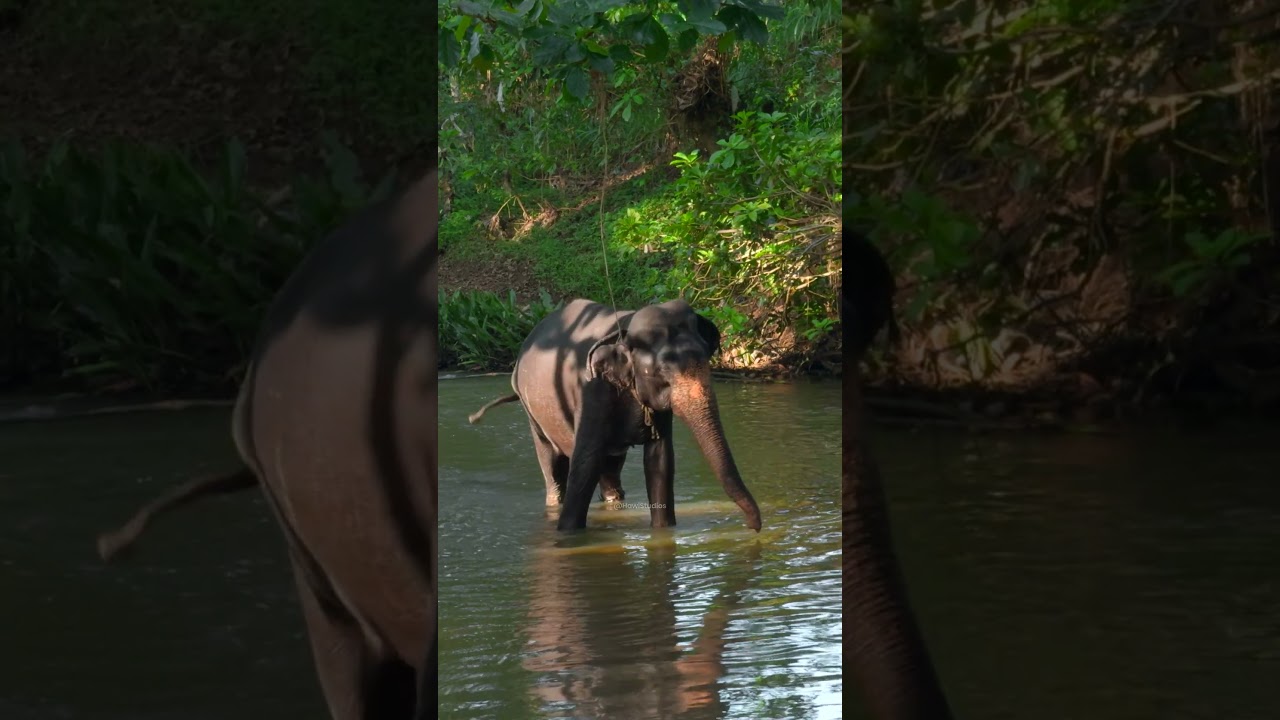
Observational footage reveals the continuous biomechanical adjustments an Asian elephant makes while wading in a shallow tropical river. The individual positions its massive columnar limbs deep in the sandy riverbed, shifting body weight from left to right to maintain stability against the current. The forelimbs absorb the force of the river current while the hindlimbs anchor into substrate sediment.
As the animal moves, its trunk executes rhythmic, fluid sweeping movements across the water surface. These trunk movements create visible surface ripples while siphoning clean surface water. By comparing this aquatic behavior to terrestrial movements such as African elephant drinking mechanics, researchers can observe how elephant species adapt their muscular hydrostat for fluid manipulation.
Anatomy of the proboscidea hydrostatic trunk system
Muscular fascicle control during water siphoning
The trunk of Elephas maximus operates as an extraordinarily sophisticated muscular hydrostat entirely devoid of bone structure. It comprises an estimated 40,000 distinct muscular fascicles arranged in longitudinal, radial, and oblique groups around two central nasal passages. This architecture permits precise extension, twisting, and controlled fluid suction.
During stream bathing, nasal passages expand through radial muscle contractions, generating internal vacuum pressure. The animal draws up to 10 liters of water into the trunk within two seconds without allowing fluid to pass into the lower respiratory tract. The single prehensile finger process at the trunk tip senses water temperature and depth before intake.
Thermoregulation and integumentary health in humid climates
Vasodilation and evaporative skin cooling dynamics
Asian elephants inhabit high humidity tropical zones where air temperatures frequently exceed 35 degrees Celsius. Because their dermis lacks eccrine sweat glands, large body mass retains substantial internal metabolic heat. Direct river immersion allows rapid heat transfer from subcutaneous blood vessels into the cooler river water.
Complementing water immersion, the broad ear pinnae undergo vasodilation while flapping back and forth. Warm blood circulating through dense capillary networks behind the ears cools rapidly when exposed to air currents and water droplets. Similar thermal relief strategies appear across other tropical taxa, such as spotted hyena water play during peak equatorial heat.
Hydrodynamics and riverbed habitat interactions
Weight distribution and sediment manipulation
The feet of Elephas maximus feature broad, cushioned soles made of fibrous fatty tissue that expand under weight. As the elephant steps through river channels, footpads expand to distribute thousands of kilograms evenly across soft river sediments. This prevents deep sinking while compressing muddy riverbeds.
While standing in water, trunk movements loosen river bottom sediments, releasing trapped nutrients and benthic organisms into the current. The elephant often sweeps water over its head and back, allowing fine silt to coat its skin folds. This temporary mud layer protects against solar radiation and ectoparasites like leeches and biting flies.
Ecosystem roles and conservation challenges
Keystone ecological impact in tropical Asian watersheds
As megaherbivores, Asian elephants act as ecosystem engineers within river corridors. By clearing aquatic vegetation along stream channels and trampling over banks, they maintain open water access for smaller wildlife species. River movement also aids seed dispersal for aquatic and riparian plants.
However, Elephas maximus populations face rising pressure from habitat fragmentation and agricultural encroachment along river basins. Protecting contiguous forest corridors and natural water systems remains essential for preserving wild Asian elephant herds across South and Southeast Asia.
Why do Asian elephants submerge themselves in tropical rivers?
Asian elephants submerge in rivers primarily for thermoregulation and skin care. Because Elephas maximus lacks functional sweat glands across most of its body, standing in water allows direct conductive heat transfer and evaporative cooling. Water immersion also hydrates dry epidermal folds and washes away external parasites.
How much water can an Asian elephant trunk hold during river bathing?
An adult Asian elephant trunk can siphon between 8 and 10 liters of water in a single intake. The trunk uses dual muscular nostrils controlled by hydrostatic pressure to draw water upward without inhaling fluid into the lungs.
What is the physical difference between Asian and African elephant trunks?
The trunk of an Asian elephant (Elephas maximus) features a single prehensile finger-like projection at its tip, whereas an African elephant (Loxodonta africana) possesses two distinct prehensile fingers. This structural distinction alters how each species grasps objects and handles river fluids.
How does river water play help elephant skin integrity?
River water hydrates the keratinized epidermal layer of the elephant hide, preventing painful cracking. Soaking in water combined with mud coating acts as a natural sunblock and deters biting insects.