
Direct answer summary
Tropical stream ecology in rainforest waterfall environments relies on steep hydraulic gradients and dense riparian vegetation. Fast-flowing cascades aerate the water column, producing dissolved oxygen levels near saturation between 8.0 and 10.5 milligrams per liter that sustain specialized aquatic larvae, benthic macroinvertebrates, and biofilm communities.
Key Field Takeaways
- Taxonomic & Habitat Classification: Tropical Montane Riparian Stream Corridor (Freshwater Lotic Ecosystem).
- Hydraulic Dynamics: High-velocity turbulent cascade flow generating oxygen saturation levels between 8.0 and 10.5 milligrams per liter.
- Structural Features: Calcified limestone substrates covered by epiphytic bryophytes and coarse woody debris spanning the stream channel.
- Ecological Importance: is a primary microhabitat for rheophilic macroinvertebrates, aquatic larvae, and specialized riparian fauna.
| Ecosystem Metric | Field Parameter & Biological Data |
|---|---|
| Ecosystem Type | Tropical Rainforest Lotic Cascade / Riparian Stream |
| Flow Velocity Range | 1.2 to 3.5 meters per second (turbulent flow) |
| Dissolved Oxygen | 8.0 to 10.5 mg/L (100 percent saturation) |
| Dominant Substrates | Calcified limestone, bedded gravel, and moss |
| Key Flora Components | Climbing Araceae, epiphytic bryophytes, tropical ferns |
| Primary Trophic Drivers | Algal biofilms, leaf litter detritus, macroinvertebrates |
Frame-by-frame structural analysis of the tropical stream cascade
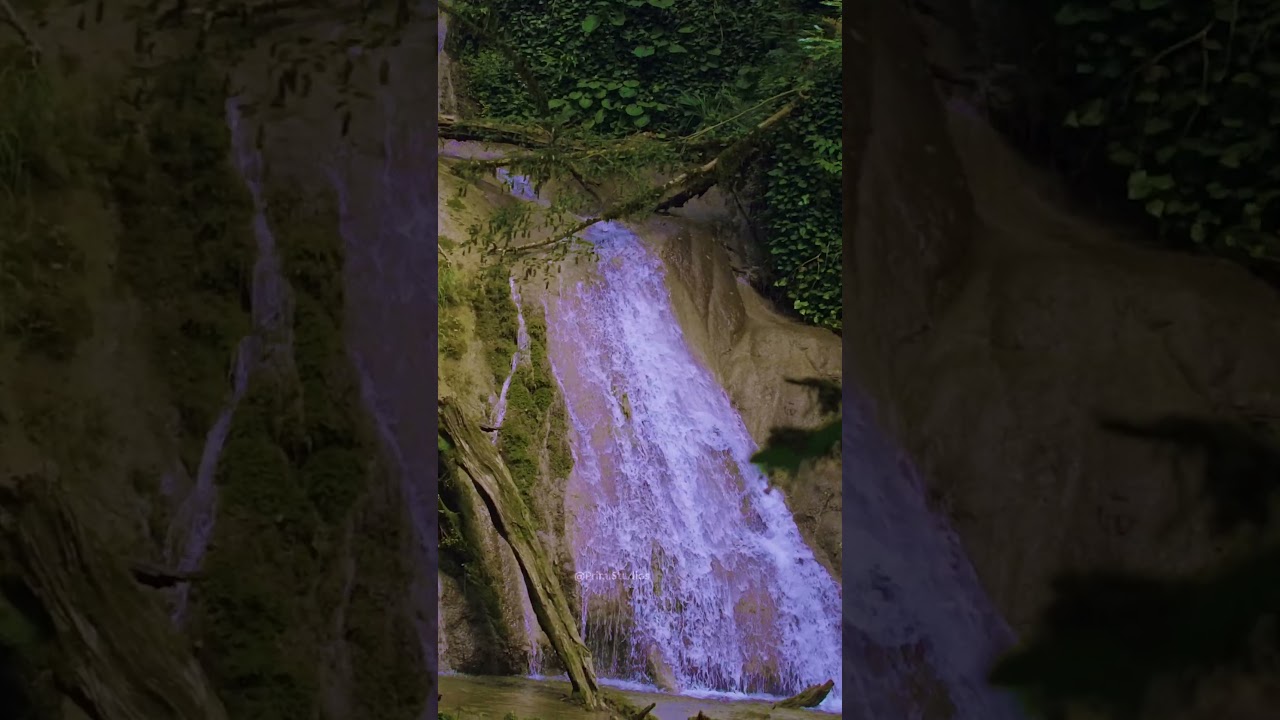
The footage documents a high-gradient tropical stream cascade in a dense rainforest environment. Continuous water discharge flows over calcified limestone bedrock at an estimated fluid velocity of 1.2 to 3.5 meters per second. The vertical drop generates high kinetic energy, resulting in white water aeration across the face of the waterfall.
A large fallen log spans the upper stream channel, forming a coarse woody debris dam. This structural feature traps floating organic matter and creates micro-eddies that slow local fluid motion. Similar hydrological structural influences are observed in macro-faunal interactions, such as Asian elephant river bathing hydraulics in tropical freshwater channels.
Morphological and physiological adaptations of riparian vegetation
The surrounding vertical rock faces are heavily colonized by epiphytic bryophytes and climbing angiosperms, primarily from the family Araceae. These plants utilize specialized adventitious roots to anchor securely into wet limestone substrates under constant spray conditions. Mosses like Fissidens species form dense mats that withstand mechanical shear stress from running water.
Broad leaves oriented toward the canopy maximize light interception in shaded forest understories. The continuous high humidity created by waterfall mist prevents desiccation, allowing non-vascular plants to maintain high photosynthetic efficiency without specialized stomatal closure mechanisms.
Hydrodynamics and aquatic microhabitat differentiation
The hydraulic force of cascading water creates distinct functional zones within the stream bed. High-velocity splash zones host specialized rheophilic organisms equipped with physical attachment adaptations, such as suction discs or silk anchor threads. Water turbulence continuously supersaturates the aquatic column with atmospheric oxygen.
Beneath the primary plunge pool, flow velocities decrease, permitting fine sediment accumulation. These depositional microhabitats provide stable benthic substrate for burrowing larvae and detritivores. Terrestrial organisms navigating humid understories often demonstrate specific physical movement adaptations, comparable to caterpillar locomotion mechanics on damp forest foliage.
Benthic food webs and interspecies biological relationships
Energy flow in tropical stream cascades depends heavily on allochthonous inputs, primarily leaf litter falling from canopy trees. Benthic macroinvertebrates, including stonefly nymphs (Order Plecoptera) and caddisfly larvae (Order Trichoptera), shred terrestrial leaves, converting coarse detritus into fine particulate organic matter. Algal biofilms coating submerged rocks form the base of the autochthonous food chain for grazing aquatic snails.
Small stream-dwelling predators, including torrent frogs and freshwater crabs, exploit these macroinvertebrate concentrations along the spray zone. Canopy mammals foraging along forest edges also interact with riparian resources, similar to Eurasian red squirrel foraging patterns observed in temperate river corridors.
Ecosystem threats and tropical stream conservation
Tropical freshwater stream ecosystems face severe degradation from deforestation, agricultural runoff, and climate-induced hydrological changes. Canopy removal increases water temperatures, reducing dissolved oxygen retention and destabilizing sensitive rheophilic species. Sedimentation from land clearing smothers benthic gravels, destroying breeding sites for aquatic insects and amphibians.
Protecting intact riparian buffer zones maintains natural shading, reduces nutrient enrichment, and preserves the physical structural complexity required for tropical freshwater biodiversity.