
Direct answer summary
New England Aster (Symphyotrichum novae-angliae) is a native perennial herb in the family Asteraceae that provides vital nectar and pollen for late-season pollinators. Its composite flower head features central disc florets that offer rich carbohydrates and amino acids before winter dormancy.
Key Field Takeaways
- Taxonomic Classification: Family Asteraceae, Genus Symphyotrichum, Species Symphyotrichum novae-angliae.
- Primary Pollinator Adaptation: High-density capitulum composite florets producing autumn nectar containing sucrose and amino acids.
- Ecological Niche & Range: Native across eastern and central North America in moist prairies, meadows, and stream banks.
- Conservation & Field Status: Globally secure, functioning as a key food resource for overwintering queen bumblebees.
| Taxonomic & Biological Feature | Field Specification Details |
|---|---|
| Binomial Nomenclature | Symphyotrichum novae-angliae |
| Common Names | New England Aster, Michaelmas Daisy |
| Conservation Status | Secure (Least Concern equivalent) |
| Primary Pollinators & Support | Native bees (Andrena, Bombus), syrphid flies, migrating butterflies |
| Habitat & Elevation Range | Moist meadows, prairie remnants, riparian borders (0 to 1,800 meters) |
| Key Anatomical Adaptation | Capitulum inflorescence with outer sterile ray florets and fertile inner disc florets |
Morphological structure of Symphyotrichum capitula
Composite head architecture and ray floret arrangement
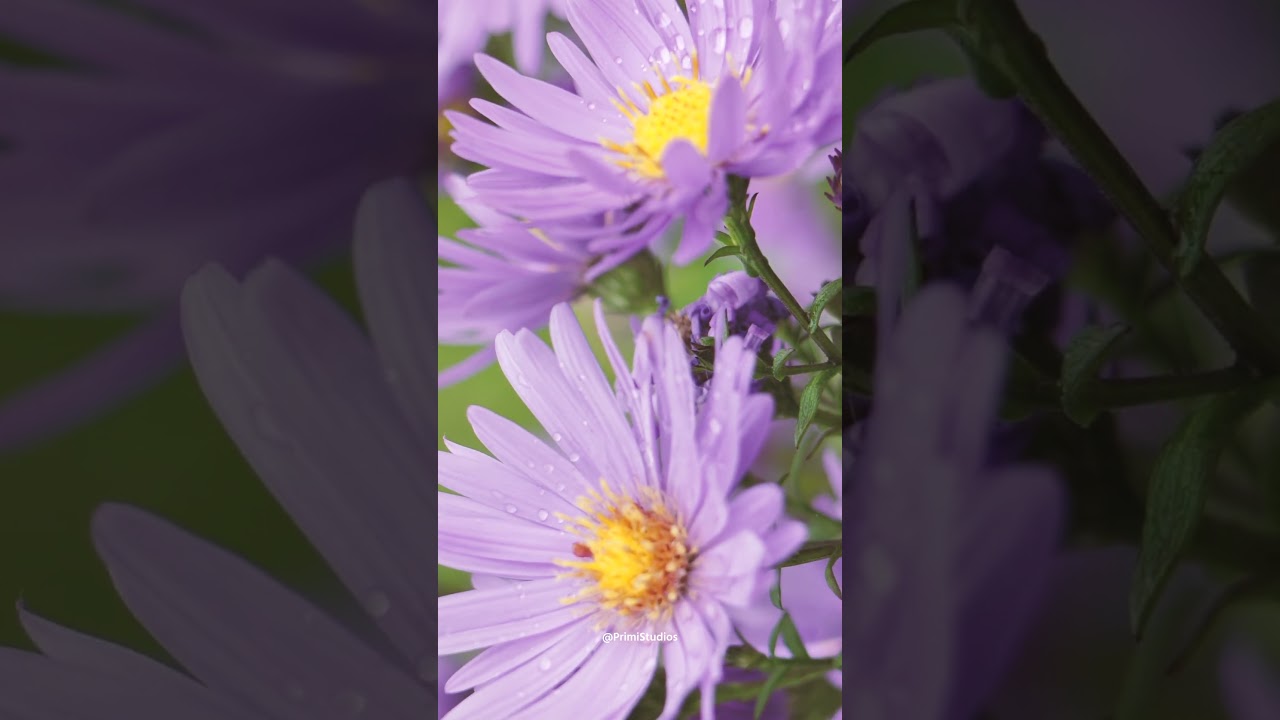
The visible blossom of New England Aster (Symphyotrichum novae-angliae) is not a single flower, but an inflorescence known as a capitulum. This structure comprises 30 to 75 outer ray florets surrounding a dense center of 50 to 110 bisexual disc florets. The elongated violet ray florets function primarily as visual visual signposts, directing foraging insects toward the reproductive center.
Underneath the capitulum, overlapping green bracts called phyllaries protect the developing florets from mechanical damage and herbivory. These phyllaries are covered in small glandular trichomes that secrete sticky resinous compounds. This glandular barrier discourages crawling insects like ants from stealing nectar without providing pollination service.
Disc floret maturation and nectar release mechanisms
The central yellow disc florets mature in a centripetal pattern, opening sequentially from the outer perimeter toward the absolute center. Each individual tubular disc floret contains both male and female reproductive organs. During the initial staminate phase, the anthers release pollen into the interior of the floral tube before the style elongates to expose its receptive stigmatic surfaces.
Nectar glands located at the base of the style secrete a solution dominated by sucrose, glucose, and fructose. This nectar reward sits deep within the corolla tube, requiring insects with modified proboscis lengths to reach it. As florets age and undergo fertilization, internal anthocyanin pigments accumulate, turning the central disc from yellow to dark reddish-purple.
Water retention and surface mechanics on aster florets
Cuticular waxes and dewdrop adhesion dynamics
The visual documentation illustrates water droplets resting on the surface of the ray petals and central florets. This hydrophobic behavior stems from the micro-structured geometry of the petal epidermal cells. Conical cells covered in micro-grooved epicuticular wax crystals create a high water contact angle, preventing moisture from spreading across the petal tissue.
This hydrophobic surface prevents liquid water from clogging the reproductive structures or diluting concentrated nectar reserves inside the corolla tubes. Similar physical surface dynamics occur in other specialized plant structures, such as the solar-tracking movements seen in sunflower heliotropism, where floral orientation regulates temperature and fluid evaporation.
Impact of surface moisture on insect foraging efficiency
Morning dew drops create temporary micro-barriers for tiny pollinating insects. While larger bumblebees easily brush aside water droplets, micro-hymenopterans must wait until humidity decreases and droplets evaporate. The high surface tension of the drops prevents water from entering the narrow openings of the individual tubular florets.
Excess water retention can lead to fungal growth if moisture persists for extended periods. The rapid runoff promoted by the hydrophobic petal surface protects the flower against pathogens such as powdery mildew and grey mold. Once the droplets clear, the floral rewards become completely accessible to active foragers.
Ecological role in late-season pollinator survival
Nectar composition and amino acid profiles for bees
Symphyotrichum novae-angliae blooms from late August through November, a period when most other herbaceous prairie flora has set seed. The nectar produced by this species contains energy-dense sugars along with high concentrations of essential amino acids, including proline and phenylalanine. These chemical compounds provide crucial metabolic energy for late-flying insects.
Newly emerged queen bumblebees (Bombus species) feed heavily on aster nectar to build lipid reserves in their fat bodies. These fat reserves are necessary to survive winter dormancy beneath the leaf litter. Without high-reward late-season asters, queen survival rates during winter drop significantly.
Specialist relationship with the aster bee Andrena aliciae
While generalist bees visit asters frequently, several specialist insects maintain obligate relationships with the genus Symphyotrichum. The aster bee (Andrena aliciae) is an oligolectic species that collects pollen exclusively from composite plants in the tribe Astereae. Female aster bees synchronize their adult emergence with the peak bloom period of Symphyotrichum novae-angliae.
These specialist bees use modified branched hairs on their hind legs to carry coarse aster pollen back to underground nests. Predators in the ecosystem take advantage of these dense pollinator aggregations. Hunting arachnids and insects, whose ambush tactics parallel the strike mechanics analyzed in praying mantis feeding mechanics, regularly position themselves along aster composite heads to catch visiting bees.
Adjacent prairie vegetation and meadow ecosystem dynamics
Co-occurring native flora and soil hydrology
New England Aster thrives in moist soils rich in organic matter, often forming dense colonies along meadow edges and damp prairies. It regularly grows alongside goldenrods (Solidago species), ironweed (Vernonia fasciculata), and native bluestem grasses. These mixed floral stands establish continuous floral bloom sequences throughout the growing season.
The extensive fibrous root system of Symphyotrichum novae-angliae stabilizes saturated soils and prevents erosion along stream banks. Soil micro-organisms, including mycorrhizal fungi, colonize the root zone to assist in phosphorus uptake during period of rapid summer growth.
Trophic support for predatory arthropods
Beyond supporting pollinators, aster foliage is a primary host plant for insect larvae, including the silvery checkerspot butterfly (Chlosyne nycteis). Caterpillar herbivory on aster leaves recycles plant material back into the soil through frass deposition. In turn, social insects foraging nearby, such as those performing organized transport seen in leaf-cutter ant foraging, alter local insect populations around dense plant patches.
Spiders, ambush bugs, and lady beetles occupy the lower stems and capitula of aster colonies. These predatory arthropods regulate herbivore populations by feeding on aphids and thrips, maintaining balanced community dynamics across temperate meadow ecosystems.