
Direct answer summary
Humpback whale calves (Megaptera novaeangliae) maintain continuous physical proximity to their mothers to utilize hydrodynamic drafting, which reduces locomotion drag by up to 28 percent. This physical alignment conserves metabolic energy during ocean travel while facilitating frequent nursing and protection from predators.
Key Field Takeaways
- Taxonomic Classification: Class Mammalia, Order Artiodactyla, Infraorder Cetacea, Family Balaenopteridae, Megaptera novaeangliae.
- Primary Behavioral Adaptation: Hydrodynamic drafting and tactile positioning beneath maternal pectoral fins reduce calf swimming energy expenditure.
- Ecological Niche & Range: Cosmopolitan marine distribution, migrating up to 8,000 kilometers annually between polar feeding grounds and tropical nursing lagoons.
- Conservation Status: Classified as Least Concern globally by the IUCN, though localized populations remain threatened by vessel strikes and fishing gear entanglement.
| Metric / Attribute | Biological Detail |
|---|---|
| Scientific Name | Megaptera novaeangliae |
| Common Name | Humpback whale |
| IUCN Status | Least Concern (global assessment) |
| Neonate Size & Mass | 4 to 4.5 meters, 900 to 1,000 kilograms |
| Adult Size & Mass | 13 to 16 meters, 25,000 to 30,000 kilograms |
| Daily Milk Intake | 200 to 500 liters (45 to 50 percent fat content) |
| Pectoral Fin Length | 4 to 5 meters (up to 33 percent of total body length) |
Observational analysis of calf positioning and movement
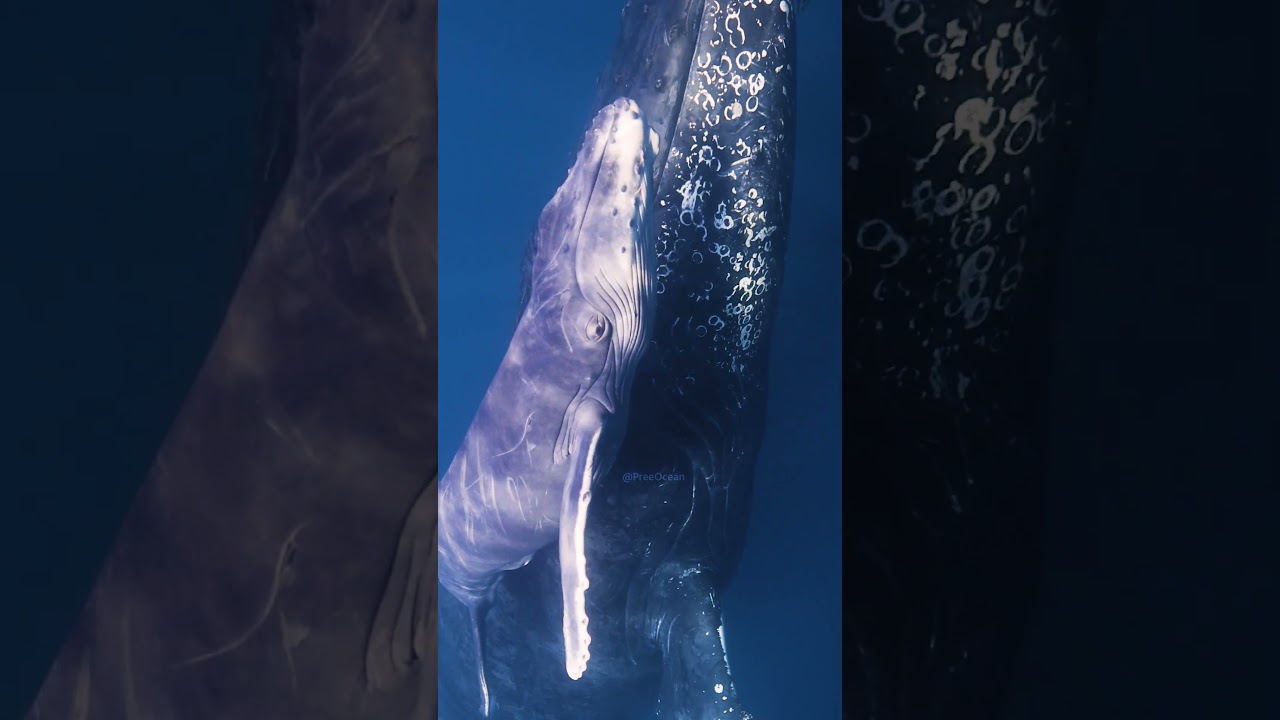
In the video footage, a juvenile humpback whale (Megaptera novaeangliae) maintains close contact with the lateral body surface of its mother. From frame 00:01 through 00:05, the calf positions its rostrum against the mother’s flank, directly beneath the anterior margin of her pectoral fin. The ventral throat grooves on the calf are visible, demonstrating the anatomical flexibility required for future lunge-feeding and initial nursing mechanics.
The skin of the mother features clusters of host-specific barnacles, primarily Coronula diadema, anchored along her head and lower jaw. The calf displays lighter dorsal pigmentation and smooth epidermal surfaces, indicating its young age. Small pectoral adjustments by the calf match the forward movement of the mother, showing that the calf actively maintains a precise spatial orientation within the maternal flow field.
Hydrodynamic drafting and energy conservation in cetaceans
Hydrodynamic drafting, also known as echelon swimming, allows a newborn marine mammal to ride within the fluid boundary layer created by its mother’s larger body. Fluid dynamics studies indicate that a calf swimming in this specific lateral position experiences a reduction in drag forces exceeding 25 percent. This mechanical advantage allows neonates to keep pace with adult migration speeds without depleting vital energy reserves.
Tactile contact and sensory communication
Beyond hydrodynamics, physical contact between mother and calf serves a vital sensory role. Humpback whale mothers use their elongated pectoral fins, which measure up to 5 meters in length, to touch or guide their offspring. This physical touching reinforces the maternal bond, provides directional cues in low visibility waters, and deters predatory species like killer whales (Orcinus orca) from isolating the calf.
Anatomical development and lactation mechanics
Neonate humpback whales are born without the thick subcutaneous blubber layer present in adults. To rapidly build thermal insulation and body mass, calves rely entirely on maternal milk containing up to 50 percent milk fat. The lactation mechanism involves inverted nipples housed within specialized mammary slits. When the calf nudges the mammary area, the mother forcibly squirts milk directly into the calf mouth, minimizing milk loss into the surrounding seawater.
During the first six months, a calf can consume up to 500 liters of milk daily, gaining up to 45 kilograms per day. This rapid growth rate accelerates muscle development and blubber deposition, preparing the calf for the long northbound or southbound migration toward high-latitude feeding grounds.
Ecosystem interactions and physical epibionts
Adult humpback whales serve as mobile habitats for specialized epibiotic organisms. The barnacle Coronula diadema attaches to cetacean skin, forming calcified shell structures that lock into the epidermis. These barnacles do not parasitize the whale, but rather use the host as a transport platform through nutrient rich waters.
Understanding marine species movement and open ocean interactions provides valuable context for broader marine ecology. Similar specialized adaptations occur across diverse aquatic organisms, such as spotted jellyfish pulsing mechanics in shallow coastal ecosystems or specialized camouflage displayed in algae octopus camouflage studies.
Conservation status and human impact factors
While global populations of Megaptera novaeangliae have recovered significantly since commercial whaling bans took effect, localized threats persist. Commercial shipping lanes present risks of lethal vessel collisions, particularly to slow-moving mother and calf pairs resting near the sea surface.
Additionally, entanglement in commercial fishing lines and fixed pot gear remains a primary cause of injury and mortality. High levels of anthropogenic ocean noise from shipping and naval sonar can disrupt maternal acoustic communication, leading to calf separation in critical nursery areas.