
Direct answer summary
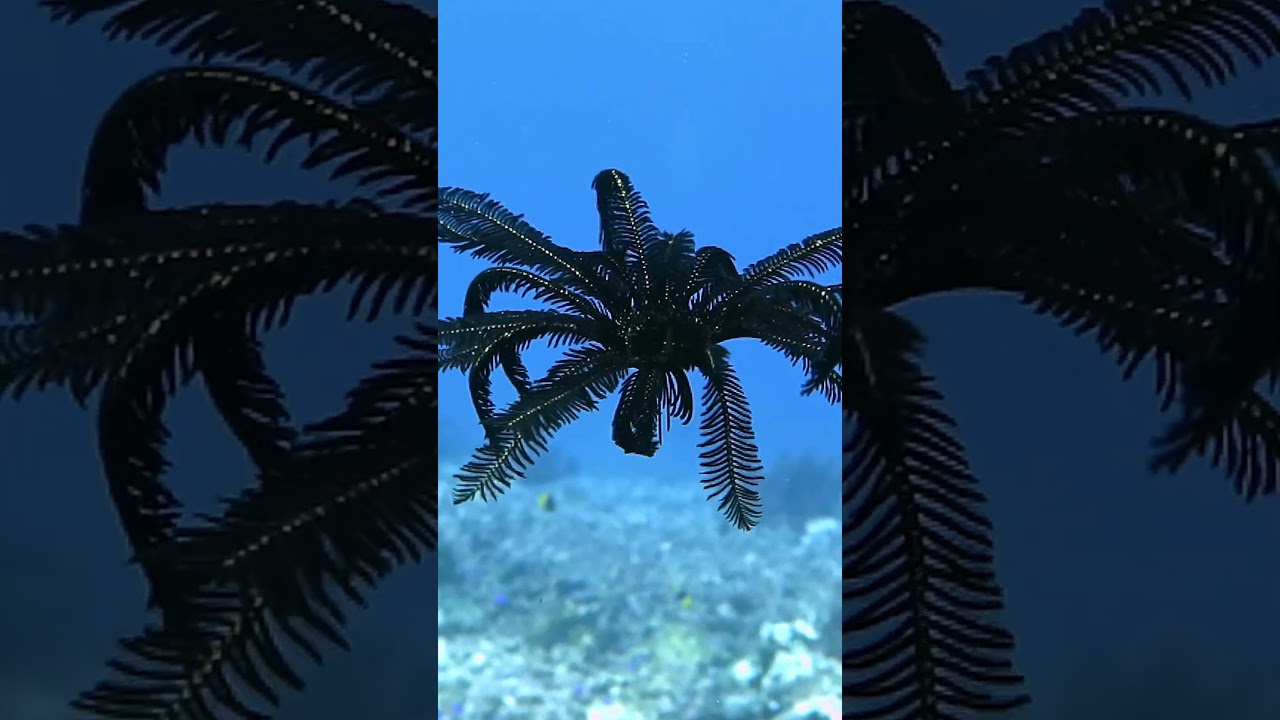
Black feather star swimming is achieved through rhythmic, alternating strokes of pinnate arms that contract in coordinated groups to push water downward and backward. This fluid mechanical force generates vertical lift and propulsion, allowing the stalkless echinoderm to detach from benthic substrates and navigate open reef waters.
Key Field Takeaways
- Taxonomic Classification: Class Crinoidea, Order Comatulida, Family Tropiometridae, species Tropiometra carinata.
- Primary Behavioral Adaptation: Metachronal swimming strokes utilizing 10 to 30 flexible pinnate arms.
- Ecological Niche & Range: Tropical marine benthos and coral reef faces across depth zones from 1 to 50 meters.
- Conservation & Field Status: Data Deficient to Least Concern, dependent on healthy hard coral reef architectures.
| Taxonomic Metric | Biological Specification |
|---|---|
| Binomial Nomenclature | Tropiometra carinata |
| Common Name | Black Feather Star |
| IUCN Conservation Status | Not Evaluated / Least Concern |
| Primary Diet | Microscopic zooplankton, suspended detritus, microalgae |
| Natural Habitat | Indo-Pacific and Atlantic shallow coral reefs, rocky drop-offs |
| Key Adaptation | Flexible jointed arms with pinnules for dual filter-feeding and swimming propulsion |
Immediate physical observation and swimming mechanics
Observational analysis of the video footage reveals a black feather star executing sustained mid-water locomotion above a coral reef substrate. The organism maintains vertical elevation by engaging its flexible pinnate arms in metachronal stroke patterns. Rather than moving all arms simultaneously, the feather star alternates groups of adjacent arms, alternating between power strokes and recovery phases.
During the power stroke, five to ten arms sweep rapidly downward towards the aboral pole. This motion creates localized water displacement, producing positive thrust that lifts the central cup (calyx) off the ocean floor. Simultaneously, opposing arms curl inward along their longitudinal axes, minimizing drag resistance during the recovery phase before initiating their subsequent downward stroke.
This dynamic stroke frequency ranges between 0.5 and 1.5 cycles per second. The hydrodynamic output maintains stability in open water without rolling or tumbling. Similar hydrokinetic principles are visible in other swimming marine invertebrates, such as spotted jellyfish pulsing mechanics, where rhythmic muscular contractions compress fluid to maintain spatial equilibrium.
Morphological and anatomical adaptations
The body structure of Tropiometra carinata consists of a central body disc, or calyx, housing the complete digestive tract and reproductive organs. Surrounding this central hub are multiple ray arms lined with fine side branches known as pinnules. These pinnules give the appendages their characteristic feather-like appearance while significantly increasing surface area for both propulsion and nutrient capture.
Internal support relies on an endoskeleton composed of porous calcium carbonate plates called ossicles. These ossicles connect via specialized muscular tissues and non-muscular collagenous ligament structures. By altering the rigidity of these mutamorphous ligaments, the black feather star can rapidly switch between a rigid structural posture during stationary filter-feeding and extreme flexibility required for active swimming.
The sensory apparatus operates entirely without central cerebral structures. Instead, an interconnected nerve ring surrounds the oral cavity, feeding main radial nerve trunks along each arm. Microscopic cilia and chemoreceptors along the pinnules detect ambient current speed, salinity, and water pressure, coordinating muscle firing patterns across all arms without centralized brain control.
Habitat range and benthic ecology
Black feather stars occupy shallow tropical and subtropical marine ecosystems across the Indo-Pacific basin and portions of the western Atlantic. They inhabit depth bands from 1 meter down to 50 meters, preferring exposed coral heads, ledges, and rocky overhangs characterized by active hydrodynamics. High-flow zones deliver a steady stream of planktonic prey while assisting passive waste removal.
On the seabed, the black feather star anchors itself using claw-like appendages called cirri. These specialized structures grip hard substrate features, securing the echinoderm against strong surge forces. When conditions become unfavorable, such as reduced current speeds or increased predator activity, the cirri detach, enabling immediate swimming maneuvers into new feeding locations.
This mobility sets free-swimming comatulids apart from sessile crinoids like deep-sea stalked sea lilies. While stationary benthic organisms are bound to local substrate conditions, mobile feather stars navigate micro-habitats to optimize feeding position and thermal conditions across changing tidal cycles.
Interspecies relationships and evolutionary significance
As filter feeders, black feather stars play a steady role in reef nutrient cycling. By capturing floating organic matter and transferring captured particles down mucus-lined food grooves to their mouth, they transfer organic carbon from the water column into benthic food webs. Their presence supports complex micro-habitats, as small commensal organisms like clingfish, harlequin shrimp, and myzostomid worms nestle within their arms for protection.
To deter predators such as larger reef fish and sea stars, black feather stars possess distasteful chemical compounds within their tissues. When targeted by persistent predators, they utilize autotomy, intentionally shedding an arm to escape while defensive chemicals release into the water column. The lost limb completely regenerates within weeks due to rapid cellular division along the ossicle margins.
The evolutionary trajectory of swimming crinoids reflects millions of years of anatomical refinement. Similar flexible limb mechanics for terrestrial movement are seen in organisms studying caterpillar locomotion mechanics, demonstrating how distinct body plans evolve efficient thrust strategies within their respective physical environments.
Conservation status and ecosystem threats
Current populations of Tropiometra carinata maintain stable distributions across global coral reef networks, though comprehensive formal evaluations by the IUCN remain incomplete. Because their lifecycle depends directly on complex structural benthic architectures, habitat degradation poses an ongoing threat to local population densities.
Ocean acidification, rising water temperatures, and coral bleaching events directly impact the structural integrity of reefs. Decreases in ambient ocean pH impair the organism’s capacity to synthesize calcium carbonate ossicles, resulting in brittle limb structures and reduced swimming efficiency. Runoff pollution and sedimentation can also clog delicate feeding pinnules, disrupting nutrient acquisition.
Protecting shallow marine sanctuaries and maintaining water quality controls are essential steps for safeguarding crinoid biodiversity. Preserving healthy coral ecosystems ensures these ancient marine invertebrates continue fulfilling their functional role within ocean food chains.
Adjacent reef micro-niches and behavioral comparisons
The benthic coral reef environment features a wide array of specialized behavioral mechanisms across diverse taxonomic groups. While feather stars rely on arm-driven fluid propulsion to traverse open water, other reef species utilize alternative movement and survival strategies tailored to their specific ecological niches.
For instance, soft-bodied cephalopods exhibit advanced movement and active visual adaptations, as detailed in studies on algae octopus camouflage techniques. Understanding how distinct body plans engage with the spatial constraints of hard coral reefs highlights the varied evolutionary pathways present in shallow ocean ecosystems.
Frequently asked questions
How does a black feather star swim without a brain?
A black feather star coordinates arm movement using a decentralized nervous system centered around an oral nerve ring and axial organ. Nerve cords extend along each arm to trigger synchronized muscle contractions, allowing for fluid propulsive strokes without central cerebral processing.
Can all feather stars swim?
Not all crinoids can swim. Sessile stalked sea lilies remain permanently anchored to deep-sea substrates, whereas stalkless feather stars in the order Comatulida use unattached cirri to walk along the benthos or swim into the water column to escape predators and relocate.
What do black feather stars eat while swimming?
Black feather stars do not feed while swimming. Swimming is reserved for relocating or escaping benthic predators. During stationary periods, feather stars extend their pinnate arms into prevailing water currents to filter zooplankton and organic detritus using sticky tube feet.
How fast can a feather star swim underwater?
Feather stars typically swim at speeds ranging from 1 to 5 centimeters per second. While modest, this velocity allows them to traverse vertical distances off the seabed, escaping predatory sea snails and sea stars.