
Direct answer summary
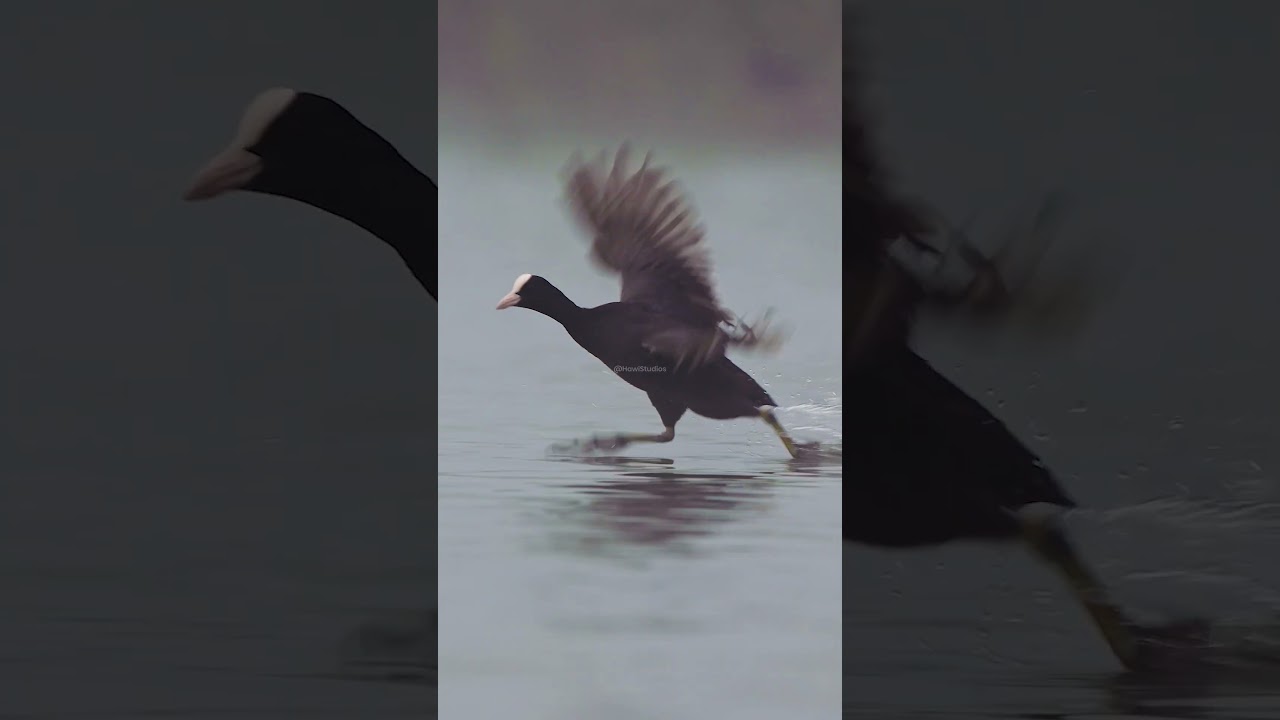
Eurasian coot running on water relies on specialized hydro-propulsion called water-pattering, where flexible lobed toes expand upon striking the surface to generate hydrodynamic thrust. This mechanical action combined with high-frequency wingbeats enables birds weighing 600 to 1,000 grams to overcome heavy wing loading and reach flight velocity.
Key Field Takeaways
- Taxonomic Classification: Order Gruiformes, Family Rallidae, Genus Fulica, Species Fulica atra.
- Primary Locomotor Adaptation: Lobate feet featuring flexible lateral lobes that flare open on power strokes and collapse on recovery strokes.
- Wing-Loading Mechanics: High ratio of body mass to wing area necessitates water surface sprinting to reach lift speed.
- Conservation Status: Listed as Least Concern on the IUCN Red List with broad population distribution across Eurasia.
| Taxonomic Parameter | Biological Specification |
|---|---|
| Binomial Nomenclature | Fulica atra |
| Common Name | Eurasian coot |
| Family | Rallidae |
| IUCN Conservation Status | Least Concern (LC) |
| Adult Body Mass | 600 to 1,000 grams |
| Wingspan Range | 70 to 80 centimeters |
| Foot Morphology | Lobate (lobed toes without full interdigital webbing) |
| Primary Aquatic Locomotion | Water-pattering run and surface swimming |
Immediate physical observation of water pattering
The video footage captures a Eurasian coot (Fulica atra) executing a water-pattering sprint across a calm water surface. The bird lowers its center of mass, holding its neck extended forward at a thirty-degree angle. Each foot alternates in rapid succession, striking the water surface with force to push fluid downward and backward, creating distinct splashes behind the body.
Simultaneously, the wings flap at high frequency, completing full downstrokes and upstrokes. The primary and secondary feathers maintain a rigid orientation during the downstroke to generate vertical lift while the feet produce the primary horizontal acceleration. The combined forces lift the main torso clear of surface drag long before the foot contacts completely cease.
Biomechanical function of lobate toes
Eurasian coots differ structurally from waterfowl such as ducks and geese. Instead of full interdigital webbing (palmate structure), the Eurasian coot possesses lobate feet. Each of the three forward-facing toes bears wide lateral skin flaps divided into individual scalloped segments.
When the foot strikes the water during the power stroke, hydrostatic pressure pushes the skin flaps outward, maximizing the surface area of the foot. This structural expansion allows the bird to push against a large mass of water, generating reactive forward propulsion. During the recovery phase, as the leg pulls forward through the air or water surface, the fluid pressure reverses, folding the lobes flat against the toe bones. This passive hydraulic mechanism reduces drag during leg advancement.
Morphological constraints and wing loading
The Eurasian coot has a heavy body relative to its wing area, a condition known in biomechanics as high wing loading. Adults typically weigh between 600 and 1,000 grams with a wingspan ranging from 70 to 80 centimeters. Because the small wings cannot generate immediate vertical lift from a stationary position, the bird must use its legs to accelerate across the water surface.
This water-running phase serves the same aerodynamic purpose as a runway acceleration in aircraft. By reaching surface speeds between 10 and 15 kilometers per hour, the airflow over the airfoils creates sufficient dynamic pressure to support the weight of the bird. Similar energetic propulsion strategies exist across other aquatic species, such as plains zebra river crossing mechanics where powerful leg strokes overcome water resistance.
Ecological context of surface sprinting
Water-pattering in Eurasian coots occurs during three distinct biological contexts: flight initiation, predator evasion, and intra-specific territorial defense. Eurasian coots maintain strict breeding territories during spring and summer, actively defending feeding zones against neighboring pairs. Fights between individuals involve surface sprinting, aggressive charging, and kicking with the lobed feet while rearing back on the water.
Foraging behavior requires different physical adaptations. While the coot sprints across the water during high-energy encounters, daily feeding relies on shallow surface dipping or short dives down to seven meters to retrieve submerged vegetation. This contrasts with benthic feeding strategies seen in other waterbirds, such as mute swan mud foraging mechanics, where body size and neck length dictate substrate access.
Environmental range and population stability
The Eurasian coot inhabits freshwater lakes, vegetated ponds, slow-flowing rivers, and open reservoirs across Europe, Asia, North Africa, and Australia. The species prefers open water bodies bordered by emergent vegetation such as reeds (Phragmites australis) and cattails (Typha), which provide nesting sites and shelter.
The International Union for Conservation of Nature (IUCN) classifies Fulica atra as Least Concern. World populations remain large and stable, though local populations experience fluctuations linked to wetland drainage, severe winter freezes, and botulism outbreaks. Their ability to thrive in artificial habitats like urban park lakes and agricultural reservoirs ensures high biological resilience across their native range.
Why do Eurasian coots run on water instead of flying directly upward?
Eurasian coots have a high wing loading ratio, meaning their body weight is relatively large compared to their wing surface area. They must run across the water surface to build forward momentum and reach the minimum airspeed required to generate aerodynamic lift.
How do the foot lobes of a Eurasian coot function during locomotion?
The lobate toes feature lateral skin flaps that expand open upon impact with the water surface, creating a wide propulsion surface. During the forward stroke, these flaps fold backward against the toe bones to minimize fluid resistance.
What speed can a Eurasian coot reach while sprinting across the surface?
A Eurasian coot can achieve surface running speeds between 10 and 15 kilometers per hour during pattering takeoffs or agonistic territorial chases.
Are Eurasian coots closely related to ducks?
No, Eurasian coots belong to the family Rallidae in the order Gruiformes, making them more closely related to rails and cranes than to ducks, which belong to the order Anseriformes.