
Direct answer summary
An alpine waterfall functions as a critical hydrological node in mountain ecosystems, providing high levels of dissolved oxygen and creating unique riparian microclimates. These cascades act as physical barriers that influence the distribution and evolutionary trajectory of aquatic organisms.
Key Field Takeaways
- Hydrological Impact: Waterfalls significantly increase oxygen saturation through turbulent aeration of high-velocity water.
- Riparian Stability: Constant moisture from spray zones supports specialized, moisture-dependent vegetation that prevents soil erosion.
- Ecological Barriers: Cascades function as selective filters, isolating aquatic populations and facilitating unique evolutionary pressures.
- Thermal Regulation: The rapid movement and depth of mountain streams, as seen in Eurasian red squirrel habitats, maintain stable cool temperatures essential for cold-adapted organisms.
| Feature | Description |
|---|---|
| Environment | Alpine/Mountainous |
| Flow Velocity | High/Turbulent |
| Oxygenation | High (due to aeration) |
| Riparian Flora | Mosses, ferns, conifers |
| Biological Impact | Physical isolation/speciation |
Hydrological dynamics of mountain waterfalls
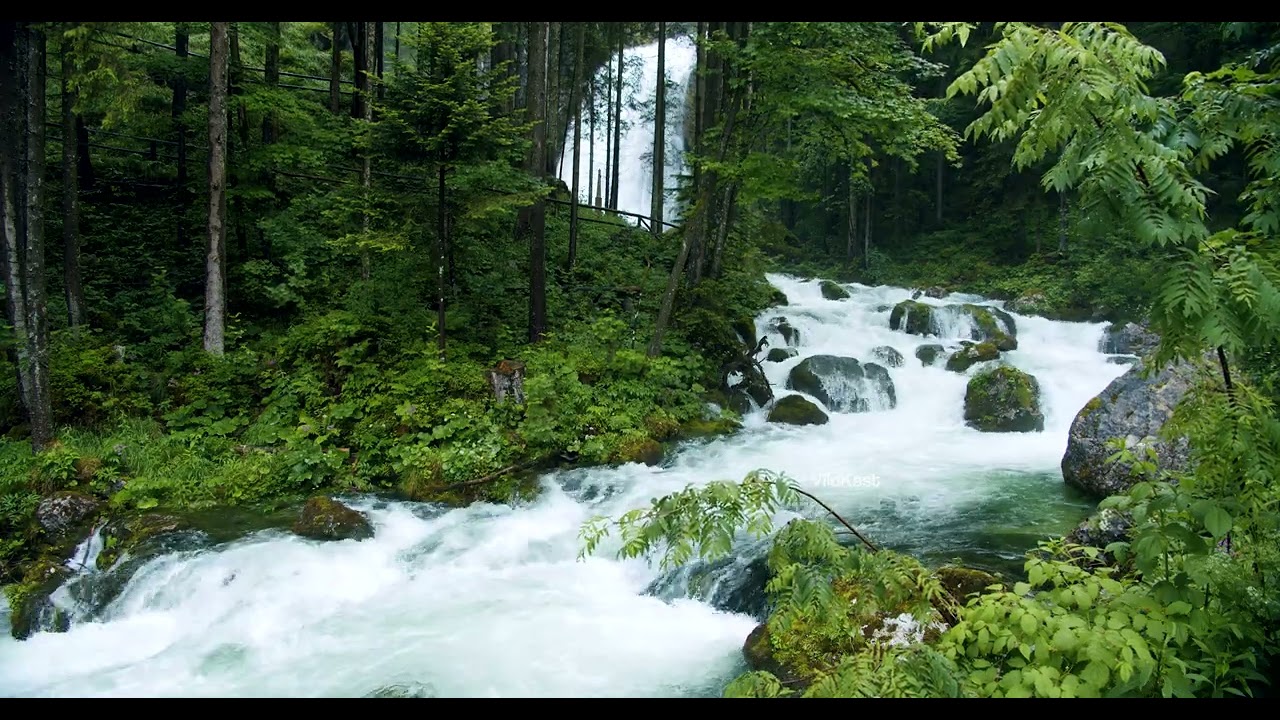
The visual evidence demonstrates a high-volume vertical drop, which is a hallmark of alpine hydrology. As water descends, it gains kinetic energy, resulting in intense turbulence upon impact with the riverbed. This physical process is essential for the continuous aeration of the water column.
Aeration and oxygen saturation
The violent mixing of water and air at the base of the waterfall ensures that dissolved oxygen levels remain near saturation. This process is vital for species that require high oxygen concentrations, such as salmonids and certain benthic macroinvertebrates. The resulting current, characterized by high-velocity flow, dictates the distribution of species capable of navigating such energetic environments.
Riparian habitat and moisture zones
The dense coniferous forest surrounding the waterfall thrives due to the constant presence of water spray. This moisture creates a unique microclimate that allows for the growth of lush, moisture-dependent vegetation, including mosses and ferns. These plants are critical for stabilizing the riverbanks, which prevents excessive sediment erosion during high-flow events.
Vegetation and nutrient cycling
Riparian vegetation acts as a biological filter, intercepting runoff and contributing organic matter into the stream. This organic input provides the base of the food web for aquatic insects, which in turn support higher-order predators. The stability of these banks is essential for maintaining the integrity of the stream channel, similar to the ecological requirements observed in Black-crowned Night Heron foraging environments.
Interspecies dynamics and barriers
Waterfalls function as significant biogeographic barriers. Many aquatic species, including various fish, cannot ascend these vertical drops. This isolation often leads to the development of endemic populations in the headwaters above the falls. These populations evolve under unique selection pressures, distinct from those found in the lower reaches of the river system.
Evolutionary implications
The inability of certain species to traverse these cascades limits gene flow between populations. Over geological timescales, this leads to significant morphological and genetic divergence. Understanding these barriers is essential for assessing the ecological health and connectivity of mountain river systems, much like studying the Zebra Squid burrowing adaptations provides insight into their specific benthic niche.