
Direct answer summary
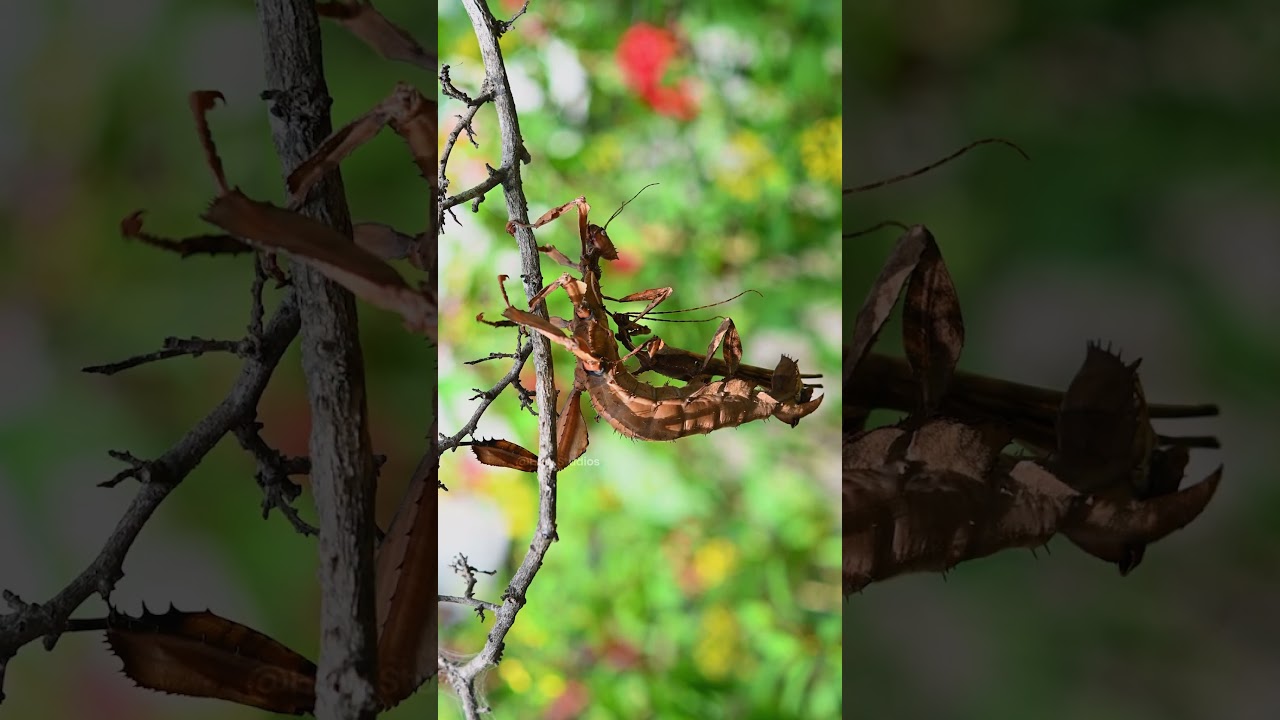
The Giant Prickly Stick Insect (Extatosoma tiaratum) is a large, herbivorous phasmid native to Australia that employs advanced crypsis to evade predation. It mimics the appearance of dead, decaying vegetation through its spiny, bark-textured exoskeleton and sedentary, twig-like posture.
Key Field Takeaways
- Taxonomic Classification: Order Phasmatodea, Family Phasmatidae, Genus Extatosoma.
- Primary Behavioral Adaptation: Passive crypsis, where the insect remains motionless to blend into the surrounding vegetation.
- Sexual Dimorphism: Females reach lengths of up to 20 centimeters, while males are significantly smaller and capable of flight.
- Reproductive Strategy: Females are capable of both sexual reproduction and parthenogenesis to ensure population continuity.
| Feature | Specification |
|---|---|
| Binomial Nomenclature | Extatosoma tiaratum |
| Common Name | Giant Prickly Stick Insect |
| IUCN Status | Not Evaluated |
| Diet | Foliage (Eucalyptus, Bramble, Rose) |
| Habitat | Forests and shrublands of Australia |
| Key Adaptation | Cryptic camouflage and spiny defensive armor |
Morphological and anatomical adaptations
The Giant Prickly Stick Insect possesses a highly specialized exoskeleton designed for survival in dense forest understories. Its body surface is covered in irregular protrusions and spines that break up its silhouette, effectively mimicking the texture of bark or dried twigs. This morphological strategy is a primary defense mechanism against visual predators.
The legs of the Giant Prickly Stick Insect are equally adapted for camouflage. They feature flattened extensions and thorny growths that further enhance the illusion of a broken branch. When threatened, the insect may sway gently, mimicking the movement of a twig caught in a light breeze to reinforce its disguise.
Cryptic behavior and defense mechanics
Behavioral ecology in the Giant Prickly Stick Insect centers on the principle of immobility. By remaining stationary during daylight hours, the insect avoids detection by visually oriented predators such as birds and lizards. This behavior is supported by a metabolic state that allows for long periods of inactivity.
Beyond passive crypsis, the Giant Prickly Stick Insect displays active defense strategies when discovered. It can curl its abdomen forward, mimicking the posture of a scorpion, or emit a defensive, almond-scented chemical secretion. These behaviors serve to deter potential threats without the need for high-energy expenditure or physical combat.
Habitat and ecological niche
Native to the forests of Queensland and New South Wales, the Giant Prickly Stick Insect occupies a specific niche within the canopy and understory. It prefers environments with high plant density, where its camouflage is most effective against a backdrop of leaves and branches. As a primary herbivore, it contributes to the nutrient cycle by consuming plant matter and depositing frass on the forest floor.
Understanding the praying mantis feeding mechanics provides an interesting point of comparison, as both insects rely on specialized physical adaptations to interact with their environment. While the mantis is an active hunter, the Giant Prickly Stick Insect is an evolutionary master of the defensive, sedentary lifestyle. Their presence supports the complex trophic webs found in Australian woodland habitats.
Reproductive biology and life cycle
The life cycle of the Giant Prickly Stick Insect involves hemimetabolous development, where nymphs emerge from eggs as smaller versions of the adults. The eggs themselves are remarkably seed-like in appearance, often featuring a capitulum that can attract ants, which may transport the eggs to secure locations. This interaction is an example of myrmecochory, where the insect utilizes ant behavior to protect its offspring.
Females are significantly larger than males, reflecting the high energy requirements for egg production. In the absence of males, females of the Giant Prickly Stick Insect can produce fertile eggs through parthenogenesis, a biological adaptation that ensures the survival of the population in isolated environments. This flexibility highlights the evolutionary success of the species in diverse habitats.