
Direct answer summary
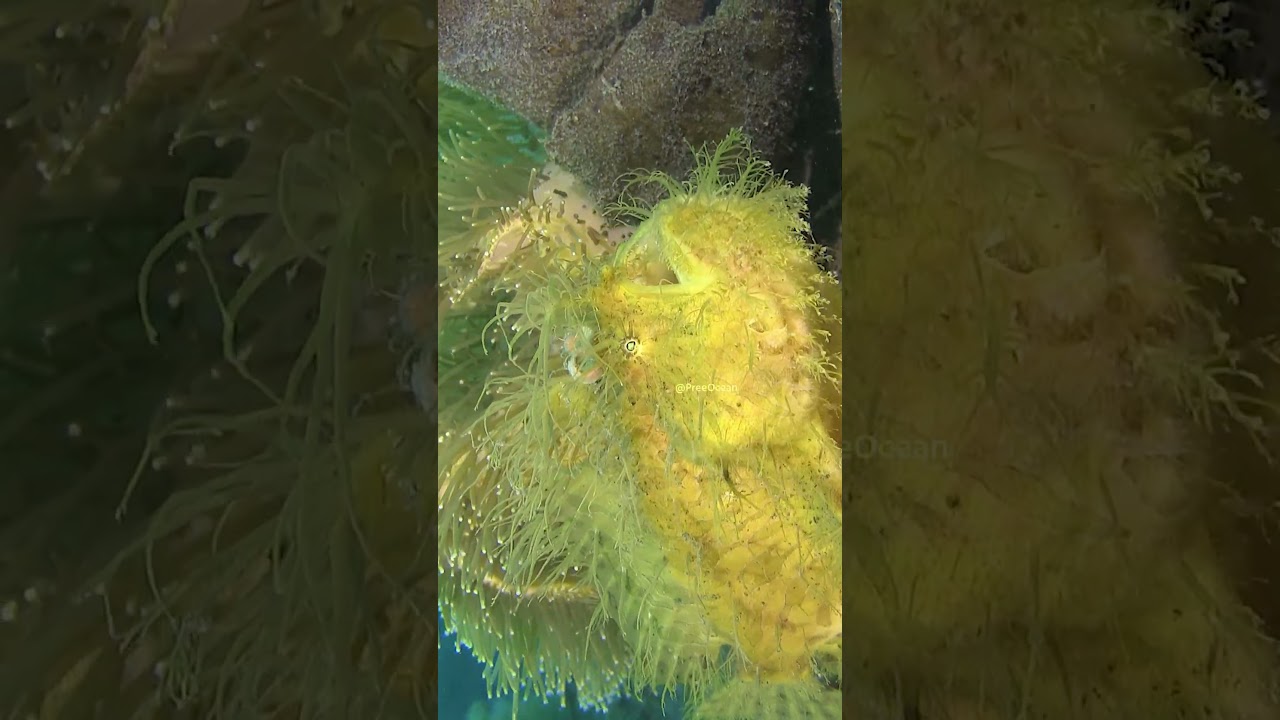
The hairy frogfish (Antennarius striatus) opens its mouth wide to stretch its elastic jaw muscles, clear detritus from its gill filaments, and realign its depressor mandibulae bones. This dramatic buccal expansion also prepares its oral cavity to generate powerful suction capable of engulfing prey in six milliseconds.
Key field takeaways
- Taxonomic Classification: Order Lophiiformes, Family Antennariidae, Antennarius striatus.
- Primary Behavioral Adaptation: Rapid buccal expansion stretching the gape up to twelve times its resting volume.
- Ecological Niche and Depth Range: Tropical and subtropical benthic substrate at depths from 1 to 210 meters.
- Conservation and Field Status: Listed as Least Concern on the IUCN Red List of Threatened Species.
| Biological Parameter | Field Specification |
|---|---|
| Binomial Nomenclature | Antennarius striatus |
| Common Name | Hairy frogfish (Striated frogfish) |
| IUCN Conservation Status | Least Concern |
| Primary Diet | Small teleost fishes, crustaceans, benthic invertebrates |
| Habitat Depth Range | 1 to 210 meters (shallow coral reefs to rocky slopes) |
| Key Morphological Feature | Branching dermal spinules and elastic maxilla structures |
Hairy frogfish jaw mechanics and buccal expansion
In the observed footage, the hairy frogfish (Antennarius striatus) sits stationary on a benthic substrate before executing a pronounced oral expansion. The individual unhinges its maxilla and drops its dentary bone downward, exposing the bright inner lining of its buccal cavity. This wide stretching motion extends the oral cavity to its maximum anatomical limit.
This mouth opening behavior is a functional physiological process known as buccal yawning. Stationary ambush predators perform this stretch to clear trapped sand or metabolic detritus from their internal branchial arches. The expansion flushes water through the gill slits, ensuring efficient gas exchange across the respiratory lamellae.
Mechanical stretching also maintains elasticity in the jaw ligament network. The suspensorium and hyoid apparatus endure intense kinetic strain during rapid predatory strikes. Periodic stretching realigns the cranial bones and keeps the depressor mandibulae muscles primed for instantaneous contraction.
Morphological features and dermal camouflage
The hairy frogfish exhibits specialized cutaneous structures that distinguish it from other members of the family Antennariidae. Its body surface is covered in flexible dermal spinules that resemble filamentous algae, hydroids, or marine sponges. These hair-like skin projections obscure the body outline against uneven coral rubble.
Yellow and greenish pigment patterns run along the body in irregular bands. These color variations help the fish blend directly into surrounding soft corals and sponges. Small circular eyes feature dark radial lines extending outward, effectively disguising the pupil from both predators and prey.
The pectoral fins are modified into limb-like structures with flexible wrist joints. These specialized fins allow the fish to walk across loose substrate rather than swim through open water. Similar benthic adaptations occur in marine organisms studied in Coleman shrimp biology.
Foraging mechanics and predatory strike biology
The primary foraging strategy of Antennarius striatus relies on aggressive mimicry and high-speed suction feeding. The first spine of the dorsal fin is modified into a specialized angling apparatus called the illicium. At the tip of this spine sits a fleshy lure known as the esca, which resembles a small worm or crustacean.
The frogfish flickers its esca in controlled rhythmic movements to attract curious prey items. When a target fish or shrimp approaches within striking range, the frogfish depresses the floor of its mouth and drops its lower jaw in approximately six milliseconds. This rapid movement expands the oral cavity up to twelve times its resting volume.
The sudden expansion creates a sharp pressure differential between the inside of the mouth and the external water column. Water rushes into the gape at high velocity, sweeping the prey directly into the mouth. The frogfish then closes its jaws and contracts its pharyngeal muscles to swallow the victim whole.
Habitat distribution and benthic ecology
Antennarius striatus is widely distributed throughout tropical and subtropical oceans. It occurs in the Atlantic, Indian, and Pacific Oceans, occupying coastal reefs, rocky slopes, and silty estuaries. The species thrives in environments with abundant vertical structures such as sponges, ascidians, and macroalgae.
The depth range of the hairy frogfish spans from shallow intertidal zones down to 210 meters along continental shelves. Its sedentary lifestyle minimizes energy expenditure, allowing the fish to remain motionless for hours while waiting for prey to enter its strike zone. Similar cryptic strategies exist among invertebrates documented in Chromodoris willani biology.
Benthic habitats supply both cover for camouflage and a steady stream of forage species. Silty substrates and reef edges provide ideal hunting perches where the frogfish can blend into the substrate without detection.
Interspecies relationships and conservation status
As a mesopredator in benthic ecosystems, Antennarius striatus helps regulate local populations of small reef fishes and mobile crustaceans. By consuming small teleosts and decapod crustaceans, it maintains trophic balance within its immediate microhabitat. Apex predators such as large groupers, snappers, and moray eels occasionally prey upon frogfishes.
The International Union for Conservation of Nature (IUCN) currently classifies Antennarius striatus as Least Concern. Its broad geographical range and cryptic habits protect it from targeted commercial fishing pressure. However, localized habitat degradation caused by coastal development and ocean warming remains a potential threat to reef health.
Protecting coral reef structures and benthic sponge communities ensures the preservation of essential foraging grounds for frogfishes. Healthy benthic habitats support the complex food webs in which these specialized predators operate.
Frequently asked questions
Why does the hairy frogfish open its mouth wide?
The hairy frogfish opens its mouth wide to stretch its jaw muscles, align its premaxillary bones, and flush debris from its gill filaments. This buccal expansion also maintains muscle responsiveness for high-speed suction strikes.
How fast can a hairy frogfish strike at prey?
A hairy frogfish can complete a suction strike in approximately six milliseconds. This rapid suction intake creates a sudden vacuum that draws prey directly into its oral cavity before the prey can escape.
What are the hair-like structures on a hairy frogfish?
The hair-like structures are dermal spinules, which are skin appendages that break up the silhouette of the fish. These spinules resemble marine algae and sponges, providing camouflage against the seabed.
What does the hairy frogfish eat in its natural habitat?
The hairy frogfish eats small reef fishes, crustaceans, and benthic invertebrates. It lures prey using a modified dorsal fin ray tipped with a fleshy bait before engulfing the prey whole.