
Direct answer summary
The cheetah (Acinonyx jubatus) is a specialized felid predator that exhibits high-intensity feeding behavior to maximize caloric intake before potential kleptoparasites arrive. By utilizing specialized carnassial teeth, the animal efficiently shears muscle tissue from its prey in a high-stakes environment.
Key Field Takeaways
- Taxonomic Classification: Kingdom: Animalia, Class: Mammalia, Order: Carnivora, Family: Felidae.
- Primary Foraging Strategy: Pursuit predation utilizing acceleration up to 110 km/h in short bursts.
- Feeding Mechanics: Specialized carnassial dentition allows for rapid shearing of meat from bone.
- Conservation Status: Classified as Vulnerable by the IUCN due to habitat fragmentation and human conflict.
| Feature | Specification |
|---|---|
| Scientific Name | Acinonyx jubatus |
| Common Name | Cheetah |
| IUCN Status | Vulnerable |
| Primary Diet | Small to medium ungulates |
| Habitat | Open savanna and grasslands |
| Key Adaptation | Semi-retractable claws for traction |
Biological analysis of cheetah feeding mechanics
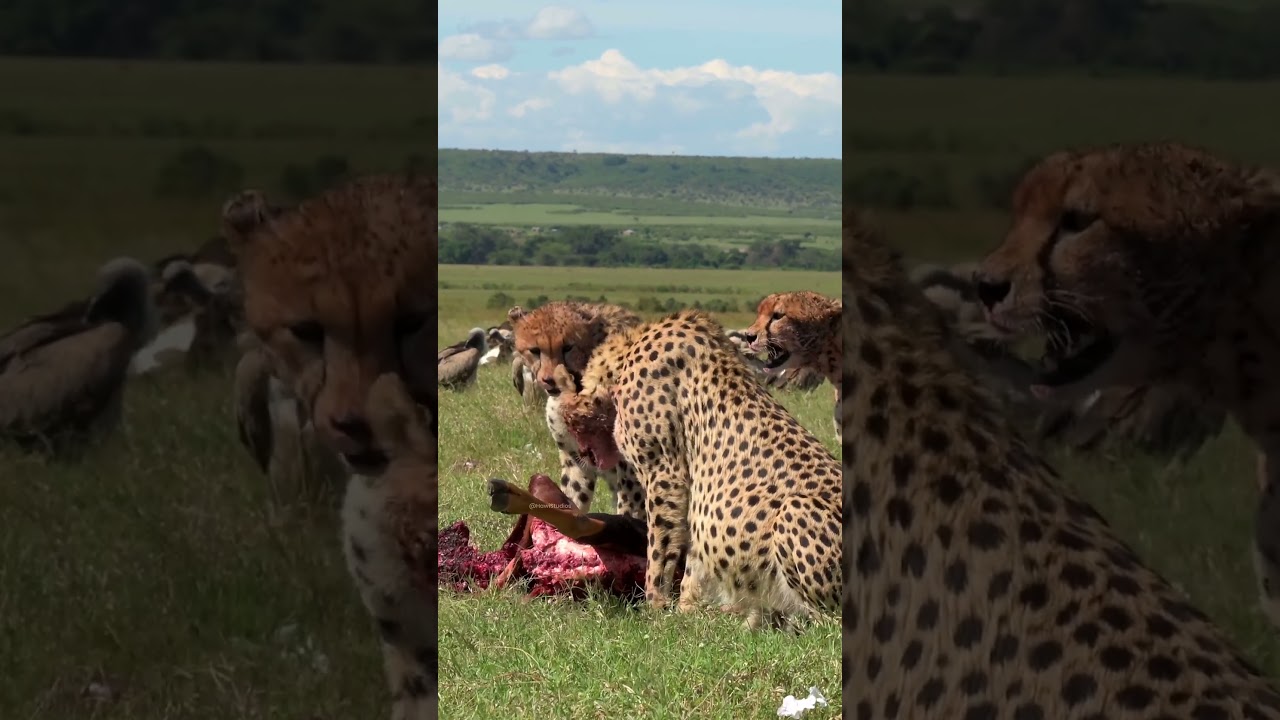
The cheetah (Acinonyx jubatus) demonstrates highly efficient feeding mechanics designed to minimize exposure time during consumption. In the provided footage, the individual focuses on shearing muscle from the antelope carcass, a process facilitated by the carnassial pair, the fourth upper premolar and first lower molar, which acts as a biological scissor.
Anatomical adaptations for consumption
The skull of the cheetah is relatively small compared to other large felids, which allows for larger nasal passages and improved oxygen intake during high-speed chases. This anatomical trade-off requires precise jaw musculature to process food effectively. The animal uses its incisors to strip meat from bone, while the molars provide the necessary shearing force to digest fibrous tissues.
Predator-scavenger dynamics in the savanna
The presence of vultures in the immediate vicinity of the kill highlights the complex trophic interactions within the African savanna. These birds serve as indicators of predator activity, often descending once a hunt is successful. The cheetah must balance the need for energy acquisition with the risk of losing its kill to larger, more aggressive scavengers or kleptoparasites.
Interspecies competition
Unlike lions or leopards, cheetahs lack the physical mass to defend their kills against larger carnivores. This behavioral constraint dictates their feeding strategy, often resulting in rapid consumption. For additional context on how other species manage similar competitive pressures, refer to hooded vulture foraging, which often relies on the leftovers of such predators.
Habitat and ecological niche
The cheetah is predominantly found in open savanna and grassland habitats, which provide the necessary terrain for their high-speed hunting strategy. This environment also forces them to remain vigilant, as the lack of dense cover makes them visible to larger predators. Their survival is intrinsically linked to the availability of medium-sized prey species and the preservation of open, unfragmented landscapes.