
Direct answer summary
The North American raccoon (Procyon lotor) exhibits complex foraging behavior characterized by high tactile sensitivity in its forepaws. This species actively investigates potential food sources, such as fruit, using its keen sense of smell and specialized mechanoreceptors to assess edibility.
Key Field Takeaways
- Taxonomic Classification: Family Procyonidae, Genus Procyon, Species Procyon lotor.
- Primary Behavioral Adaptation: Enhanced tactile sensitivity in forepaws allows for precise object manipulation.
- Ecological Niche & Range: Versatile omnivore occupying diverse habitats across North and Central America.
- Conservation & Field Status: Classified as Least Concern by the IUCN due to high adaptability and population density.
| Feature | Specification |
|---|---|
| Scientific Name | Procyon lotor |
| Common Name | North American Raccoon |
| IUCN Status | Least Concern |
| Diet | Omnivorous (fruit, insects, vertebrates) |
| Habitat | Forests, urban areas, wetlands |
| Key Adaptation | Highly sensitive tactile forepaws |
Foraging behavior and sensory mechanics
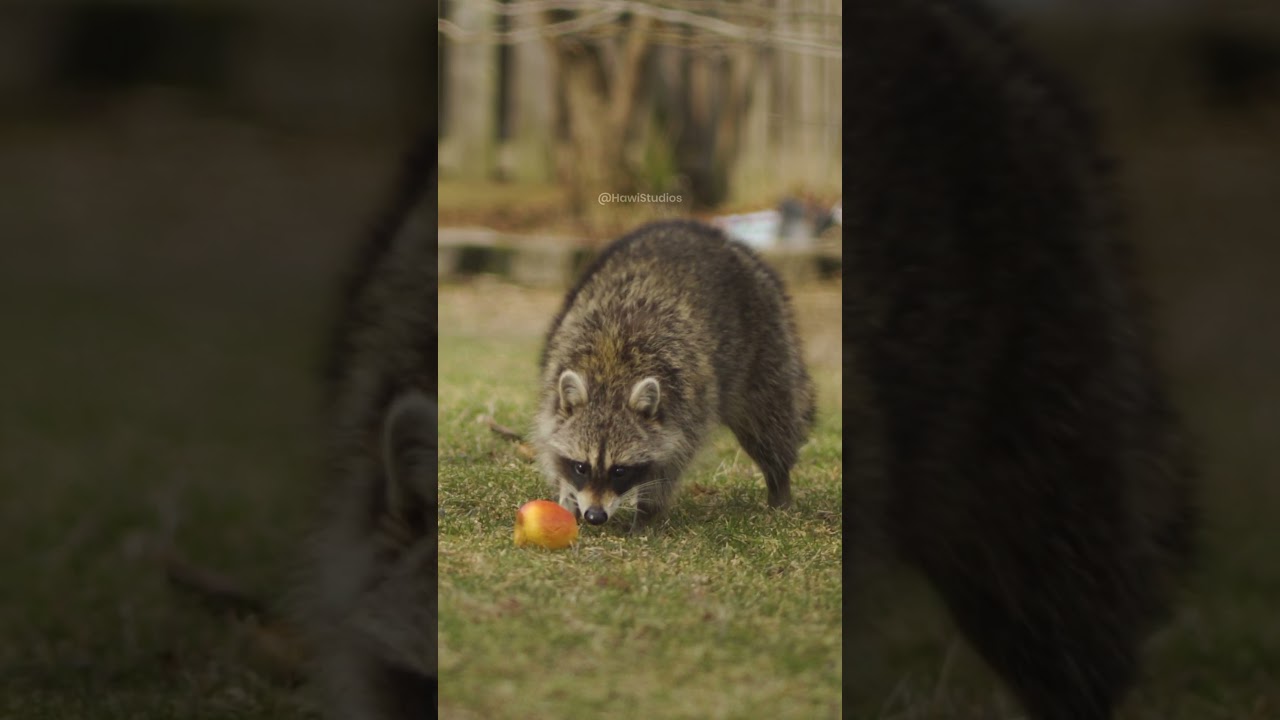
The North American raccoon demonstrates a methodical approach to foraging. In the observed footage, the individual maintains a steady gait, lowering its head to engage its olfactory senses with the environment. This behavior is typical of a species that relies heavily on sensory input to evaluate the quality and safety of potential food items.
Tactile and olfactory investigation
Raccoons possess an exceptional sense of touch, concentrated primarily in their forepaws. When encountering an object like an apple, they often use their paws to manipulate the item, identifying its texture and density. While the individual in the video primarily uses its nose, this is the first stage of a comprehensive assessment process that combines smell, sight, and touch.
Morphological and anatomical adaptations
The physical structure of the North American raccoon supports its role as an opportunistic generalist. The distinct black facial mask is not merely aesthetic, it aids in reducing glare from light sources, improving the animal’s ability to see in low-light environments. This is a critical adaptation for a species that is primarily crepuscular or nocturnal.
Pelage and insulation
The dense, coarse fur of the raccoon provides excellent insulation against temperature fluctuations. This allows the species to maintain its metabolic rate across varying climates, from northern temperate zones to warmer southern regions. The thick coat also is a protective layer during movement through dense undergrowth or rocky terrain.
Habitat range and ecological niche
Procyon lotor is highly adaptable, thriving in environments ranging from deep, undisturbed forests to dense urban centers. This flexibility is a hallmark of the species, enabling it to exploit a wide array of food resources. In suburban settings, they frequently interact with anthropogenic resources, which has led to high population densities in many regions.
Interspecies dynamics
As an omnivore, the raccoon occupies a middle trophic level. It acts as both a predator of small invertebrates and a scavenger of plant matter. Its presence in an ecosystem influences the distribution of fruit seeds and the population dynamics of smaller prey species. Understanding these interactions is essential for broader ecological studies, much like analyzing Eurasian red squirrel foraging patterns to determine forest health.
Conservation status and environmental factors
The North American raccoon is currently listed as Least Concern by the International Union for Conservation of Nature (IUCN). Its ability to adapt to human-modified landscapes ensures its continued success. However, like many mammals, it remains susceptible to habitat fragmentation and the spread of zoonotic diseases.
Future research directions
Continued monitoring of raccoon populations provides valuable insights into how wildlife adjusts to urban expansion. Comparative studies, such as those examining mule deer vigilance mechanics, help researchers understand the behavioral shifts occurring in species that share space with human development. These investigations are vital for sustainable wildlife management.