
Direct answer summary
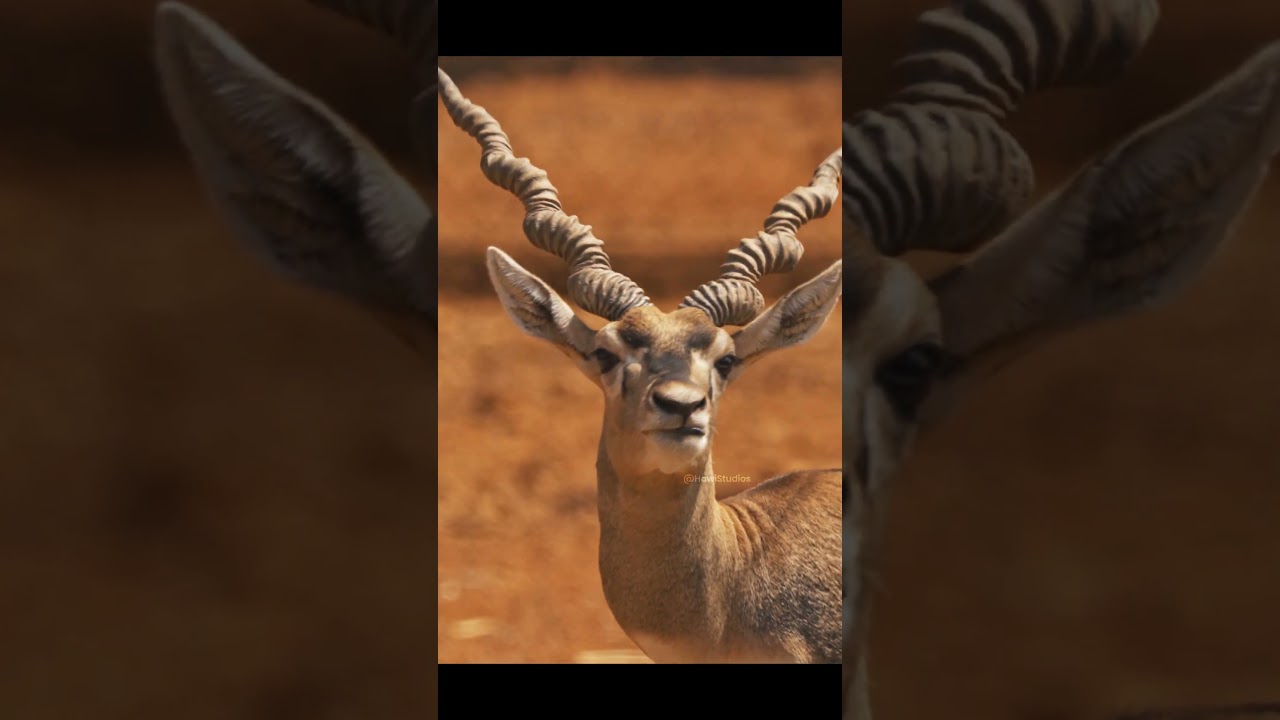
The Blackbuck (Antilope cervicapra) possesses distinctive spiraled horns, which are permanent bony structures growing up to 70 cm long in males. These horns serve primarily for sexual display to attract females, establishing dominance among males, and as a formidable defense against predators in its open grassland habitats.
Key Field Takeaways
- Horn Morphology: Male Blackbucks feature spiraled, ringed horns that can reach lengths of 50-70 cm, twisting up to four times.
- Sexual Dimorphism: Males exhibit a pronounced dark brown to black dorsal coat, contrasting with the lighter tan of females and younger males.
- Locomotion Speed: Blackbucks are among the fastest terrestrial animals, capable of bursts up to 80 km/h (50 mph) across open plains.
- Habitat Adaptations: They thrive in open grasslands and semi-arid scrublands, relying on acute vision and speed for predator evasion.
| Trait | Description |
|---|---|
| Binomial Nomenclature | Antilope cervicapra |
| Common Names | Blackbuck, Indian Antelope |
| IUCN Conservation Status | Least Concern (though populations declined historically, now stable in protected areas) |
| Primary Diet | Herbivore, primarily grazers feeding on grasses, leaves, and pods. |
| Natural Habitat | Open grasslands, scrublands, lightly forested areas, and agricultural fields in India and Nepal. |
| Key Adaptation | Long, spiraled, ridged horns in males for display and defense, exceptional speed for predator evasion. |
Immediate physical observation and behavioral mechanics
The video provides a close-up view of a male Blackbuck (Antilope cervicapra), showcasing its striking anatomical features and subtle behaviors. The animal’s head is initially held level, allowing for a clear view of its prominent, spiraled horns. These horns are deeply ridged, with distinct rings indicating growth increments.
The Blackbuck then exhibits active vigilance, turning its head slowly to scan its surroundings. Its large, pointed ears swivel independently, demonstrating their role in directional sound detection. This behavior is typical for prey animals in open environments, where early detection of predators is crucial for survival, mirroring the vigilance seen in species like the black-backed jackal. Following this, the Blackbuck lowers its head, a posture that can indicate a momentary relaxation, self-grooming, or the beginning of a resting period.
Morphological and anatomical adaptations
The most distinctive morphological feature of the male Blackbuck is its magnificent horns. These spiraled horns are permanent, unbranched, and made of keratinized bone, growing upwards and outwards with 2 to 4 distinct twists. They can reach impressive lengths of 50 to 70 centimeters, providing both a visual display of genetic fitness to potential mates and a formidable weapon against rivals and predators.
Sexual dimorphism is evident in the Blackbuck’s coat coloration. Adult males, particularly during the breeding season, develop a striking dark brown to black dorsal coat, contrasting sharply with their white underparts and eye rings. Females and younger males typically retain a lighter fawn or tan coloration. This color change in males likely is a visual signal of maturity and reproductive status.
The Blackbuck’s large, forward-facing eyes provide a wide field of vision, essential for spotting predators across open plains. Their long, slender legs and powerful musculature are adaptations for incredible speed, allowing them to reach speeds of up to 80 kilometers per hour (50 mph) in short bursts. This high-speed locomotion is their primary defense mechanism against pursuit predators.
Habitat range and terrestrial ecology
The Blackbuck is endemic to the Indian subcontinent, primarily inhabiting open grasslands, semi-arid scrublands, and lightly wooded areas. Its historical range extended across much of India, Pakistan, and Nepal, though populations are now fragmented and largely confined to protected areas and reserves. The reddish-brown background visible in the video footage is consistent with the dry, earthy tones of its natural savanna and grassland habitats.
These environments are characterized by sparse tree cover and abundant low-lying vegetation, which the Blackbuck utilizes for grazing. They are highly adapted to these open landscapes, relying on their keen senses and exceptional speed to navigate and survive. Their ability to thrive in such environments underscores their specialized evolutionary trajectory.
Interspecies relationships and evolutionary significance
In its natural ecosystem, the Blackbuck occupies a critical niche as a primary herbivore, influencing vegetation structure through grazing. Its primary predators include large felids like leopards and, historically, cheetahs, whose feeding behavior shaped the Blackbuck’s defensive adaptations. The Blackbuck’s remarkable speed and agility are direct evolutionary responses to these fast, pursuit predators. Their social structure, often forming herds of varying sizes, also aids in predator detection through multiple alert individuals.
The elaborate horn displays and ritualized fighting between males are significant for establishing dominance and securing mating opportunities. This intraspecific competition drives the selection for larger, more impressive horns, reinforcing their evolutionary importance. The Blackbuck’s ability to coexist with human agricultural activities in some regions also highlights its adaptability, though habitat loss remains a significant threat.
Conservation status and ecosystem threats
The Blackbuck (Antilope cervicapra) is currently listed as Least Concern by the IUCN, a significant improvement from its Near Threatened status in 2003. This positive change is largely due to successful conservation efforts, including the establishment of protected areas and anti-poaching measures in India. However, localized populations still face threats.
Habitat fragmentation and conversion of grasslands to agricultural land continue to pose challenges to Blackbuck populations outside of protected zones. Poaching for meat and trophies, though reduced, remains a concern in some regions. Maintaining genetic diversity and ensuring connectivity between fragmented populations are ongoing conservation priorities to secure the long-term survival of this species.
What is the primary function of a Blackbuck’s horns?
The primary function of a male Blackbuck’s spiraled horns is for sexual display and dominance contests. These impressive structures signal fitness to females and are used in ritualized sparring between males to establish hierarchy and secure breeding rights within a herd.
How fast can a Blackbuck run?
Blackbucks are among the fastest animals on land, capable of reaching speeds up to 80 kilometers per hour (50 mph). This exceptional speed is a crucial adaptation for evading predators across the open grasslands and semi-arid plains they inhabit.
Do female Blackbucks have horns?
No, typically only male Blackbucks possess horns. Female Blackbucks are generally hornless, which is a clear example of sexual dimorphism within the species. In rare instances, some females may develop rudimentary horns.
What is the Blackbuck’s diet?
The Blackbuck is a herbivore, primarily a grazer. Its diet consists mainly of various grasses, but it also consumes leaves, shoots, and fruits from shrubs and trees, adapting its foraging to the available vegetation in its grassland and scrubland habitats.